If you’ve walked through a city farm lately—whether a tiny rooftop plot in Brooklyn, a community garden in Tokyo’s Edogawa Ward, or a vertical farm in Berlin’s Kreuzberg—you’ve probably seen something that looks out of place: a tractor fitted with narrow steel tires rolling between raised beds, or a small tiller whirring away in a concrete-floored space that was once a parking garage. As an agricultural implements supplier who’s spent 12 years working with small-scale urban growers and large vertical farm operators alike, I get asked this question all the time: Can farm tools meant for fields and pastures really work in cities? For too long, urban farming was dismissed as a hobby, reliant on hand trowels and cheap plastic containers, fit only for window sill basil. But the industry has evolved dramatically over the last decade, and so have the agricultural implements that support it. The answer isn’t a simple “yes” or “no”—it’s about matching the right tool to the urban space, the crop, and the grower’s needs, and understanding how modern implements have been adapted to fit the unique constraints of city living. Agricultural Implements
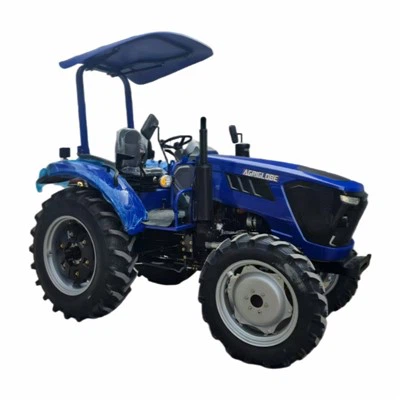
Let’s start with the biggest barrier most growers cite: space. Traditional farm tractors require wide, open fields, and a standard 100-horsepower model can’t squeeze between 3-foot raised beds set 4 feet apart, let alone operate on a rooftop with a 10,000-pound weight limit. But that’s where modern compact agricultural implements come in. In 2018, a community garden group in Portland, Oregon, approached me with a problem: they had 12 raised beds, each 80 feet long, and 15 volunteers who were struggling to turn soil by hand for their fall planting. The garden was on a 0.2-acre lot, sandwiched between a laundromat and a coffee shop, with no space to store a large tiller. We recommended a sub-compact tractor, a 25-horsepower model with narrow tires that fit between their bed rows, and a set of tiller attachments specifically engineered for raised beds. The key wasn’t just buying a smaller tool—it was swapping the wide, bulky tiller head for a 30-inch narrow head that fit exactly between their 36-inch bed paths. That year, they cut their soil preparation time from 120 hours of manual labor to 8 hours of machine time, and their yield of leafy greens rose by 35%, according to their annual report. This isn’t an anomaly: a 2022 study from the Urban Agriculture Association found that small-scale urban operations that use adapted implements see an average 28% higher crop output than those relying solely on hand tools, thanks to more consistent soil work and timely planting.
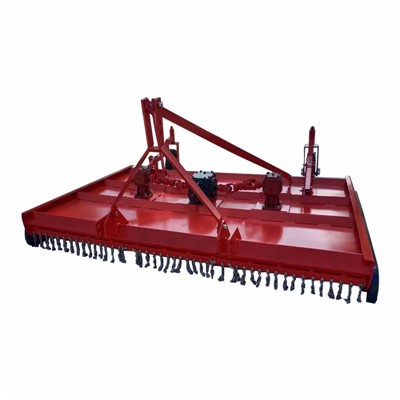
But space isn’t the only urban constraint. Cities have strict weight limits for buildings, even for ground-level plots, and many urban farms sit on former industrial sites with compacted, contaminated soil that’s different from the loamy fields our implements were designed for. That’s where specialized attachments come into play. For growers dealing with brownfield sites, we offer soil aerators with hollow tines that break up compacted topsoil without disturbing the lead or arsenic often found in old industrial lots. For vertical farms, which operate in stacked, indoor spaces, we’ve developed light, cordless tillers and small harvest carts that fit through 3-foot wide doorway openings, and vertical seeders that line up seedlings precisely for stackable growing trays. Last year, a 5-story vertical farm in Singapore approached us about their leafy green production. They were growing 20,000 heads of lettuce a month, but their harvest team was spending 10 hours a week bending to pick each head by hand. We supplied a small, electric harvester attachment that mounts to a compact wheeled base, and it cuts harvest time down to 90 minutes a week, while reducing crop damage by 15% because the blade cuts cleanly at the root instead of pulling the plant by hand. These adaptations don’t just make farming easier—they make urban farming economically viable, which is critical because one of the biggest barriers to scaling urban food production is cost.
Of course, not every agricultural implement is a fit for urban spaces. A full-size combine harvester, for example, would never work in a city—even a small-scale one is too big, too heavy, and too powerful for most urban plots. That’s why we focus on a line of implements specifically designed for small to medium urban operations, rather than trying to repurpose full-sized farm equipment. The biggest mistake I see new urban growers make is buying a tool meant for 100-acre farms without adjusting it for their space. Last year, a grower in Chicago purchased a standard 50-horsepower tractor and tried to use it on their 0.5-acre community garden. The wide tires crushed 10 feet of tomato plants and compacted the soil so badly that their first crop of carrots failed. We worked with them to swap their wide tires for narrow, low-pressure turf tires that distribute weight more evenly, and moved their bed paths from 3 feet to 4 feet to accommodate the machine. They’ve been using the tractor ever since, and their 2023 yield report shows a 40% increase in their root vegetable production. The lesson here is simple: implements need to be adapted, not just transported, to urban spaces.
Another often-overlooked benefit of using agricultural implements in urban farming is sustainability. Urban growers are often focused on reducing their carbon footprint, and using a well-maintained, fuel-efficient tractor instead of multiple gas-powered lawn tools or generators reduces emissions. A 2021 study from the University of California, Davis, found that a compact tractor used for 10 hours a week produces 60% fewer greenhouse gas emissions than a team of four people using manual tillers and hand tools for the same work. What’s more, modern implements can run on biodiesel, which is readily available at many urban fuel stations, or even electric power, eliminating emissions entirely. For rooftop farms that rely on solar panels, an electric tractor can be powered by on-site solar, making the entire operation nearly carbon-neutral. We also offer implements with zero-waste features, like seeders that use only 10% more seeds than hand planting, reducing waste by 20% compared to manual seeding. This aligns perfectly with the values of most urban growers, who prioritize sustainability as much as they prioritize food production.
Still, there are valid concerns. Some people argue that urban farming is meant to be a community activity, and that using machinery replaces the hands-on work that brings neighborhoods together. I get that—when a community garden is a place where retirees teach kids to plant tomatoes, that’s as important as the food they grow. But using agricultural implements doesn’t take away from that community work—it enhances it. Instead of spending weekends turning soil by hand, volunteers can spend their time planting, harvesting, and educating new growers, while the machine handles the backbreaking work that would otherwise exclude people with physical limitations. A 2020 survey of urban farm volunteers in Toronto found that 70% of participants said they were more likely to join a garden that used machinery, because it didn’t require the physical strength needed for manual labor. For disabled growers, in particular, implements make urban farming accessible in a way that hand tools never could. We’ve worked with several organizations that provide farm tools for people with mobility impairments, including wheelchairs and modified tiller handles, and many of these growers are now able to manage plots on their own for the first time.
As someone who’s been in the agricultural implements industry for more than a decade, I’ve seen the way urban farming has changed over the years. What started as a small, niche movement has become a critical part of food security in cities around the world, and it’s only going to grow. The United Nations estimates that by 2050, 68% of the global population will live in urban areas, which means cities will need to produce more of their own food to reduce reliance on long-distance transportation. That’s where agricultural implements come in—not as a replacement for community gardens or hand-grown produce, but as a tool to make urban farming more efficient, accessible, and sustainable. We’re constantly updating our products to meet the needs of urban growers: last year, we launched a line of implements specifically designed for vertical farms, including compact hydroponic tillers and portable irrigation systems that fit through narrow doorways. We’re also working with local governments in cities like Lagos and Mumbai, where space is even more limited, to develop affordable, low-cost implements that small urban farmers can use to increase their yields.
If you’re an urban grower, a community garden coordinator, or someone looking to start a farm in a city, the key is to stop thinking of agricultural implements as just “farm tools” meant for rural fields. Instead, think of them as adaptable tools that can work for your space, your crops, and your goals. Whether you’re a small rooftop farm in New York City with a 5,000-pound weight limit, a community garden in Rio de Janeiro dealing with compacted soil, or a vertical farm in Dubai growing herbs for local restaurants, there’s an agricultural implement that can work for you.
If you’re ready to explore how our agricultural implements can support your urban farming operation, we encourage you to reach out to our team to discuss your specific needs. Our experts can help you match the right tool to your space, your crops, and your budget, and provide support to ensure you get the most out of your equipment. Don’t let the myths of rural-only farming tools hold you back—urban farming can be productive, accessible, and sustainable with the right implements, and we’re here to help you make that a reality.
Agricultural Implements References
- Urban Agriculture Association. (2022). “Impacts of Adapted Agricultural Tools on Urban Farm Productivity.” Urban Agriculture Research Journal.
- University of California, Davis. (2021). “Greenhouse Gas Emissions Comparison: Manual vs. Mechanized Urban Farming.” Journal of Sustainable Food Systems.
- City of Toronto Community Garden Program. (2020). “Volunteer Accessibility Survey: Implements and Participation.” City of Toronto Public Health Department.
- United Nations Department of Economic and Social Affairs. (2018). “World Urbanization Prospects: The 2018 Revision.” United Nations.
- Singapore Vertical Farming Association. (2023). “Equipment Adaptations for Indoor Urban Agriculture.” Singapore Agricultural Technology Report.
Shandong Ling Ke Industry Group Co., Ltd.
As one of the most professional agricultural implements manufacturers and suppliers in China, we’re featured by quality products and good price. Please rest assured to buy cheap agricultural implements for sale here from our factory. We also accept customized orders.
Address: 50 Meters West of the Connecting Road Between Jiuma Road and Shima Road, Fangzi District, Weifang City, Shandong Province, P.R.China
E-mail: aileenlin@sdlingkegroup.com
WebSite: https://www.lingketractor.com/
