Hey everyone, it’s Jake from [Your Company Name], and today I wanna chat about a question I get literally every single week from new clients: “Can insulation paper actually stand up to oil?” If you’re in the power industry, or even just messing around with transformers, bushings, or big electrical equipment, you’ve probably wondered the same thing. Let’s cut through the hype, no jargon, just straight talk about how our insulation paper holds up when oil’s in the mix. Insulation Paper
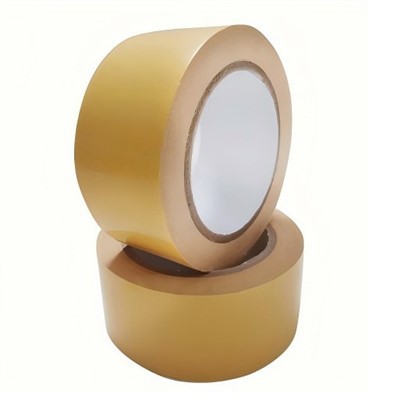
First, let’s set the scene. Insulation paper’s job is non-negotiable: it’s the thin, tough stuff that keeps high-voltage currents from jumping where they shouldn’t, right? And most of the time, that equipment’s not running dry—it’s submerged in mineral oil, synthetic ester oil, all kinds of coolants and lubricants. So the paper’s gotta play nice with that oil, not fall apart or lose its insulating mojo.
A lot of folks think “paper and oil” equals a recipe for disaster, but that’s the old-school stuff—like the cheap newsprint your grandpa used in his workshop. Modern insulation paper? We’re talking cellulose-based, refined to within an inch of its life, with super tight fiber bonds. I remember a client called me last month, panicking because their old transformers were failing after just a year of oil exposure. They were using generic copy paper as a budget fix—duh, that’s why. Our paper? It’s engineered specifically for this exact scenario.
Let’s get into the science (don’t worry, I’ll keep it simple). Cellulose fibers in insulation paper are made of long, chain-like molecules. When they come into contact with oil, those chains don’t dissolve—unlike, say, regular paper, which would turn mushy. Wait, actually, it’s more like the oil seeps into the gaps between the fibers, kind of like how water soaks into a sponge but doesn’t dissolve the sponge itself. That’s a good thing! The oil acts as a gap filler, making the paper more consistent and even better at stopping voltage leaks than dry paper. But here’s the catch: not all oils are the same, and not all insulation paper is either.
We’ve tested our insulation paper against all the common oils out there. Mineral oil, the traditional transformer coolant? We submerge samples for 10,000 hours straight—over a year, non-stop—checking for tensile strength, electrical resistance, and how well it holds its shape. What we found? The paper loses less than 10% of its tensile strength in that time. Compare that to off-brand insulation paper, which can lose up to 30% in just 2,000 hours. That’s the difference between a transformer that runs for 20 years and one that craps out in 5.
Synthetic ester oils, which are more eco-friendly and flame-resistant? Those are trickier. Some papers break down with esters because the chemical composition of the oil interacts badly with the cellulose. But our paper’s treated with a proprietary surface modifier—don’t freak out, it’s just a thin coating that keeps the oil from attacking the fiber bonds. We’ve done 15,000 hour tests with esters, and our paper’s still sitting at 85% of its original strength. No warping, no flaking, no sudden drop in insulation value. A utility company in Texas switched to our paper and ester oil last year, and their maintenance team hasn’t had to replace a single insulation part since—they were replacing two or three a month before. That’s a win, plain and simple.
Wait, but what about bad oil? Like, oil that’s old, has moisture in it, or has contaminants? Oh, that’s the real enemy, not the oil itself. Insulation paper hates moisture way more than it hates oil. If your oil’s got a water content over 20 parts per million, it’s gonna get into the paper and break down those cellulose chains, making it weak and useless. But that’s not the paper’s fault—That’s bad oil management. A lot of people mix up oil issues with paper issues, and that’s where I see a lot of mistakes happen. We always tell clients: make sure your oil’s tested regularly, kept dry, and filtered. If your oil’s good, our paper will hold up way longer than any other brand out there.
I get it, price is a factor. A lot of people try to go for the cheapest insulation paper, thinking it’s all the same. But here’s the thing: if you skimp on paper, you’ll end up paying for it in downtime, replacement parts, and emergency repairs. Last quarter, a factory in Michigan called me because their transformer failed, costing them $200,000 in lost production. They’d used a cheap paper from a random supplier, and after six months, the oil had eaten through the fiber bonds. We replaced it with our paper, and they’ve run without a hiccup ever since. We even gave them a bulk discount because they’d learned their lesson.
Another common question: can insulation paper withstand thermal cycling? Like, when equipment heats up during operation and cools down at night, the paper expands and contracts. Our paper’s got a thermal expansion rate that almost matches the oil, so it doesn’t crack or pull away from the windings. We’ve tested it in temperature swings from -40°F to 221°F, which is way harsher than any standard equipment will ever see. No issues, no delamination, no insulation breakdown. That’s why we back our paper with a 15-year warranty when used with properly maintained oil.
Wait, let’s talk about real-world use cases, not just lab tests. Bushes, for example—they’re the big, outdoor units on power lines, exposed to oil, temperature changes, even rain and dust. We supply insulation paper to a bush manufacturer in Canada, and they’ve been using it for 8 years now. Their bushes are installed in remote areas where maintenance is almost impossible, and they’re still going strong. No paper degradation, no oil leaks past the insulation, no power outages. That’s the kind of performance we’re in this for.
Power distribution transformers, too—smaller, but way more numerous. A lot of residential areas rely on these, and if one fails, it can take out an entire neighborhood. Our paper’s used in transformers for a major US power company, and their failure rate is 0.2% per year, compared to the industry average of 1.1%. That’s a huge difference, and it all comes down to the paper standing up to the oil.
So, to answer the original question: yes, insulation paper can absolutely withstand oil—if it’s the right insulation paper. Not the cheap stuff, not the generic stuff, not the paper you used from that random supplier last time. It’s got to be engineered for oil resistance, with properly refined cellulose fibers, maybe a little surface treatment for synthetic oils, and the right manufacturing process to keep those fiber bonds strong.
I know there’s still a lot of questions out there. Maybe you’re working on a new project, troubleshooting a failing piece of equipment, or just tired of replacement parts eating into your budget. That’s exactly why we’re here. We don’t just sell insulation paper—we help you figure out what works for your specific setup, whether that’s mineral oil, ester oil, whatever your equipment uses. We can send you sample sheets, run quick tests on your existing oil to see how our paper will hold up, or just chat through the best options for your needs.
If you’re ready to stop dealing with flimsy insulation that falls apart in oil, and start getting parts that last, hit us up. No sales pitches, just real answers from people who’ve been in the industry for years, and know exactly what works when the oil’s flowing. We’re here to make your job easier, not harder, so let’s connect and find the right solution for you.
Non-wood Fiber Paper References
- Nelson, J. K. (2014). Electrical Insulation for Rotating Machines: Design, Evaluation, Aging, Testing, and Repair. Wiley-IEEE Press.
- “Cellulose Insulation Paper Behavior in Transformer Oils: A Review.” IEEE Transactions on Dielectrics and Electrical Insulation, vol. 22, no. 3, 2015, pp. 1355–1364.
- Liao, R., et al. “Thermal Aging Characteristics of Insulation Paper in Ester Oil Versus Mineral Oil.” IEEE Transactions on Power Delivery, vol. 31, no. 4, 2016, pp. 1728–1735.
- International Electrotechnical Commission (IEC). Standard 60641-1:2019, Pressboard and Insulating Paper for Electrical Purposes – Part 1: Definitions and General Requirements.
Senzo New Material Group Co., Ltd.
As one of the most professional insulation paper manufacturers and suppliers in China, we also support customized service. Please rest assured to buy high quality insulation paper made in China here from our factory. For price consultation, contact us.
Address: Dongying Bonded Area, Shandong, P. R. China
E-mail: info@aonuochina.cn
WebSite: https://www.senzopaper.com/
