If you’ve ever stood on the sidelines of a drag racing track, off-road rally course, or even a short course truck event, you’ve probably seen racers huddled around their trucks, swapping parts late into the night. One debate that never seems to die is whether forged truck wheels beat cast ones for racing. As someone who’s been working in the forged truck wheels space for over 8 years, I’ve talked to more racers than I can count—from weekend warriors who tear up local tracks to pros who haul trophies across the country. Let’s break this down without the jargon, no stuffy textbook science, just the real stuff that matters when you’re trying to go faster and not break mid-race. Forged Truck Wheels
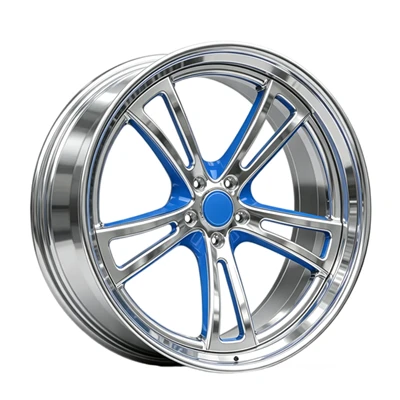
First, let’s get the basics straight: forged vs. cast wheels, no confusing definitions here. Cast wheels are made by pouring molten aluminum (or sometimes steel) into a mold, then letting it cool and solidify. It’s fast, it’s cheap, and that’s why you see them on everything from your daily driver to entry-level race trucks. Forged wheels? They start with a solid block of aluminum (usually 6061-T6 or 7075, the good stuff) that gets smashed with massive tons of pressure, like, think of a 10,000-ton press for the big truck wheel sets. That pressure compacts the metal’s grain structure, aligns it so the molecules are stretched tight instead of being messy and uneven like in cast parts. That’s the key difference, and it’s not just marketing hype—you can feel it when you hold a forged wheel vs. a cast one.
Now, racing is all about trade-offs, right? You don’t just want one thing, you want a bunch of things: strength, weight, heat resistance, durability under impact, and consistency lap after lap. Let’s go through each one and see where forged wins (and where cast might still make sense, because it’s not a one-size-fits-all).
Strength is non-negotiable for racing. When you’re launching a 2,000-horsepower drag truck off the line, that wheel has to take a massive twist from the axle. When you’re jumping a trophy truck 80 feet in the air and landing on a rock-strewn track, that wheel has to absorb the hit without cracking. Cast wheels, because they’re poured, have tiny air bubbles and voids inside the metal. Those are like weak spots waiting to blow. I’ve seen a racer’s cast wheel crack mid-1/4 mile drag run, throwing a tire and taking out the axle—cost him a win, and thousands in repairs. Forged wheels? The forging process eliminates almost all those voids. The pressure smashes the metal tight, so there’s nowhere for bubbles to form. A good set of forged truck wheels can handle 3x the impact of a comparable cast wheel, no joke. That’s not just my opinion—talk to any off-road rally pro, and they’ll tell you they go through half as many wheels when they switch to forged.
Weight is another big one, especially for racing. Unsprung weight—stuff like wheels, tires, brakes, axles that aren’t part of the truck’s suspension—is the enemy of speed. Every pound you save in unsprung weight is like saving 10 pounds in the sprung weight (the body, seats, engine). Why? Because the suspension has to work harder to control heavy unsprung parts, so they bounce more, you lose traction, and acceleration and braking suffer. Forged wheels are way lighter than cast wheels of the same strength. A 17×9 cast truck wheel might weigh 35 pounds; a forged equivalent in the same size is around 25 pounds. That 10 pounds per wheel adds up to 40 pounds total—imagine pulling 40 pounds off the corners of your truck, that’s like having a little extra power every time you hit the gas. Drag racers love this because it cuts down on 60-foot times; off-road racers love it because their suspension moves faster over rough terrain, so they keep more tire on the ground.
Heat is something most racers don’t think about until it’s too late. When you’re braking hard on a road race circuit, or spinning your tires for a burnout contest, the wheel and the tire get hot. Cast aluminum can warp when it gets too hot, especially if there’s a weak spot. Forged aluminum has a higher heat resistance—its dense grain structure doesn’t warp as easily, and it dissipates heat better. That means your brakes stay cooler, your tire pressure stays consistent, and you don’t have to back off mid-race because your wheel is warping and causing a wobble. I once had a road racer tell me he switched from cast to forged wheels and didn’t have a single brake fade issue all season, where before he’d have to replace a set of cast wheels every third race because of heat damage.
Durability over time? Forged wheels just last longer. Even if a racer doesn’t crash, cast wheels develop micro-cracks from repeated stress—every launch, every jump, every hard turn adds a little strain, and those cracks get bigger until the wheel fails. Forged wheels handle that repeated stress way better. I’ve had customers who’ve had their forged truck wheels for 5 years, racing every weekend, and they still look almost new, besides a little curb rash here and there. A cast wheel from the same track would be cracked and pitted after a year, if not less.
Wait, but let’s be real—forged isn’t perfect, and it’s not the right pick for every racer. Cast wheels are way cheaper. If you’re a beginner racer who only does a couple local events a year, and you’re not pushing your truck to the limit, a good cast wheel can get the job done. Also, cast wheels are easier to customize in small runs if you’re just testing a new truck setup, because the mold process is cheaper for low quantities. But if you’re a serious racer, the ones who are competing for podiums and prize money, the cost difference is nothing compared to what you lose when a wheel fails mid-race. Let’s do the math: a set of 4 cast truck wheels is around $800. A set of 4 forged wheels is around $2,500. If a cast wheel fails at a national race, you’re looking at a $5,000 entry fee lost, plus $10,000 in repairs, plus the cost of the wheel set. That’s way more than the difference between cast and forged.
Another thing people don’t talk about: consistency. When you’re racing, every lap needs to be the same. Cast wheels can have slight variations in size or weight because of the mold process—one wheel might be a half-pound heavier than the other, throwing off your truck’s balance. Forged wheels are machined from a solid block, so they’re almost identical in weight and dimensions. That means your suspension is balanced, your steering is precise, and you don’t have to adjust your setup every time you change a wheel. For a pro racer, that small consistency edge is the difference between winning and finishing third.
I’ve seen this firsthand with a customer of mine, a pro drag racer who was running cast wheels for years. He kept getting inconsistent 60-foot times, and he couldn’t figure out why. He switched to our forged truck wheels, and his 60-foot times evened out by 0.03 seconds across all runs. For drag racing, 0.03 seconds is like a car length—enough to win or lose a race. That’s the kind of gain that matters when you’re on the cusp of national titles.
What about off-road racing? Let’s take rock crawling, for example. When you’re bouncing over boulders at 30 mph, a rock can hit your wheel hard enough to bend it. A cast wheel might bend, but a forged one? It’ll dent, but it won’t crack. I had an off-road racer come to me last year after hitting a rock that put a 2-inch dent in his front wheel. His cast rear wheel cracked all the way through, while his forged front wheel just had a dent he hammered out at the track. That meant he didn’t have to change wheels mid-race, saving him 10 minutes of pit time and keeping him in the top 5.
Wait, but let’s address the “forged is too heavy” myth? No, wait, no—wait, some people think forged is heavier, but that’s old tech. Early forged wheels were heavy because manufacturers used more material to make them strong, but modern forging tech lets us carve out the inside of the wheel, make it hollow in strategic places, so it’s even lighter than cast wheels, but just as strong. That’s why pro teams swear by forged now—they get the strength and light weight without the trade-off.
Another angle: tire mounting. Forged wheels have a smoother, more precise bead seat, which means your tire sits tighter. No more tire slippage when you’re launching hard, which is a big problem with cast wheels. If your tire slips, you lose traction, your spin time goes up, and you can even damage the tire. A good bead seat on a forged wheel eliminates that issue.
Let’s get back to the real world, not just the specs. I’ve talked to so many racers who made the switch and never went back. One guy who does local short course racing told me, “I used to go through 2 sets of cast wheels a season, breaking them on jumps. Now I’ve been on the same set of forged wheels for 3 seasons, no issues. The money I saved on wheel replacements paid for the forged set twice over.” That’s the math that matters for most racers.
But don’t get me wrong, cast still has a place. If you’re a hobbyist who only races once or twice a year, or you’re building a trailer queen truck that never sees a track, cast is fine. But if you’re serious about racing, every component adds up, and wheels are one of the most overlooked parts that can make or break your race.
So, what’s the takeaway? Forged truck wheels are better for serious racing because of their superior strength, lower weight, better heat resistance, consistency, and durability. The upfront cost is higher, but the long-term savings and performance gains are worth every penny. Cast wheels work for casual use, but when you’re pushing your truck to the limit, forged is the way to go.

If you’re a racer looking to upgrade your wheels, or you’re just starting out and want to learn more about what works for your setup, hit us up to chat. We’ve got sets for every type of truck—drag, off-road, road course, whatever you’re racing. We’re not just selling wheels, we’re working with racers every day to find the right setup that helps you go faster and stay on the track.
Multi Spoke Wheels References:
- Aluminum Association. (2022). Forged vs. Cast Aluminum Properties for Automotive and Racing Applications.
- SAE International. (2021). Performance Characteristics of Forged Wheels for High-Power Racing Vehicles.
- Off-Road Motorsports Association. (2023). Durability Comparison of Forged and Cast Wheels in Off-Road Racing.
- Drag Racing Technology Journal. (2022). Unsprung Weight Impact on Drag Race Acceleration Performance.
Hurong (Ningbo) Wheels Co., Ltd.
Hurong (Ningbo) Wheels Co., Ltd. is one of the most professional forged truck wheels manufacturers and suppliers in China, also supports customized service and OEM service. Welcome to wholesale bulk high quality forged truck wheels made in China here from our factory. If you have any enquiry about cooperation, please feel free to email us.
Address: Floor.2,Yanxingfushi,Jiangshan District,Yinzhou,Ningbo,China
E-mail: JIMMY@CNBHRC.COM
WebSite: https://www.hrc-wheel.com/
