Hey there, let’s cut to the chase. If you’re a facilities manager, a building owner, or anyone in charge of keeping outdoor lights on 24/7 (think parking lots, storefronts, residential streets, or even industrial yards), you’ve probably heard LED exterior light bulbs are the way to go. But you might still be stuck asking: Is the long-term cost actually worth it? As a LED exterior light bulbs supplier who’s been in this game for over a decade, I talk to people every single day who’ve wasted cash on cheap incandescents or old-school halogens that die way too fast. Today, I’m breaking down the real, numbers-backed cost-effectiveness—no fluff, just what you’ll actually save (or lose) over time. LED Exterior Light Bulbs
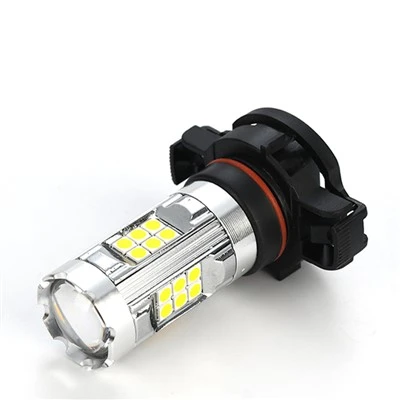
First, let’s get the basics straight: What makes LED exterior lights different from the junk most folks used to buy? Incandescents, for example, only last about 1,000 hours. Halogens? Maybe 2,000. Now, our standard LED exterior bulbs? We spec ’em for 50,000 hours minimum. Wait, that’s not a typo. Let’s put that in perspective. If your lights run 12 hours a day (super conservative for most exterior spaces), an incandescent burns out every 83 days. A halogen? Every 166 days. That means in 5 years, you’d go through 22 incandescents, 11 halogens, and just… 1 LED. No more climbing ladders every couple months to swap bulbs—especially if those lights are 20 feet up or mounted on a 10-story parking garage. That’s labor cost right there, which is way more expensive than the bulb itself for most people.
Let’s do actual math, because numbers don’t lie. Let’s pick a common use case: a small retail store with 10 exterior floodlights running 14 hours a day (that’s 5,110 hours a year, by the way). Let’s compare our commercial-grade LED bulb to a standard halogen. First, upfront cost: Our LED is $18 each. A halogen is $3 each. Upfront, halogens win—$30 vs $180. But wait, let’s go year 1. How many halogens do you need? Each lasts 2 years max, so in year 1, that’s 5 bulbs (10 lights ÷ 2 year lifespan). That’s $15 just for bulbs, plus labor. The average hourly rate for a commercial electrician or even a handyman to swap an exterior bulb is $75 an hour, and a single swap takes 15 minutes (that’s $18.75 per bulb swap). For 5 halogen swaps, that’s $93.75. Total year 1 cost for halogens: $30 (bulbs) + $93.75 (labor) = $123.75. Now, our LED: No swaps needed in year 1, so cost is just $180 upfront. Wait, that’s a big gap—year 1, halogens are cheaper? But hold on, keep going.
Year 2: Halogens need 5 more bulbs ($15) plus another $93.75 labor. Total year 2 halogens: $108.75. LEDs still no swaps, but wait—we need to count electricity. This is the part almost everyone misses. Halogens use way more energy. A 50W halogen is standard for this floodlight. Our equivalent LED is only 12W. Let’s use the average US commercial electricity rate of $0.15 per kWh. For halogens: 50W = 0.05kW × 5,110 hours = 255.5 kWh × $0.15 = $38.32 per year per light. 10 lights = $383.20 a year. For LEDs: 12W = 0.012kW × 5,110 hours = 61.32 kWh × $0.15 = $9.20 per year per light. 10 lights = $92 a year. Year 2 total: Halogens’ cumulative cost is $123.75 + $108.75 + $383.20 = $615.70. LEDs’ cumulative cost is $180 + $92 = $272. That’s a $343.70 difference in year 2 alone.
By year 5? Let’s wrap it up. Halogens: Each bulb lasts 2 years, so over 5 years, that’s 12.5 bulbs (10 lights × 5 years ÷ 2 year lifespan) = $37.50 in bulbs. Labor: 12 swaps × $18.75 = $225. Electricity: $383.20 × 5 = $1,916. Total 5-year halogen cost: $37.50 + $225 + $1,916 = $2,178.50. Our LEDs: Bulbs last 50,000 hours. At 5,110 hours a year, that’s about 9.8 years, so no swaps needed in 5 years. Electricity: $92 × 5 = $460. Total 5-year LED cost: $180 + $460 = $640. That’s a $1,538.50 savings over 5 years. Wait, that’s like, almost two grand in your pocket you don’t have to spend on swapping bulbs and power—just for 10 lights. Multiply that by 50 lights for a strip mall, 200 for a big box store, or a whole city’s street lights, and that adds up to millions.
But wait, not all LEDs are created equal. I can’t tell you how many people buy cheap Amazon LEDs that die in 6 months, still cost them way more than our quality ones. How do we separate the good from the garbage? First, check the lumen output vs wattage. A good LED gives you 80-100 lumens per watt—so our 12W LED gives ~1,000 lumens, same as the 50W halogen, no dimness. Cheap LEDs might only do 50 lumens per watt, so you need a bigger bulb, which uses more power anyway. Second, look at the IP rating. Exterior lights get rained on, snowed on, maybe hit by a stray ball. Our LED exterior bulbs have IP65 rating—meaning they’re dust-tight and can handle jets of water, no problem. Cheap indoor LEDs will have IP20, which means they’ll die after one rainstorm. Third, color temperature. For storefronts or parking lots, you want 5000K (cool white) or 4000K (neutral white)—that’s way easier on the eyes than 2700K warm white, which makes it hard to see at night. And avoid LEDs with no warranty—we give a 5-year warranty on all our exterior bulbs, because we know they’ll last that long.
Another thing: What about rebates? A lot of local governments and utility companies offer cash back for switching to LEDs. I’ve had customers get $2-$5 per bulb rebate, which knocks the upfront cost down even more. For that retail store we talked about, that’s $20-$50 off their initial $180, making the upfront gap even smaller. And some utilities even have time-of-use rates—if your lights run during peak hours (when electricity is more expensive), LEDs will save even more because they use so much less power.
Wait, but what if you’re not running lights 24/7? Let’s say you’re a residential property owner with 5 exterior lights that run 4 hours a day. Let’s do the same math. Halogen: 50W, 1,460 hours a year. Electricity: 50W × 1.46 = 73 kWh × $0.15 = $10.95 per light, $54.75 a year. Bulbs last 1 year, so 5 bulbs a year = $15. Labor: $18.75 per swap, 5 swaps a year = $93.75. Total annual halogen cost: $54.75 + $15 + $93.75 = $163.50. LED: 12W, electricity: $9.20 per light, $46 a year. Upfront bulb: $18. Total first year LED cost: $64. Second year, halogens are $163.50 again, LEDs are still $46. By year 3, you’ve saved $200. That’s even for small residential setups.
Now, common myths I hear all the time. Myth 1: LEDs are too expensive upfront. No, not when you calculate total cost. The upfront cost is higher, but you earn it back in 1-2 years. For that retail store, they made back the extra $150 upfront in like 10 months, because they were saving $300+ a year after that. Myth 2: LEDs don’t work in cold weather. Nope, our LEDs are designed for exterior use, from -40°F to 120°F. We’ve got customers in Alaska and Arizona who’ve been using our bulbs for years, no issues. Myth 3: LED light is too harsh. No, you can get warm white or neutral white—we have options for every space. Some customers even use 3000K for residential walkways, which is nice and soft, but still way more efficient than halogens.
One more thing: Durability. Exterior lights take a beating. Vibration from wind, temperature swings, even being bumped. Our LED bulbs use solid-state technology—no filament to break, no glass to shatter like incandescents. A lot of halogens are glass, so if a kid hits a light with a baseball, it breaks, and you have to swap it. Our LEDs have a plastic (UV-stabilized) casing, so they can take small impacts. That’s another cost you don’t have to deal with—replacing broken bulbs from accidents.
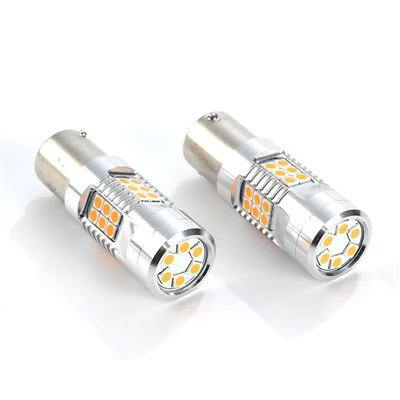
So what’s the takeaway? If you’re buying cheap bulbs every year, you’re wasting thousands of dollars over 5 years. Switching to quality LED exterior lights means you pay a bit more upfront, but you save on labor, bulbs, and electricity for decades. We’ve had customers tell us they’ve gone 7 years without swapping a single exterior bulb from us, and their power bills are cut in half. If you’re tired of climbing ladders, wasting money on frequent bulb swaps, or just want to lower your operational costs, let’s connect. We can help you figure out exactly how many bulbs you need, what wattage fits your space, and even help you apply for rebates in your area. Just reach out to chat through your needs.
LED Headlight Bulb References:
- U.S. Department of Energy. (2024). LED Lighting Facts: Benefits and Performance.
- International Association of Plumbing and Mechanical Officials. (2023). Exterior Lighting IP Rating Standards.
- Energy Star. (2024). Commercial LED Lighting Cost and Savings Analysis.
- National Electrical Contractors Association. (2022). Commercial Lighting Labor Cost Benchmarks.
- Environmental Protection Agency. (2023). Utility Incentives for Energy-Efficient Lighting.
Shine Bright Optoelectronic Co., Ltd.
As one of the most professional led exterior light bulbs manufacturers in China, we also accept customized orders. Please feel free to buy bulk advanced led exterior light bulbs in stock here from our factory. Welcome to contact us for quotation.
Address: 6th Floor, Buildings B & C, Baotang Industrial Zone, No. 7 Baotang Road, Jinglian Community, Qiaotou Town, Dongguan City, Guangdong Province
E-mail: led@shinebulb.com
WebSite: https://www.shinebulb.com/
