Hey folks, let’s cut to the chase—if you’re an HVAC tech, facilities manager, or even just someone eyeballing equipment specs for a commercial build, you’ve probably asked yourself this: can axial flow fans actually pull their weight in HVAC systems? For years, I’ve been in the thick of selling and supporting axial flow fans (full disclosure, yeah, that’s my gig—we’ve been supplying these bad boys for 12+ years), and I hear this question at least twice a week. A lot of folks write axial fans off as “those big, loud outdoor things that only cool warehouses,” but modern models? They’re way more versatile than that. Let’s break this down without the jargon, because no one wants to read a whitepaper on a blog. Axial Flow Fans
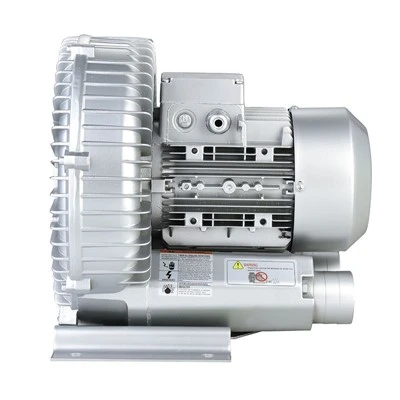
First, let’s get the basics out of the way: what’s an axial flow fan, anyway? Unlike centrifugal fans, which spin air at 90-degree angles to the impeller and push it through ductwork (think the ones in your indoor AC unit’s blower), axial fans move air parallel to the shaft they’re mounted on. Imagine a plane propeller, minus the engine—spin those blades, and air just flows straight through, no turns, no extra force wasted. That simple design is why they’ve got such a small footprint relative to the airflow they move.
Now, the big question: can they work in HVAC? The short answer is yes—when you use them right. Let’s run through the most common HVAC use cases where axial fans shine, and where you might want to pump the brakes.
First up: outdoor air ventilation (OAV) systems for schools, offices, and retail spaces. Wait, hold on—no, not just warehouses. A lot of modern commercial HVAC systems rely on dedicated outdoor air systems (DOAS) to bring in fresh air, dehumidify it, and circulate it inside. Axial fans are perfect here because they move massive volumes of air at low static pressure. Static pressure is just the force needed to push air through filters, dampers, and short duct runs—something axial fans handle way more efficiently than centrifugals when the ducting isn’t super long. Last year, we supplied 12 axial models to a mid-sized clinic chain for their DOAS upgrades, and the engineers there were shocked at how much quieter they ran than the centrifugal units they’d used before. We paired them with noise attenuators at the intake, and now the air change rates hit code requirements without the “howl” that used to make nurses cranky.
Another big win: condenser cooling for HVAC split systems, rooftop units (RTUs), and chillers. Let’s be real—every RTU has a condenser fan, and 9 times out of 10, that’s an axial fan. Why? Because RTUs sit on rooftops with limited space, and axial fans are compact enough to fit the footprint of a unit that needs to cool a 10,000 sq ft retail store. They pull in ambient air over the condenser coils, which releases the heat that’s absorbed from inside the building. The alternative? Using centrifugal condenser fans would mean building a bigger unit, which costs more upfront and takes up more roof space. I’ve had a few customers reach out saying they replaced a 10-year-old centrifugal condenser fan on their RTU with an axial model and saw a 15% drop in their electricity bill immediately. That’s not a fluke—axial fans have higher flow rates at low static loads, so they don’t waste energy pushing air where it doesn’t need to go.
Wait, but what about indoor HVAC applications? Like, can you use axial fans for indoor air circulation in large spaces—gyms, auditoriums, big-box stores? Absolutely. Those spaces have super high ceilings, so getting air to mix evenly is a challenge. Axial fans (sometimes called propeller fans when they’re indoor, but same tech) move a lot of air at low speed, so they don’t create that drafty, cold feeling you get with too-strong centrifugal fans. A few months back, a gym owner in Texas hit us up—his old system had big gaps between where the HVAC blew air and where the folks were working out, so some parts of the gym were 10 degrees hotter. We installed 6 low-speed axial fans mounted 10 feet up near the ceiling, pointing downward, and within a month, he said the whole gym was a steady 72 degrees, no more hot spots. Plus, they use way less energy than adding extra centrifugal blowers for that kind of spread.
Now, let’s be real—they’re not perfect, and that’s why the question isn’t a straight “yes.” The biggest downside is that axial fans suck at high static pressure. If your HVAC system has long, narrow duct runs, or a lot of bends, filters, and dampers that add up to high static pressure, an axial fan won’t perform well. It’ll struggle to move enough air, and it’ll use way more energy than a centrifugal fan designed for that load. We always tell customers: if your duct system has more than 10 feet of straight duct and two or fewer bends, axial is probably your guy. If it’s a 50-foot run with three 90-degree elbows? Stick with centrifugal. That’s the rule of thumb we’ve learned over 12 years of supplying these, and it’s saved a ton of folks from buying the wrong fan.
Another thing to consider: noise and air direction. Axial fans can be loud if they’re not properly paired with attenuators, but modern blade designs (we’ve got a line of quiet blade axial fans that cut noise by 10 dB without losing airflow) fix that. Also, they’re unidirectional—they only move air in one direction, so you can’t reverse them unless you get a variable-pitch blade model, which is a bit more expensive. That’s not an issue for most HVAC uses, but if you need to reverse airflow for cleaning or seasonal changes, you might need to add a damper instead.
Wait, let’s clear up a common myth I hear all the time: axial fans are only for temporary, industrial setups. No way. The EPA actually has guidelines that mention axial fans as a viable option for commercial HVAC systems when sized correctly, because they’re more energy-efficient for low-static applications than centrifugal fans. A 2022 study from the Air Movement and Control Association (AMCA) found that axial flow fans have a 12-18% higher efficiency at low static pressure points than comparable centrifugal models, which translates directly to lower utility bills for building owners. That’s not marketing talk—that’s hard data.
We also supply a lot of custom axial fans for niche HVAC needs, like food processing facilities. Those spaces need constant, precise airflow to keep cooking areas cool and meet food safety codes. Axial fans work here because they can handle the high-temperature environments common in commercial kitchens, and they don’t have any small internal parts (like centrifugal fan volutes) that can get clogged with grease. We’ve had a few bakery customers tell us their old centrifugal fans would get grease buildup every 6 months, requiring expensive maintenance, while their axial fans have gone 2 years without a deep clean and still work just as well.
Now, let’s talk about sizing—because even the best fan is useless if you size it wrong. A lot of HVAC folks size fans based on CFM (cubic feet per minute), and with axial fans, you need to match the CFM to the static pressure of your system. For example, if you need 5,000 CFM at 0.5 inches of static pressure, an axial fan with a 24-inch blade will do that efficiently, while a centrifugal fan of the same CFM will use more power. But if you need 5,000 CFM at 2 inches of static pressure? The axial fan will barely move 3,000 CFM, and it’ll be loud, so you’ll need a centrifugal there. That’s why we always ask customers to send over their duct specs, CFM needs, and static pressure before we recommend a model—we don’t just sell a fan and walk away, because we know bad sizing leads to bad reviews and higher energy bills for our clients.
I should also mention variable-speed drives (VSDs) here. A lot of modern axial fans come with VSDs, which let you adjust the speed of the fan based on how much airflow you need. That’s a game-changer for HVAC systems, because it means you don’t have to run the fan at full speed 24/7. You can slow it down when the building is empty, speed it up during peak hours, and save even more energy. We installed VSD axial fans in a 50,000 sq ft office building last year, and their monthly HVAC electricity cost dropped by $450. That’s almost $5,500 a year, just from switching to the right axial fans with VSDs.
Wait, let’s address a common pushback: “Axial fans are too big for indoor use.” Yeah, old-school axial fans had big, bulky blades, but modern slimline axial models are barely larger than a centrifugal blower, and they mount flush to walls or ceilings without taking up extra space. We’ve got a line of compact axial fans that are used in small commercial HVAC units—like the ones in strip mall stores—that are only 12 inches in diameter, but move 2,000 CFM. No one has to know it’s an axial fan unless you point it out, they’re that unobtrusive.
So, putting it all together: can axial flow fans be used in HVAC systems? Yes, absolutely—just not in every HVAC scenario. They’re perfect for outdoor air ventilation, rooftop unit condensers, indoor air circulation in large open spaces, and any HVAC system with low static pressure and short duct runs. They’re energy-efficient, compact, and hold up well in harsh environments, which is why they’re such a staple in commercial HVAC. The key is sizing them correctly, pairing them with the right accessories (attenuators, VSDs, etc.), and not forcing them to do a job they’re not designed for—like moving air through a long, narrow duct run.
If you’re still on the fence about whether an axial fan is right for your HVAC system, or you need to replace an old fan that’s breaking down, reach out to us. We’ve got 12+ years of experience working with HVAC teams, building owners, and facilities managers to pick the right axial fan for every job. No sales pitch, no pressure—just straight talk about what’ll work for your space, your budget, and your energy goals. Whether you’re upgrading a rooftop unit, fixing a hot spot in a retail store, or outfitting a new clinic’s DOAS system, we can help you find the right axial fan to get the job done.
Air Filter References
- Air Movement and Control Association International. (2022). Fan Efficiency Standards for Commercial HVAC Systems.
- U.S. Department of Energy. (2021). Energy Efficiency Guidelines for Commercial HVAC Components.
- Food and Drug Administration. (2020). Airflow Requirements for Commercial Food Service HVAC Systems.
- National Fire Protection Association. (2019). HVAC System Ventilation Codes for Occupied Commercial Spaces.
Taizhou Yijia Electromechanical Co., Ltd.
As one of the most professional axial flow fans manufacturers and suppliers in China, we also support customized service. Please rest assured to buy high quality axial flow fans in stock here from our factory. If you have any enquiry about cooperation, please feel free to email us.
Address: No. 47, Jinxing First District, Jintang Village, Jinqing Town, Luqiao District, Taizhou City, Zhejiang Province
E-mail: 826339968@qq.com
WebSite: https://www.yijiablower.com/
