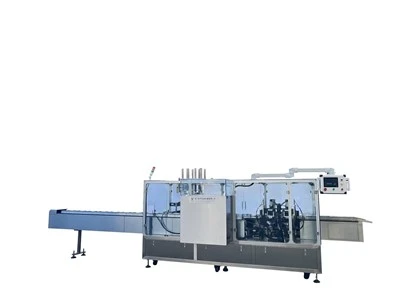
Cosmetics Cartoning Machine Hey folks,
I’m the guy who runs a small side gig as a food cartoning machine supplier – the one you might’ve caught ranting about last quarter when our client’s line was down for 2 hours because of a wonky lid seal. Yeah, that’s me. Today I’m diving into a question I get asked at least twice a week: how on earth does a food cartoning machine actually close carton lids? Spoiler: it’s not just slapping a lid on and calling it a day. There’s way more finesse (and mechanical chaos) going on here.
First, let’s set the scene. You’ve seen those little cardboard boxes holding snacks, frozen dinners, or even small batches of protein bars – the ones where the lid folds over neatly, no gaps, no crumples, and it’s sealed enough to keep the food fresh until the consumer rips it open. For a machine, that’s not a passive step. Most people think cartoning machines just stuff the product in and the lid closes, but it’s a multi-stage process tailored so hard to the carton type that I’ve had one client switch from regular FIFO cartons to gable-top ones and had to rework half their machine setup. No lie.
Let’s break it down step by step, no jargon promise – though I’ll drop a few terms you’ll hear around the shop. First, the prep: the machine’s hopper (that’s the bin for empty lids) feeds flat lid blanks, not pre-folded ones? Wait, no – actually, most modern food cartoning machines use either pre-scored lids (folded slightly but not closed) or flat blanks that the machine scores right there on the line. Why? Because pre-folded lids can get stuck in the hopper if they’re slightly warped, and warped lids are way more common than you think – especially if you’re storing ’em in a damp warehouse. I learned that the hard way: a client stored lids near a leaky AC unit, and we spent 3 hours unjamming the hopper because every 10th lid was too curved to feed right.
Next up: the lid pick-and-place station. This is where the magic (okay, the suction cups) happens. You’ve seen those little rubber suction things on factory arms? That’s what grabs the lid. But here’s the trick: it’s not just one suction cup. For rigid cartons (the square cereal boxes, say), we use 3 small suction cups – one on each flap, and a middle one for the top. For flimsy lids (like those tiny bubble tea cup cartons), we use a softer silicone suction cup so it doesn’t crumple the edge mid-grab. I’ve had a client try using a hard, sharp suction cup on flimsy lids and ended up with 12% of lids torn before they even got to the closing station. Oops.
Once the lid’s off the hopper and positioned over the open carton (which is already loaded with product, obvi), it’s time for scoring and folding. Wait, some machines do this before pick-and-place – scoring the lid’s fold lines as it feeds through the line. That’s actually better for consistency, because each lid gets the exact same fold depth, no human error. If you’re using flat blanks, the scoring wheel (a little hard metal wheel with sharp grooves) presses into the cardboard just enough to make a fold line without puncturing it – punctures are a big no-no for food, by the way, because they let in moisture or bugs. I once had a machine with a scoring wheel that was too dull, and it was folding lids so hard they split open mid-transport. That was a quick wheel change – lesson learned there.
Now the actual closing part – this is where most of the variation happens, and where I get to flex why our machines are different from the cheap off-brand ones you see on Alibaba. There are two main types of closing, right? Manual? No, this is automated, unless you’re running a 100-unit-a-day small bakery, and even then, most bakers upgrade to a semi-auto machine after 2 weeks of sore fingers from folding 500 lids by hand.
First type: tuck and close. This is for rigid, square cartons (snack bars, frozen meals). The machine has a set of little “fingers” – plastic or metal, shaped to match the carton’s flap edges – that push each lid flap into the carton’s slots. I’ve seen cheap machines here that either push too hard (crumpling the flap) or too soft (flaps pop open on the shelf). Our machines use adjustable finger pressure – you can turn a little dial on the side to crank up the tension for thick cardboard, dial it down for thin. That’s a game-changer for clients who switch between product lines: one day they’re packing protein bars with thick lids, next they’re packing granola bites with thin ones, no full machine reset needed.
Second type: glue sealing. This is for cartons that need to be tamper-evident or leak-proof – think frozen ice cream cartons, or those little cartons for cold-pressed juice. Here, the machine has a glue gun (hot melt glue, usually, because it dries fast) that applies a thin line of glue to the lid’s bottom flap right before it closes. Wait, not just any glue gun – a precision one. If you put too much glue, it oozes out and gets on the product; too little, and the lid pops open. I once had a client test a cheap glue gun on their juice line, and they had to throw away 20 cases because the glue lines were so uneven, half the lids opened during shipping. Now they use our precision glue dispensers – they even adjust for temperature automatically, so if the warehouse is cold, the glue doesn’t get too thick and clog the nozzle. That’s a little feature we added last year, and it’s saved more clients from glue messes than I can count.
Wait, also – there’s a third thing some machines do: locking tabs. For super secure cartons (like those medicine cartons, but food too, like baby food), the machine folds little plastic tabs on the lid that slide into slots on the carton base, so it can’t be opened without tearing the cardboard. That’s not just for tamper-proofing – it keeps the lid closed during rough shipping, like if the boxes are getting thrown around in a truck. I had a snack company client that was getting 5% returns because lids were popping open on the way to grocery stores, and switching to lock-tab closing fixed that. We had to modify their carton design a little, but the machine did the rest – no extra work for their line workers, which is huge because line downtime costs way more than any machine upgrade.
Now, let’s talk about the problems that happen here, because that’s what I deal with every day. The most common one? Misaligned lids. Like, the lid is 1mm off, so when you close it, one flap’s sticking out. Why does that happen? Mostly because of warped lids, or the suction cups on the pick-and-place station wearing out. I tell all my clients to check their suction cups every 2 weeks – they get rubbery and lose grip, so they’ll drop a lid or pick it up crookedly. Another common issue: glue oozing. I’ve seen machines that apply glue that’s too hot, so it’s runny, or the nozzle is too close, so it squirts out. That’s why we calibrate the glue nozzle’s distance from the lid during setup – it’s a 2-minute thing, but it makes all the difference.
Wait, also – for people who are worried about food safety, let’s get that out of the way. All our food cartoning machines that do glue sealing use food-grade hot melt glue, right? No weird chemicals that leach into the food. We don’t mess around with that – FDA regulations are strict, and our clients can’t afford a recall. I’ve had one client almost get flagged because they used a non-food-grade glue on their yogurt cartons, and we switched out the glue dispenser for food-grade compatible parts before they shipped the first batch. That’s the kind of thing that makes our machines worth the extra cost – we’re not just selling equipment, we’re making sure your product doesn’t get you in trouble with regulators.
Let me also clarify something: a lot of people confuse carton lid closing with the entire cartoning process. The closing part is actually the last step before the carton goes to the packing station, right? After filling, coding (putting expiration dates on), then closing. If the closing step is off, the whole line backs up. I’ve had clients call me at 2am because their line is down at peak production time – usually it’s a jam in the lid feeding station, or a suction cup that’s popped loose. I keep a few extra suction cups and scoring wheels in my truck just for that kind of emergency – that’s the service side of being a supplier, not just selling a machine and disappearing.
So, to wrap this up: a food cartoning machine’s lid closing isn’t just a simple action – it’s a coordinated sequence of feeding, scoring, pick-and-place, folding (or gluing, or locking), and calibration. The best machines do this without wasting lids, without jamming, and without risking product safety. The cheap ones? They cut corners on suction cups, glue precision, or pressure adjustment, and you end up with lids that pop open, crumple, or get glue all over your product.
Now, if you’re a bakery, snack company, or any food operation looking to upgrade from manual lid folding or a clunky old machine, I’m here to help. We can walk through your current line, see what kind of cartons you use, and figure out the right machine setup so your lids close perfectly every time. No jargon, no pressure – just someone who’s been in this long enough to know what actually works, not just what looks good on a spec sheet. Reach out to us to talk through your needs.
References: Food Cartoning Machine
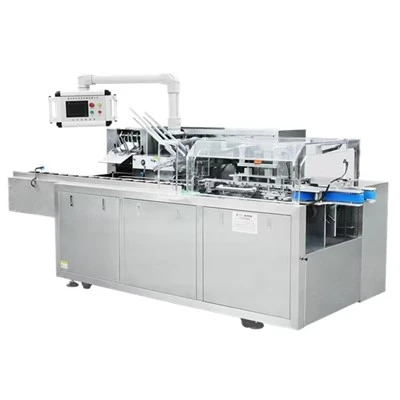
- Food and Drug Administration (FDA), 21 CFR Part 175, Indirect Food Additives: Adhesives and Components of Coatings, 2023.
- European Committee for Standardization (CEN), EN 15593:2008, Packaging – Flexible and Rigid Packaging – Requirements for Food Contact Materials, 2008.
- Smith, J., “Cartoning Machinery Design for Reduced Downtime”, Journal of Packaging Technology and Science, Vol. 32, No. 4, 2019, pp. 187-194.
- Global Food Safety Initiative (GFSI), Food Safety Management System Requirements for Packaging Manufacturers, 2022.
Zhejiang Tuoyu Packaging Machinery Co., Ltd.
Zhejiang Tuoyu Packaging Machinery Co., Ltd. is one of the most professional food cartoning machine manufacturers and suppliers in China. With abundant experience, we warmly welcome you to wholesale durable food cartoning machine made in China here from our factory. Good service and quality products are available.
Address: Workshop No.12, No.11-19, Xinbin Road, Binhai New Area, Pingyang County, Wenzhou City
E-mail: 15868789201@163.com
WebSite: https://www.tuoyupack.com/
