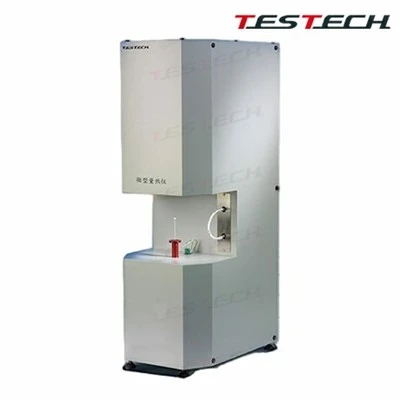
If you’ve ever watched a lithium-ion battery go up in flames—whether in a lab setting or a real-world incident—you know there’s no room for guesswork when it comes to testing flammability. As a supplier of New Energy Battery Flammability Testers, I’ve spent years walking operators through the fine line between getting accurate, repeatable data and putting yourself or your facility at unnecessary risk. Too many teams treat this testing as “just another lab task,” but the reality is that operating one of these units safely and effectively demands specific training that most standard lab certification programs don’t cover. Let me break down exactly what that training looks like, from hands-on safety drills to nuanced understanding of battery chemistry that makes or breaks every test result. New Energy Battery Flammability Tester
First, you can’t skip the foundational chemistry training—and no, I don’t mean a high school-level overview of lithium-ion cells. Operators need to know exactly what’s happening when a battery reaches thermal runaway, the point where its internal temperature spikes uncontrollably and releases flammable gases, then ignites. I’ve seen new operators mistake a small, minor off-gassing event for a full thermal runaway—and that’s a dangerous mistake. Training needs to cover the difference between anode and cathode chemistries (NMC, LFP, NCA, etc.), because each reacts differently when heated. For example, LFP batteries have a higher thermal runaway temperature, but when they do ignite, the flame is far more sustained than NCA cells. If an operator doesn’t know that, they’ll set the tester’s temperature threshold too low for LFP, leading to false “no ignition” results that are useless for regulatory compliance. We’ve had clients come to us after running tests on LFP cells with a generic tester they bought without this context, only to find their data was rejected by UN 38.3 (the global standard for transporting lithium batteries) because they misclassified flammability risk.
Next up: comprehensive safety training specific to flammable test environments. This isn’t general lab safety we’re talking about—this is training focused on the unique hazards of working with small-scale, controlled thermal events that intentionally produce flammable gases and open flames. Operators must learn the ins and outs of the tester’s built-in safety systems: the fire suppression suppression system, emergency shutoff valves, gas evacuation ports, and pressure relief mechanisms. I always emphasize the importance of hands-on practice, not just watching a video. In our on-site training sessions for new clients, we do simulated “incidents” where we trigger a minor thermal event and walk operators through the exact steps to activate suppression, isolate the battery, and evacuate the test chamber. I’ve seen operators panic and fumble for the shutoff switch because they never actually practiced it—once, a new operator at a automotive battery lab forgot that the gas evacuation port is linked to the lab’s ventilation system, and a small gas buildup almost triggered a false alarm. That’s avoidable with proper, scenario-based training.
One of the most underrated parts of operator training is calibration and test integrity—because even the safest tester is useless if it gives bad data. Flammability testers rely on precise temperature sensors, gas concentration detectors, and ignition timing controls. Operators need to know how to calibrate each component, how to spot drift that can skew results, and how to document every step to meet ISO 17025 standards (the global benchmark for testing lab accreditation). For example, a technician who doesn’t calibrate their tester’s surface temperature sensor might record a battery’s surface temp as 150°C when it’s actually 180°C, leading them to incorrectly label a battery as “non-flammable” when it’s not. I recommend that all operators complete at least 20 supervised calibration runs before working independently, and that they keep a log of every calibration that’s auditable for regulatory bodies.
Regulatory compliance training is non-negotiable, too. Different regions have different rules for battery flammability testing, and a tester calibrated for EU standards won’t work the same for North American or Asian markets. Operators need to understand UN 38.3, SAND 312 (a US standard for battery safety testing), IEC 62660, and any regional government-specific guidelines. I always advise operators to stay up to date on updates—for example, the EU’s recent changes to battery waste regulations add new flammability testing requirements for end-of-life batteries, so training can’t be a one-time course. We offer annual refreshers for clients, because I’ve seen teams fall behind on new rules and end up with test data that’s rejected for shipping or sale.
Hands-on, live-test training can’t be replaced. Classroom learning and videos only go so far—operators need to actually run tests on real batteries, observe different thermal runaway events, and learn how to adjust the tester’s settings in real time. When we train operators at our facility, we set up controlled tests with different battery chemistries, sizes, and states of charge (full, partial, end-of-life) so they can see firsthand how each variable affects flammability. I always make sure to walk through the mistakes new operators make here—like running a test on a fully charged battery with a too-quick ignition timing, which can cause an unplanned, dangerous flame that damages the tester. We also teach them how to analyze test data: what a normal gas release looks like, what a red flag for thermal runaway is, and how to report results accurately.
Finally, role-specific training matters. A tester operator at a lithium-ion cell manufacturer has different needs than someone testing EV battery packs, or someone working with small consumer batteries. For example, a manufacturer of small power tool batteries only needs to learn about testing 18650 or 21700 cells, while an EV pack tester needs to understand testing large-format pouch cells and the integrated battery management system (BMS) that controls thermal events. At our company, we tailor training to each client’s use case—we don’t do a one-size-fits-all course, because that leads to gaps in knowledge. I once had a client who bought a tester for EV packs but sent a tech trained only on small cells, and that tech accidentally disabled the BMS safety feature during a test, resulting in a small fire. That’s the kind of avoidable mistake that comes from generic training.
If you’re an operator or a lab manager reading this, I hope you’re not skimping on training. A New Energy Battery Flammability Tester is a powerful tool, but only if it’s handled by someone who knows what they’re doing. Poor training doesn’t just lead to bad test data—it leads to safety incidents, regulatory fines, and costly delays in bringing new batteries to market.
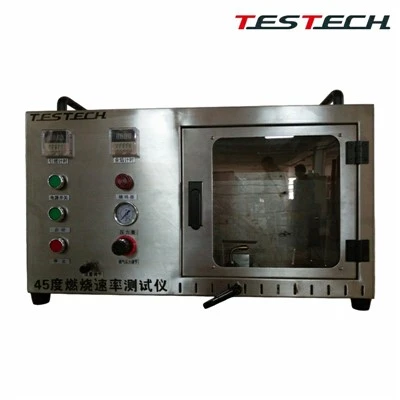
If your team needs to get up to speed, or if you’re ready to invest in a tester and professional operator training, don’t hesitate to reach out to us to schedule a consultation tailored to your facility’s needs. We can walk you through every part of training, from chemistry basics to live test drills, so your team is prepared to run tests safely and accurately every single time.
Fabric Flammability Tester References:
- United Nations. (2023). Manual of Tests and Criteria, Part III, Section 38.3: Test for Lithium Ion Batteries.
- International Organization for Standardization. (2022). ISO 17025: General Requirements for the Competence of Testing and Calibration Laboratories.
- U.S. Department of Energy. (2021). SAND312: Flammability Testing Protocols for Lithium-Ion Battery Systems.
- International Electrotechnical Commission. (2020). IEC 62660: Secondary Lithium-Ion Cells for the Propulsion of Electric Road Vehicles.
TESTech Instrument (Suzhou) Technologies
TESTech Instrument (Suzhou) Technologies is one of the most reliable new energy battery flammability tester manufacturers and suppliers in China. If you’re going to wholesale durable new energy battery flammability tester, welcome to get quotation from our factory. For price consultation, contact us.
Address: 8/F, R&D and Production Workshop No. 5, Jiangsu Guoqian Technology Innovation Industrial Park, 168 Lüliangshan Road, Huqiu District, Suzhou, Jiangsu Province, China
E-mail: sales@testech.com.cn
WebSite: https://www.testechfiretest.com/
