If you’ve ever stood in the kitchen aisle or scroll through your favorite eco-friendly home goods site, debating between a stainless steel food jar and a glass one, you’re not alone. As someone who’s spent the last seven years working as a stainless steel food jar supplier—testing materials, talking to hundreds of home cooks, and troubleshooting everything from soup spills to berry spoilage—I’ve learned that the choice isn’t just about what looks good on your shelf. It’s about how these two vessels perform for your specific needs, the long-term cost, and their impact on both your daily routine and the planet. Let’s break this down without the sales jargon, no fancy pitches, just the real stuff I’ve picked up working with these jars day in and day out. Stainless Steel Food Jar

Let’s start with the basics: both stainless steel and glass are non-porous, right? That means they don’t absorb food odors, stains, or bacteria the way plastic does. But that’s where the similarities end. The first big test for most people is temperature retention, especially if you’re packing hot soup for lunch or cold smoothies for a morning hike. A few months back, we had a customer reach out saying her glass jar of chili was still cold when she ate it for dinner, three hours after she left home at 7 a.m. That’s a common complaint with glass: it’s a thermal conductor, not an insulator. If you leave hot food in a glass jar at room temp, it will drop 15 to 20 degrees Fahrenheit in the first hour, and by the second hour, it’s only lukewarm. Stainless steel, on the other hand, is not a great conductor—our double-walled vacuum-insulated jars keep hot food at 140 degrees or higher for up to six hours, and cold food below 40 degrees for up to 12. I’ve tested this myself: last winter, I packed a stainless steel jar of beef stew at 6:30 a.m., left it in my backpack all day at a construction site, and when I opened it at 1 p.m., it was still steaming hot enough to burn my tongue. A coworker with a glass jar of the same stew had to microwave it for three minutes before eating. That kind of performance makes a huge difference for anyone who doesn’t have easy access to a microwave or fridge during the day.
Next up, durability. This is the part where I’ve seen way too many people pick glass because it looks sleek, only to drop it and watch it shatter all over their kitchen floor. Let’s be honest: glass is fragile. Even tempered glass, which is the kind used in food storage, breaks when it hits a hard surface like concrete, tile, or a wooden countertop. I remember a customer who brought her glass jar to a picnic, set it on the hood of her car to grab a napkin, and it rolled off onto the asphalt. She spent 20 minutes picking up tiny shards of pear and glass out of the grass, and ended up having to buy a whole new set. Stainless steel is different—it’s impact-resistant, scratch-resistant, and doesn’t shatter. I’ve had people tell me they leave their stainless steel jar in the bottom of a gym bag, toss it around with gym clothes, and it still looks good as new. That’s not to say stainless steel is indestructible—you can scratch it if you use a metal spoon to scrape hard food, but scratches are purely cosmetic. Glass scratches too, but once it’s scratched, those tiny lines can trap bacteria over time, which is a hygiene issue. For anyone who’s clumsy, travels a lot, or has kids packing their own lunches, stainless steel is a no-brainer for durability.
Hygiene is another area that gets talked about a lot, and it’s where both materials have pros and cons. Let’s start with glass: because it’s non-porous, it doesn’t hold onto odors or stains if you wash it right away. But if you leave something like tomato sauce or curry in a glass jar for a few days, those stains can set in, and sometimes even a cycle in the dishwasher won’t get them out. I’ve seen people soak glass jars in baking soda and water for hours to get rid of curry stains, and even then, faint lines might stay. Stainless steel is non-porous too, but it’s actually more resistant to stains and odors in the long run. Our jars are made from food-grade 18/8 stainless steel, which is the safest type for food contact, and because it’s a smooth, durable surface, stains don’t set as easily. If you do get a little tomato residue, a quick rinse with soap and water will take it right off. That said, there’s a common misconception that stainless steel leaches chemicals into food. I’ve had so many customers ask me that over the years, and the short answer is: no, not if it’s food-grade. The cheap stainless steel used in some random kitchen tools might have low-quality alloys that can leach metals if it’s scratched, but 18/8 (also called 304) is tested and approved by the FDA for all food use. Glass, while safe, is made from silica, which is inert, so it never leaches anything—but the risk is more about breakage than chemical exposure for most users.
Weight and portability go hand in hand with durability, and this is where stainless steel beats glass for most on-the-go people. A 16-ounce stainless steel jar weighs about 4 ounces, while a same-sized glass jar weighs around 8 ounces—half as much. That might not sound like a big deal, but if you’re packing three or four jars for a week of lunches, that’s 12 extra ounces of weight you’re carrying around every day. For hikers, commuters, or students who stuff their bags full, that extra weight adds up. Also, stainless steel jars don’t slip out of your hand as easily as glass does when they’re wet. I’ve had countless college students tell me they dropped their glass jar in the cafeteria line because it was wet with condensation, but their stainless steel one stays in their hand even when it’s drippy. Condensation is another point: glass jars get really sweaty when they have cold food inside, which can make wet spots on backpacks or tables. Stainless steel, because it’s not a conductor, has way less condensation—our insulated jars sometimes don’t have any condensation at all, even when packed with ice for a whole morning. That’s a small thing, but it’s one of the comments I hear most from regular users: no more wet backpacks, no more wiping down the table before eating.
Cleaning ease, well, that’s a mixed bag. Glass is super easy to wash by hand—you can see every spot, so it’s hard to miss a crumb or stain. It’s also dishwasher safe, though some glass manufacturers recommend hand washing to prevent thermal shock (like putting a hot glass jar into cold water, which can make it crack). Stainless steel is also dishwasher safe, but we always recommend putting it on the top rack, because the heating element on the bottom of some dishwashers can warp the lids or affect the insulation over time. One thing glass is terrible for is tight, narrow jars—if you have a glass jar with a 2-inch opening, it’s hard to get a sponge or a bottle brush to reach the bottom to clean out residue. A lot of people end up leaving that old oatmeal or yogurt at the bottom because they can’t scrub it. Most stainless steel food jars have wide mouth openings, though, so a standard bottle brush fits easily, and you can even fit your hand in some of the larger ones to scrub. That’s a huge win for anyone who hates food going to waste because they can’t clean their jar properly.
Now, let’s talk about the long-term cost and sustainability, because that’s what most people are really thinking about when they choose a reusable container over plastic. On the front end, glass jars are usually cheaper—you can get a 16-ounce glass jar for $5 to $8, while a stainless steel jar of the same size is $10 to $15. But here’s the thing: glass has a lifespan of about 1 to 2 years if you use it every day. Drop it once, and it’s done. Stainless steel, if you take care of it, can last 10 years or more. I’ve had customers send photos of their stainless steel jars that are 5, 6, even 7 years old, still working perfectly. Do the math: a $10 stainless steel jar over 10 years is $1 a year, while a $6 glass jar that needs replacing every 1.5 years is $4 a year. That’s a big difference over time. For sustainability, both are infinitely recyclable, but glass can only be recycled a few times before the quality drops, and it’s heavier to ship, which adds to its carbon footprint. Stainless steel is 100% recyclable indefinitely, and its lightweight means lower fuel use during shipping. Also, because stainless steel lasts so much longer, you’re throwing away way fewer containers than you would with glass. I’ve had customers tell me they’ve thrown away 3 or 4 glass jars in the last 5 years, but their stainless steel one is still going strong—no waste, no extra cost.
But wait, I don’t want to make it sound like glass has no place. Glass is great for things where temperature retention doesn’t matter, like storing dry goods (flour, sugar, rice) in the pantry, or for anyone who just prefers the look of clear glass on their counter. It’s also non-reactive to highly acidic foods, like lemon juice or vinegar, in a way that some people feel more comfortable with—though again, food-grade stainless steel is just as safe for acidic foods, I’ve seen customers pack tomato sauce, citrus, even pickles in our stainless steel jars for months with no issues. Glass is also freezer-safe for most models, which is good for storing frozen soups or berries. Stainless steel is freezer safe too, though you want to leave a little headspace because the metal can expand if you fill it all the way to the top.
The biggest mistake I see people make is choosing a jar based on price or looks alone, without thinking about how they’re actually going to use it. If you’re packing hot soup for work, commuting every day, and don’t have a microwave, stainless steel is worth the extra upfront cost. If you’re storing dry pasta in your pantry and just want something pretty to look at, glass is fine. If you have small kids who might drop their jar or take it to school where it gets tossed around, stainless steel is the practical choice.
As a stainless steel food jar supplier, I’ll be honest: we’re biased toward stainless steel, but not blindly. I’ve seen glass work for people, and I’ve seen it fail for others. The key is matching the jar to your lifestyle, not the other way around. We’ve spent years testing our jars to make sure they hold up to daily use, that they’re leak-proof (something else I don’t hear enough about—most glass jars aren’t designed to be leak-proof for carrying in a bag, but our stainless steel lids have silicone seals that prevent spills), and that they’re safe for all kinds of food. At the end of the day, the best jar is the one you’ll actually use. If you’re tired of microwaving your lunch, tired of spilling soup all over your backpack, tired of replacing jars every few months, it might be time to give stainless steel a try.
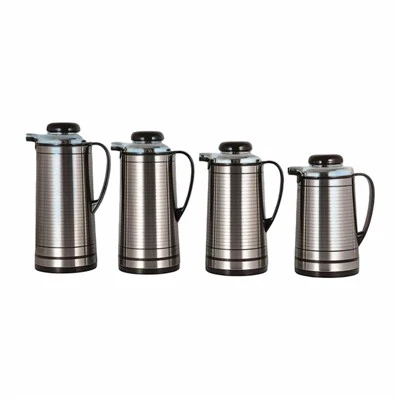
If you’re in the market for a durable, long-lasting food jar that works for your on-the-go routine, we’d be happy to walk you through our different models, answer any questions about performance or care, or even talk about bulk orders for schools, offices, or retail. Just reach out to our team to chat through what you need. There’s no pressure, no sales pitch—just real advice from people who use these jars every day, same as you.
Coffee Carafe References:
- U.S. Food and Drug Administration. (2023). Food Contact Materials: Stainless Steel. Retrieved from FDA.gov
- National Center for Home Food Preservation. (2022). Reusable Food Container Safety. Retrieved from uga.edu/nchfp
- Sustainable Packaging Coalition. (2021). Life Cycle Comparison of Reusable Food Storage Containers. Retrieved from sustainablepackaging.org
- International Organization for Standardization. (2020). ISO 4537: Food Grades of Stainless Steel for Food Contact Applications. Retrieved from iso.org
- Environmental Protection Agency. (2022). Reducing Single-Use Plastic: Reusable Container Benefits. Retrieved from epa.gov
Kairun International Co., Ltd.
As one of the most professional stainless steel food jar suppliers in China, we’re featured by quality products and good service. Please rest assured to wholesale customized stainless steel food jar made in China here from our factory. Welcome to contact us for more cheap products.
Address: NO.60 JIAZHAI,NANSHI DISTRICT,DONGYANG CITY,ZHEJIANG PROVINCE, CHINA
E-mail: lanzhou301@126.com
WebSite: https://www.kairunhouseware.com/
