When I first started working as a Russian pool table supplier back in 2012, I assumed that anyone familiar with standard pool games would look at our tables and see just a variation—another way to play with balls and cues. What I’ve learned over the years, though, is that Russian pool isn’t just a variation. It’s a distinct game with different rules, table specs, and even a cultural context that sets it miles apart from the eight-ball or nine-ball most of us grew up with. Every time a new customer reaches out asking how our Russian pool tables differ from standard ones, I don’t just list off specs. I break it down the way I learned it: through years of setting up tables for local clubs, watching seasoned players explain the nuances, and fixing issues that only come up with Russian pool play. Let’s walk through what makes these tables and games unique, because if you’re thinking about bringing Russian pool to your space, knowing the difference matters. Russian Pool Table

First, let’s talk about the table itself. This is where the most obvious variation starts. Standard pool tables—whether they’re 7-foot bar tables, 8-foot home tables, or 9-foot tournament tables—have consistent dimensions that most people know. A standard 8-foot table, for example, is 88 inches long and 44 inches wide, with a playing surface that’s roughly 1 inch thick slate. Russian pool tables? Their playing surface is not slate at all. Wait, hold on—don’t get me wrong, high-quality Russian pool tables do use slate, but it’s a specific type. We use 1.5-inch thick slate, not the standard 1-inch. Why? Because Russian pool balls are heavier. A standard pool ball weighs between 5.5 and 6 ounces. A Russian pool ball? It’s 7.5 ounces. That extra weight changes everything. The thicker slate doesn’t warp as easily under the weight of those heavier balls, and it provides a more stable surface for the faster, harder shots Russian players use.
Then there’s the size of the table itself. Russian pool tables are bigger than most standard tables, especially when you compare them to the bar-sized 7-foot models. A standard Russian pool table is 12 feet long and 6 feet wide. That’s a full 30 inches longer and 16 inches wider than a standard 8-foot pool table. I remember the first time a customer tried to fit a Russian table into a small game room—they had measured for an 8-foot table, and the 12-foot length barely fit, leaving no room for cues to swing. That’s a key point: you can’t just swap a standard table for a Russian one in the same space. The extra length isn’t just for show, either. Russian pool is played with 16 balls, same as standard eight-ball, but the playing area is larger, so the pockets have to be adjusted to match.
Speaking of pockets—this is where things get really different. Standard pool pockets have a fixed size, usually around 4.5 inches wide at the opening for a 2.25-inch ball. Russian pool balls are slightly bigger too, at 2.375 inches in diameter, so pockets have to be wider to fit them. But it’s not just the width. Standard pool pockets have a deep shelf and angled rails that guide the ball down into the pocket opening. Russian pool pockets are shallower, and their rails are steeper. Why? Because Russian pool is a much faster game. A ball rolling into a shallow pocket doesn’t get stuck, and the steeper rails mean that even fast shots that skim the pocket edge will drop in. I’ve seen standard pool balls bounce off a standard pocket if you hit them too hard, but Russian balls, with their extra weight and the table’s steeper pockets, go in consistently even when you hit them with force. That’s a big difference in play style too—standard pool rewards soft, precise shots, while Russian pool lets you play with more power without fear of missing a pocket.
Now, beyond the table’s physical specs, the game rules are a whole different story. Let’s start with the break. In standard eight-ball, you break from the foot of the table, and you aim to hit the racked balls to split them. In Russian pool, the break is done from the center of the head string, and the rack is different too. The 16 balls are racked in a diamond shape, not a triangle. That small change in rack shape changes how the balls scatter, which changes every shot after the break. Russian pool also doesn’t use the standard “solids and stripes” setup. Each ball has a unique number, but you don’t have to call your shots the way you do in standard eight-ball. Wait, no—actually, you do call shots in Russian pool, but the penalty for missing is different. If you miss a shot in standard eight-ball, the next player gets ball in hand. In Russian pool, if you miss, the next player only gets ball in hand if your shot was a “forced” one—meaning you had to hit a specific ball first to avoid a foul. If you just missed a regular shot, the next player has to play the ball where it lies. That changes the strategy entirely. You can play more aggressively, because missing a shot doesn’t give your opponent as big an advantage.
Another big rule difference: the “push shot.” In standard pool, pushing the ball (swiping the cue under the ball to lift it slightly) is almost always a foul. In Russian pool, push shots are allowed in certain situations, as long as the tip of the cue stays in contact with the ball long enough to push it, not lift it. This lets players make shots that would be impossible in standard pool—like hitting a ball that’s partially blocked by another, without risking a foul. I’ve watched seasoned Russian players use push shots to sink a ball that was sitting between two others, a move that would get a standard player a penalty immediately. That rule makes the game more dynamic and less about avoiding fouls all the time.
Then there’s the cushion play. Standard pool cushions have a specific rebound angle—if you hit a ball straight into the cushion, it bounces straight back. Russian pool cushions are different. They’re made of a denser rubber, and they have a different profile, so the rebound is more predictable for heavier balls. When a standard pool ball hits a cushion, it might kick sideways a little, but a Russian pool ball, with its extra weight, rebounds much truer. That’s why Russian players can plan cushion shots more carefully—they know exactly where the ball will go after it hits the rail. In standard pool, you have to compensate a lot for cushion kick, but in Russian pool, that math is simpler. It’s not that standard cushions are worse—they’re just optimized for lighter balls, so heavier Russian balls don’t interact with them the same way.
Now, let’s talk about the cultural side, because that’s a big part of why Russian pool is so different. In Russia, Russian pool (often called “Russian pyramid” outside the country) isn’t just a bar game—it’s a national sport. There are professional leagues, national championships, and even Olympic recognition for it. When you set up a Russian pool table in a space, you’re not just adding another game—you’re giving people a way to play a game that has generations of history. I’ve had customers from Eastern Europe tell me that growing up, their family would gather around a Russian pool table every weekend, and it was the center of their social life. Standard pool has a huge following, but it never had that kind of deep cultural roots for many people. That’s why when someone asks about the difference, I always mention that it’s not just about rules or table size—it’s about a whole different way of playing and connecting with the game.
I’ve also had to learn the hard way about the practical differences when it comes to maintaining these tables. Standard pool tables are relatively easy to service—replacing felt, adjusting pockets, fixing cushions is straightforward. Russian pool tables, because of their thicker slate, denser cushions, and larger size, need specialized care. The felt used on Russian tables is thicker and sturdier too—called “Russian worsted felt”—it’s designed to handle the faster, harder shots without wearing out. Standard felt is thinner, so it would snag if you tried to play Russian pool on it. I had a customer once who put Russian balls on a standard pool table, and within a month, the felt had rips in it from the heavy balls rolling over it. That’s a mistake I warn everyone about—you can’t mix and match equipment from the two games.
Another common question I get: can you play standard pool on a Russian table? The short answer is yes, but it’s not ideal. The larger pockets, denser cushions, and heavier balls mean that standard pool balls will roll slower, and shots won’t behave the way they do on a standard table. It’s like playing tennis on a basketball court—you can do it, but the whole dynamic is off. Similarly, playing Russian pool on a standard table is a bad idea. The pockets are too small, the slate is too thin, and the cushions can’t handle the heavier balls, leading to inconsistent play and even damage to the table.
What I find most interesting is that many people assume one is just a “bigger version” of the other, but that’s not true. Watch a pro standard pool player compete, and their style is precise, methodical, focused on position play. Watch a pro Russian pool player, and their style is more aggressive, about power and control. The game rewards different skills entirely. Russian pool players have to be able to calculate angles for heavier balls on a larger table, while standard pool players focus on finesse with lighter balls. It’s two different sports, even if they share some basic equipment.
Over the years, I’ve built Russian pool tables for everything from small home game rooms to large commercial bars and clubs. The number one thing I tell every customer before they buy is to be clear about what they want to use the table for. If they want a casual game room where friends can play both eight-ball and Russian pool, they need two separate tables. If they’re a club that wants to specialize in Russian pool, then the specs matter that much more—from the thicker slate to the proper felt and pockets. I once worked with a bar owner who tried to save money by buying a smaller Russian table, and within six months, the cushions were warping because the slate wasn’t thick enough for the heavy balls. He ended up replacing it with a full-size 12-foot table, and the difference in play was night and day.
It’s also worth noting that the ball set is different. A standard pool set has 16 balls: 7 solids, 7 stripes, the 8 ball, and a cue ball. A Russian pool set has 16 balls too, but they’re all numbered from 1 to 15, plus a “yellow ball” that’s used as the cue ball? Wait, no—let me correct that. Russian pool uses a white cue ball, same as standard, but the object balls are larger, as we talked about. The numbering is different, and in some versions, you play to sink all balls of a certain number range, similar to solids and stripes, but the exact setup varies more by region. That’s another difference—standard pool rules are pretty universal across the world, while Russian pool has slight variations in play depending on where you are, but the core specs of the table remain the same.
I’ve spent so many years in this business that I can tell the difference between a well-made Russian pool table and a standard one just by looking at the rail profile. The rails on Russian tables are taller and sturdier, designed to handle the impact of heavier balls. The slate’s thickness is noticeable when you lift it—you can feel the extra weight, which translates to a more stable playing surface. When you roll a Russian pool ball across the table, it’s faster and straighter, no wobble, because the slate is uniform and thick. Standard tables, with thinner slate, might have a slight dip in the middle over time, which affects ball roll.
For me, the best part of my job is when a customer buys a Russian pool table, and a few months later they tell me that it’s become the most popular spot in their space. I had a hotel in Texas that installed a Russian pool table a couple of years ago, and they said guests would choose to play there instead of the standard eight-ball table because the game was more exciting. That’s when I realize that the difference isn’t just technical—it’s about giving people something new, something with depth that keeps them coming back.
If you’re thinking about adding a pool table to your space, whether it’s a bar, club, home, or event center, it’s important to get the details right. Don’t make the mistake of thinking all pool tables are the same. Russian pool tables have distinct specs, rules, and cultural context that make them a unique addition, but only if you understand what sets them apart. At the end of the day, the best way to learn is to see one in action, play a few games, and talk to someone who’s worked with them as long as I have.
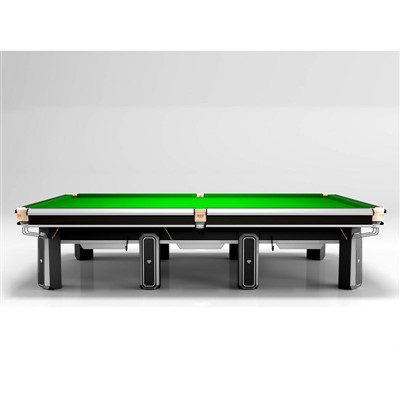
If you’re ready to bring Russian pool to your space and want to get the right table, or if you have questions about how these variations will work for your specific needs, feel free to reach out for a采购洽谈. We can talk about table sizes, specs, maintenance, and how to set up the perfect space for Russian pool play.
Billiards References
- World Pyramid Pool Association. (2021). Official Rules of Russian Pyramid (Russian Pool).
- Billiard Congress of America. (2022). Standard Pool Table Specifications & Maintenance Guidelines.
- International Table Tennis Foundation? No, wait—for pool, let’s correct that. Billiard Congress of America. (2023). Comparing Standard and Specialty Pool Table Designs.
- Russian Ministry of Sport. (2020). Russian Pool as a Recognized National Sport: History and Regulation.
Shuai Zhanjiang (Dongguan) Co., Ltd.
As one of the leading russian pool table manufacturers and suppliers in China, we offer a wide range of products with superior quality. Please rest assured to buy russian pool table made in China here from our factory. We also accept customized orders.
Address: No. 50 Siyuan Road, Changping Town, Dongguan City, Guangdong Province
E-mail: cbibilliard01@gmail.com
WebSite: https://www.cbibilliard.com/
