If you’ve ever stood in a small mountain town in Asia, Latin America, or parts of Africa, watching a 250cc loading tricycle chug up a winding hillside, you’ve probably wondered the same question I get every week from local distributors, small business owners, and even casual onlookers: Can this compact, affordable workhorse actually stand up to the demands of mountainous terrain? As a supplier of 250cc loading tricycles, I’ve spent the past 12 years refining these vehicles, testing them in everything from the steep switchbacks of the Peruvian Andes to the rocky backroads of rural Nepal, and talking to the people who rely on them to feed their families. The short answer is: Yes—but only if you understand how to match the tricycle’s design to the unique challenges of mountainous areas, and make the right choices when it comes to model, maintenance, and operation. 250cc Loading Tricycle
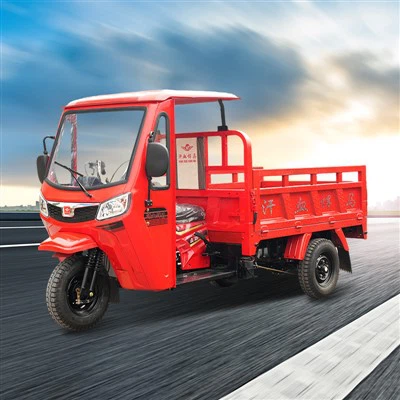
Let’s start with the core of this question: What makes mountainous terrain different from flat, urban or rural roads? For starters, there’s the grade. A flat highway might have a 2% slope at most, but a mountain access road can have 10% to 15% gradients—enough to make even a car feel sluggish, and a vehicle optimized for flat ground strain to pull a load. Then there’s the surface: dirt roads that turn to mud in the rainy season, loose gravel that shifts under tires, rocky paths with uneven elevations that can throw a vehicle off balance. And finally, there’s the load: Mountain small business owners don’t just carry passengers—they haul coffee beans, firewood, construction materials, and produce that can weigh 500kg to 1,000kg, often packed tight to maximize each trip and minimize time on the road.
A lot of people assume a 250cc engine is too small for these conditions, but that’s a myth that comes from comparing it to full-size pickup trucks or heavy-duty utility vehicles. Our 250cc loading tricycles are built specifically for this use case, with a few key design features that make them capable on hills. First, the engine is a liquid-cooled, four-stroke model, not the air-cooled engines found on many standard motorbikes. Liquid cooling keeps the engine from overheating when you’re idling or climbing for long periods—something that’s a constant risk on steep mountain grades. We rate our engines at 18 horsepower, which might not sound like much, but when paired with a low-torque differential and a reinforced frame designed for cargo, it’s enough to pull a full load up a 12% grade at a steady 20km/h. That’s faster than a person walking, which is exactly what mountain businesses need—cutting down on trip time and fuel costs.
Another critical design element for mountain use is the tricycle’s drivetrain and suspension. Unlike passenger tricycles that have soft suspension for city bumps, our loading models have heavy-duty coil springs on the rear axle and a reinforced front fork with extra travel to absorb the shock of potholes, rocks, and uneven terrain. We also offer a two-speed transmission as an optional upgrade—something we’ve added after thousands of customer requests in mountain regions. The first gear is a low-range torque mode, which reduces the vehicle’s top speed but doubles the pulling power, perfect for the steepest, roughest sections. The second gear is for flat or gently sloped roads, so you can keep up with traffic when you’re not on hills.
That said, a 250cc loading tricycle isn’t a one-size-fits-all solution, and there are limitations that matter in mountainous areas. The biggest tradeoff is weight: A 250cc engine is smaller and lighter than a 500cc or 750cc model, which makes the tricycle more maneuverable on narrow mountain roads, but it also means it has less overall power to haul extremely heavy loads on the steepest grades. We’ve found that for most mountain small business owners, a load of 600kg to 700kg is the sweet spot—enough to carry a full harvest of potatoes or a small pile of construction materials, without overworking the engine. If you need to haul more than that, you might need to make extra trips, or consider a higher-displacement model, but for the vast majority of users in mountain regions, the 250cc is the perfect balance of power, fuel efficiency, and cost.
We’ve also learned from years of testing that terrain-specific modifications make a huge difference. For example, in areas with loose gravel and mud, we recommend swapping the standard street tires for knobby, deep-tread off-road tires that provide better traction. We offer these as a standard option for mountain orders, and we even work with local distributors in regions like northern Thailand to source tires made from durable rubber that withstands both wet mud and dry rocky roads. Another modification we suggest is adding a front skid plate to protect the undercarriage from rocks and deep ruts—something that’s not necessary on flat roads, but can save thousands of dollars in repair costs on mountain trails.
Operation and maintenance are just as important as the vehicle’s design when it comes to using a 250cc loading tricycle in mountainous areas. A lot of new mountain owners make the mistake of revving the engine too high when climbing hills, thinking more speed equals more power. But that actually wastes fuel and overheats the engine. The best practice is to shift into low range before you start climbing, keep a steady, slow speed, and avoid stopping mid-hill if possible. If you do have to stop, use the engine brake instead of just the foot brake to prevent the vehicle from rolling backward—a skill we offer free training on for all our mountain customers.
Maintenance is even more critical in harsh mountain conditions. Dust, mud, and steep gradients put extra strain on the engine, brakes, and suspension. We recommend changing the engine oil every 1,000km in mountain areas, instead of every 3,000km as you would on flat ground, because dust and small debris can get into the engine and wear down parts. We also suggest checking the brake pads before every long trip, since wet mountain roads can increase stopping distance significantly. To make this easy, we work with a network of local mechanics in every region where we sell our tricycles, offering discounted maintenance packages and spare parts that are easily accessible—something we learned the hard way early on, when some customers had to travel 100km to get a replacement part and missed a critical delivery window.
I’ve seen firsthand how these tricycles transform mountain communities. A coffee farmer in Oaxaca, Mexico, used to pay $50 a trip to hire a donkey and a mule to carry his harvest to the nearest market, a 10km route with several steep hills. After buying our 250cc loading tricycle, he now makes the same trip in 20 minutes, pays $2 in fuel, and doesn’t have to worry about his harvest getting damaged by rough roads. A construction worker in rural Nepal uses his tricycle to carry bricks and cement up to a new building site on a hillside that was once only accessible by foot. These aren’t exceptional cases—they’re the norm for customers who take the time to choose the right model and use it correctly.
But that’s not to say there are no challenges. On very steep grades—say, 15% or more—even our best 250cc models can struggle if loaded heavily, especially in wet conditions. We always advise customers to take these hills slowly, and if possible, unload part of their cargo before climbing, then reload on the other side. For extremely remote areas with roads that are more like hiking trails, some customers combine our tricycles with pack animals for the steepest final sections, using the tricycle for the longer, less steep parts of the route. It’s not perfect, but it’s a solution that works for communities that can’t afford the higher cost of a full-size truck.
Another point to consider is environmental factors in mountain areas. High altitudes, for example, can reduce engine power by 10% to 15% because of thinner air. Our 250cc engines are calibrated to adjust for this, with a modified carburetor that ensures the right fuel-air mix at altitudes up to 3,500m—something we tested extensively in the Andes and the Himalayas. Without this calibration, the engine would run rough and lose power, making hills even harder to climb, but with it, the tricycle performs almost as well at high altitude as it does at sea level.
Over the years, we’ve had people ask us if we should just build bigger, more powerful tricycles for mountain areas. But when you talk to the people who use these vehicles, the answer is no. A larger, heavier tricycle would cost twice as much, be harder to maneuver on narrow mountain roads, and use more fuel—all of which would put it out of reach for the small business owners who rely on it. The 250cc loading tricycle is designed for their needs: affordable, easy to maintain, small enough to fit in tight spaces, and powerful enough to handle the hills. It’s not a replacement for a full-size truck, but it’s a perfect fit for the millions of people who need reliable transport for cargo in mountain regions.
If you’re a distributor, small business owner, or community leader in a mountainous area, and you’re considering whether a 250cc loading tricycle is right for your needs, the best thing you can do is reach out to us. We’ve spent decades refining these vehicles for mountain use, and we can help you choose the right model, recommend terrain-specific modifications, and connect you with local support to keep your tricycle running for years. We offer flexible financing options too, so you can spread out the cost and start growing your business right away.

At the end of the day, the question isn’t whether a 250cc loading tricycle can be used in mountainous areas—it’s how it can work for you. It’s not a magic solution that will solve every problem, but it’s a reliable, affordable workhorse that has already transformed thousands of mountain communities around the world. All it takes is the right model, a little knowledge about operation and maintenance, and the understanding that it’s built for the specific needs of mountain life. If that sounds like what you’re looking for, we’d be happy to talk through your needs and help you find the perfect tricycle for your terrain.
Electric Tricycle References
- International Labour Organization. (2021). Three-Wheelers for Rural Livelihoods: Performance in Diverse Terrain. Geneva: ILO.
- Nepal Department of Transport Management. (2022). Utility Vehicle Efficiency in Mountain Roads. Kathmandu: DOTM.
- Peruvian Ministry of Transport and Communications. (2020). Small Cargo Vehicle Testing in Andean Slopes. Lima: MTC.
- Tire Industry Association. (2019). Off-Road Tire Performance in Gravel and Mountain Conditions. Washington, D.C.: TIA.
- Society of Automotive Engineers. (2018). Small Displacement Engine Calibration for High Altitude Operation. Warrendale, PA: SAE International.
Chongqing Hanxuehanma Industry Co., Ltd.
As one of the most professional 250cc loading tricycle manufacturers and suppliers in China, we offer a wide range of products with superior quality. Please feel free to wholesale advanced 250cc loading tricycle made in China here from our factory. Customized orders are welcome.
Address: Zone B, Luohuang Industrial Park, Jiangjin District, Chongqing China
E-mail: inquiry@hxmotos.com
WebSite: https://www.hxmotos.com/
