If you’ve ever walked past a utility substation on a humid summer day, you might have noticed the faint hum of transformers that keep your neighborhood’s lights on. As a corrugated transformer tank supplier, I spend my days thinking about the tiny, often overlooked factors that make those hums consistent, safe, and reliable. Most people focus on voltage levels, copper wire gauge, or cooling systems, but humidity—especially atmospheric humidity that soaks into every material around and inside a corrugated transformer tank—can be one of the most disruptive variables we face. Over 15 years in this business, I’ve seen firsthand how even a small shift in humidity can turn a well-designed tank into a costly failure, and it’s a challenge that’s only getting more pressing as climate change brings more extreme, humidity-heavy weather to regions around the world. Let me break down what that impact actually looks like, why it matters so much for corrugated tanks specifically, and how we work with clients to mitigate it. Corrugated Transformer Tank

First, let’s start with the basics of what a corrugated transformer tank is, and why it’s different from the old-style smooth-walled tanks you might have seen in older substations. A corrugated tank has those distinct, folded ridges along its sides—those aren’t just for looks. They’re engineered to increase the surface area of the tank without expanding its footprint, which means the transformer oil inside can dissipate heat more efficiently as the transformer runs. That extra cooling is a huge win for transformer performance: hotter oil breaks down faster, so better cooling means a longer transformer lifespan, lower maintenance costs, and fewer unplanned outages. But those corrugations, with all their tiny crevices and uneven surfaces, are also more porous to moisture than smooth steel, which makes them far more sensitive to humidity. That’s a key difference between corrugated tanks and traditional designs that many engineers don’t fully account for when specifying components.
Now, let’s talk about how humidity gets into a transformer tank. It’s not just rain or standing water—most of the moisture that causes problems comes from ambient atmospheric humidity. Air always contains some amount of water vapor, and when that moist air comes into contact with a cooler surface, it condenses into liquid water. For transformers, this usually happens in two ways. First, during manufacturing or installation. If a tank isn’t properly sealed before it’s filled with oil, humid air from the shop or the construction site can get trapped inside. Second, over the tank’s lifetime, through slow permeation even through sealed seams, or through small gaps in gaskets that can develop as the tank expands and contracts with temperature changes. Corrugated steel, because of its folded structure, has more points where tiny gaps can form over time, creating pathways for water vapor to seep in when humidity is high. Once that water is inside the tank, mixing with the transformer oil, that’s where the problems begin.
The biggest, most immediate impact of moisture in transformer oil is on dielectric strength. Dielectric strength is the ability of a material (in this case, oil) to insulate electrical current. Think of it like a barrier that keeps high-voltage current from jumping where it shouldn’t—into the tank, into the ground, or between internal components. Pure transformer oil has an extremely high dielectric strength, usually around 30 to 50 kilovolts per millimeter (kV/mm) when it’s fully dry. But even a tiny amount of water—just 10 parts per million (ppm) in oil—can drop that strength by 20% or more. At 50 ppm, that drop can be 50%, and once you hit 100 ppm, the oil is effectively no longer a reliable insulator. For a transformer operating at even 10,000 volts, that’s a ticking time bomb: the risk of internal arcing, short circuits, or total transformer failure skyrockets. I’ve worked with a utility client in the Southeast U.S. a few years back that installed a line of corrugated tanks in a region where summer humidity regularly hits 85% or higher. Within two years, they were seeing regular dielectric failures in 12% of their new transformers, all traced back to moisture in the oil that had seeped through the corrugated seams during construction. The cost to replace those transformers and fix the substations was over $2 million—all because of a humidity-related issue they hadn’t planned for.
But it’s not just immediate electrical failures that humidity causes. There’s also long-term damage that builds up over time, even at lower humidity levels. Water in transformer oil doesn’t just sit there—it reacts with the other chemicals and components in the tank. One of the biggest reactions is with oxygen that also gets trapped in the tank. When water and oxygen mix with the hot oil (transformers run at 60 to 80 degrees Celsius during normal operation), they create organic acids. Those acids corrode the internal steel of the tank, and also break down the oil itself. The broken-down oil forms sludge, which builds up on the bottom of the tank and clogs the corrugations. Remember those corrugations that are supposed to increase cooling surface area? If they’re clogged with sludge from acid breakdown, they can’t dissipate heat anymore. That causes the transformer to run hotter, which in turn speeds up more chemical reactions, creates more acid, and leads to a vicious cycle of degradation. For transformers in high-humidity coastal regions or areas with heavy seasonal rain, this cycle can cut a transformer’s lifespan by 30 to 50 years. I had another client in South Florida, where humidity is over 70% year-round, that reported their corrugated transformers were needing full oil flushes every three years—compared to an average of every 10 years for smooth tanks in dryer climates. That’s not just a maintenance cost; it’s a reliability issue for a region where even a short outage during hurricane season can cost tens of thousands of dollars per hour in lost business.
Wait a second—some of you might be thinking, “Isn’t transformer oil supposed to be sealed? Why does moisture get in over time?” That’s a great question, and it’s where corrugated tanks have a unique vulnerability. Because corrugated tanks expand and contract as the oil heats up and cools down—when a transformer is running, the oil expands, pushing the corrugations outward; when it’s off, the oil contracts, pulling the corrugations inward—that constant movement puts stress on the tank’s seals and seams. Gaskets around the tank lid or bushing ports, which are usually made of rubber or ethylene propylene diene monomer (EPDM), can develop tiny cracks or gaps from repeated flexing. And even the welded seams on corrugated tanks, while strong, can have micro-pores that open and close as the metal bends with temperature changes. In high humidity, those micro-pores and gaps act like tiny straws, drawing in moist air from the atmosphere whenever the tank contracts, and even if some air is pushed out when it expands, enough moisture gets trapped inside to cause problems over time. Smooth-walled tanks, by contrast, don’t have that constant flexing of metal, so their seals last longer and are less permeable to air and moisture. That’s why corrugated tanks, which are ideal for energy efficiency and cooling, have a higher humidity-related failure rate if not designed or installed with that vulnerability in mind.
Now, the good news: this isn’t an unsolvable problem. Over my years as a corrugated transformer tank supplier, we’ve developed a range of solutions tailored specifically to address humidity-related issues, and we work closely with every client to make sure their tanks are built for their exact climate. Let’s walk through what that looks like. First, material selection. For tanks in high-humidity regions, we use a high-grade, galvanized steel that’s specifically coated to resist moisture permeation. It’s not just a standard paint—we use a two-part epoxy coating that bonds to the corrugated metal’s ridges and crevices, sealing the tiny gaps that would otherwise let water vapor in. We also add a secondary sealant to all welded seams, tested to withstand repeated flexing from temperature changes, so the seams stay tight even after decades of expansion and contraction.
Second, during manufacturing and installation, we work with clients to implement strict moisture control protocols. Every corrugated tank leaves our facility with a full vacuum drying process—we pull all the air out of the tank, heat it to 105 degrees Celsius, and hold it for 24 hours to evaporate any residual moisture before filling it with dry, pre-tested oil. We also provide installation guidelines that require on-site testing of ambient humidity during tank setup: we recommend installing tanks only when relative humidity is below 70%, and using portable dehumidifiers to keep the work area dry during assembly. I can’t tell you how many times a client has cut corners on that part to save time, only to end up paying for it later when moisture gets trapped in the tank. We’ve seen that work pay off: a utility client in the Pacific Northwest, which has high annual humidity, switched to our corrosion-resistant, vacuum-dried corrugated tanks five years ago, and has reported zero dielectric failures from moisture in oil since. Before that, they averaged two failures per year from the same issue.
Third, we also recommend condition monitoring systems that track humidity and moisture levels inside the tank over time. Modern sensors can measure water content in oil in real time, and alert operators if levels start to rise before they cause a problem. For clients in extreme humidity zones, we even offer tanks with a built-in dry air breather system: this system pulls in ambient air, passes it through a desiccant that removes all moisture, and only lets dry air into the tank as it expands and contracts. It’s a small extra component, but it’s made a huge difference for clients in places like Houston, where summer humidity regularly tops 90%. One large energy provider in Texas that deals with that kind of humidity has used our tanks with dry air breathers for three years, and their moisture levels have stayed below 20 ppm, well within the safe range, even during the hottest, wettest months.
I want to be clear, though—humidity isn’t just a problem for regions that are already humid. Climate change is leading to more volatile weather patterns, including longer periods of high humidity in places that used to have mild, dry climates. A friend who works at a utility in the upper Midwest told me that in 2022, they had a week of humidity over 80% that caused a 15% increase in moisture-related transformer issues, something they hadn’t seen in their 20 years of operating there. So this is a challenge that every corrugated transformer tank owner needs to plan for, not just those in traditional high-humidity areas.
At the end of the day, corrugated transformer tanks are a critical part of the grid’s reliability. They deliver better cooling, longer transformer lifespans, and lower operating costs when they’re working as intended—but humidity is a silent threat that can undo all those benefits if you don’t plan for it. As a supplier, our job isn’t just to build tanks that meet a standard spec; it’s to understand the unique conditions each client operates in, and design a tank that works for their specific humidity, temperature, and weather patterns. We don’t take that responsibility lightly—every time we ship a tank, we know it’s part of a network that powers homes, hospitals, and businesses, and making sure it can stand up to whatever humidity the environment throws at it is non-negotiable.
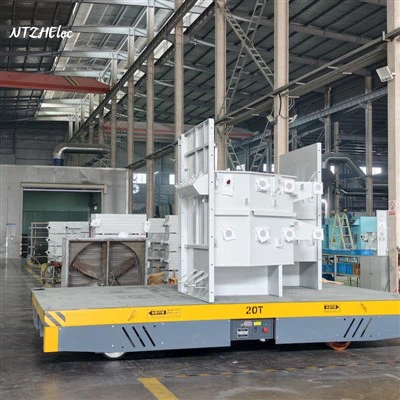
If you’re working on a project that involves corrugated transformer tanks, whether it’s a new substation, a retrofit, or a planned upgrade, I’d be happy to walk through how humidity could impact your setup and what solutions we can provide to mitigate that risk. We’ve worked with utilities of all sizes, from small local co-ops to large national energy providers, and we tailor every solution to your specific needs, not a one-size-fits-all approach. Don’t let a silent variable like humidity turn a well-planned project into a costly failure—reach out to discuss your requirements today.
Corrugated Transformer Tank References
- IEEE Guide for Moisture Control in Transformers, IEEE Std C57.12.00-2015
- Electrical Insulation Magazine, Vol. 28, No. 3, “Moisture Effects on Dielectric Properties of Transformer Oil and Cellulose Insulation”
- Journal of Loss Prevention in the Process Industries, Vol. 54, “Corrosion Behavior of Corrugated Steel Tanks Under High Humidity Conditions”
- National Renewable Energy Laboratory (NREL) Report TP-5400-75682, “Grid Reliability in Humid Climates: Transformer Performance and Mitigation Strategies”
Nantong Zhihe Electric Co., Ltd.
As one of the most professional corrugated transformer tank manufacturers and suppliers in China, we’re featured by quality products and low price. Please rest assured to wholesale cheap corrugated transformer tank made in China here from our factory. Customized orders are welcome.
Address: NO.202 Jianghai West Road, Hai’an Town, Hai’an City, Jiangsu Province
E-mail: colt.ntzh@gmail.com
WebSite: https://www.ntzhelectric.com/
