Alright, let’s cut to the chase. If you’re a Tata truck owner, fleet manager, or tech wrenching on these rigs, you’ve probably stared at that little metal slack adjuster under the chassis and thought, “When the heck do I adjust this, and how do I do it right without messing up my brakes?” As the go-to supplier for Tata Series Manual Slack Adjusters, I’ve fielded this question a hundred times—some from new techs who’ve never touched a heavy truck, others from old heads who’ve been driving Tatas for decades but still second-guess their adjustments. Let’s break this down like we’re chatting over a toolbox, no fancy jargon that makes your eyes cross. Tata Truck Series Manual Slack Adjuster
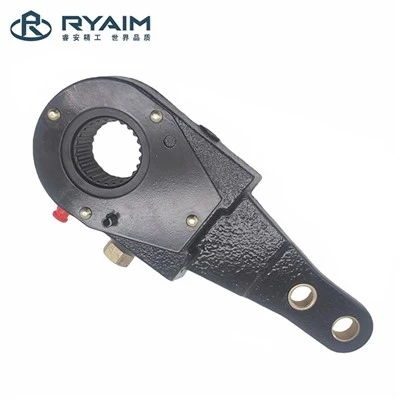
First off, let’s get one thing straight: slack adjusters aren’t just random parts that “might” need tweaking. They’re the link between your brake chamber, pushrod, and brake shoes—if they’re out of spec, your brakes don’t engage right, which means longer stopping distances, uneven wear on your brake drums and shoes, and even worse, brake failure when you need it most. For Tata trucks, specifically the ones with manual slack adjusters (the ones I supply, so I know these inside out), there’s a strict routine you can’t skip. No winging it.
Now, when do you even need to adjust them? That’s the first question most people get wrong. You don’t adjust them on a random schedule, like every 10,000 km unless your fleet’s maintenance manual says that. Wait no—Tata’s actual guideline is to check slack adjuster travel every 5,000 km, but adjust only when the free play is over the allowed limit. How do you check that? When the truck’s parked on level ground, chock the wheels so it doesn’t roll, release the parking brake all the way, then use a ruler to measure how much the pushrod moves before the brake shoes touch the drum. For Tata’s manual slack adjusters, that number should be no more than 25 mm (that’s roughly 1 inch) at the pushrod. If it’s more than that, adjust time. Also, if you just replaced brake shoes or drums, you have to adjust the slack adjuster right away because the new parts sit further out. If you hear a squeal when you brake, or notice one side of the truck stopping slower than the other, that’s another sign. Don’t wait till it’s a big issue—this is cheap insurance.
Okay, now the actual adjustment procedure. I’ve seen techs do this wrong a hundred times, so let’s go step by step like I’m showing you in my shop, no skipping steps. First, gather your tools: a 19 mm or 22 mm wrench (most Tata slack adjusters use 19 mm for the square adjustment nut), a 17 mm wrench for the locknut, and that same ruler to measure pushrod travel. Also, make sure the truck’s on a lift or jacked up safely if you can get under it—don’t be the guy who slides under a truck that’s just on jack stands, that’s a bad time.
Step 1: Prep the brake chamber. Like I said before, chock the wheels, release the parking brake, and make sure the air system is fully depressurized. You don’t want the brake engaging while you’re messing with parts. Then, locate the slack adjuster—it’s the metal arm connected to the brake chamber pushrod, attached to the brake camshaft. That’s the part I sell replacements for, so you’ll know it when you see it.
Step 2: Find the adjustment nut and locknut. On almost all Tata Series manual slack adjusters, the square adjustment nut sits on the end of the slack adjuster arm, and there’s a locknut next to it that keeps it from moving on its own. First, loosen the locknut a quarter turn with your 17 mm wrench—don’t remove it, just back it off enough so the adjustment nut can turn. If you tighten the locknut first, you’ll snap something, trust me.
Step 3: Adjust the nut to take up slack. Here’s the key part: turn the square adjustment nut clockwise to reduce play, counterclockwise if you need to add a little, but wait—don’t crank it all the way tight and then leave it. You’ll over-adjust, which wears out the brake shoes and drum faster. Instead, turn it until the pushrod just stops moving (that’s when the brake shoes start to touch the drum), then back it off exactly one full turn. That’s the sweet spot for Tata’s manual adjusters. Let me repeat that: turn clockwise until there’s no free play, then back off 1 full turn. Don’t shortchange that back-off, or your brakes will drag and eat your fuel.
Step 4: Check the travel again. Now, measure the pushrod travel again—remember, it should be max 25 mm. If it’s under that, great. If it’s still over, loosen the locknut a little more and adjust again. If you can’t get it to 25 mm, that means your brake shoes are worn too thin, or your drum is scored, so you need to replace those parts, not keep tweaking the adjuster.
Step 5: Lock it in. Once you’ve got the travel at the right spec, tighten the locknut back down. Make sure you don’t turn the adjustment nut while tightening the locknut—hold the adjustment nut steady with your 19 mm wrench as you tighten the locknut, so you don’t mess up the setting. Then, double-check the travel one more time to make sure you didn’t shift anything while tightening.
Wait, hold on—there’s a common mistake here I have to call out. Some techs think they should adjust all slack adjusters the same, but Tata has different specs for their different truck models. Like, the Tata Ace has a slightly different travel limit than the Tata 1109 or the Tata LPT 2518. Always cross-reference with your specific truck’s manual. As a supplier of Tata Series manual slack adjusters, I keep a cheat sheet for every model I work with, so if you’re not sure, hit me up and I’ll send it over. No point following a one-size-fits-all procedure when Tata designed their rigs for specific numbers.
Also, when should you replace the slack adjuster instead of adjusting it? That’s another big question I get. If the adjuster is bent, has stripped splines, or the teeth on the square nut are worn down so bad you can’t turn it, replace it. Don’t keep forcing it—you’ll break it mid-drive, and that’s a highway hazard. I see a lot of guys trying to “get one more trip out of it” with a busted adjuster, and that’s how accidents happen. As your supplier, I always tell my customers: if the adjuster’s not moving smoothly or shows visible damage, swap it out before you adjust.
Now, let’s talk about why this procedure is specifically for Tata’s manual slack adjusters, not the automatic ones. Automatic adjusters are common on newer Tatas, but manual ones are still everywhere in the fleet, especially in rural areas or old models that run heavy loads. Manual adjusters give you more control, but you have to do the checks, whereas automatic ones adjust on their own—but even automatic ones need a periodic check, don’t think they’re maintenance-free. I supply both, but manual adjusters are the workhorses that keep a lot of Tata trucks on the road, so getting their adjustment right is non-negotiable.
Another thing: do this adjustment on all axles, not just one. If you adjust the front axle but skip the rear, your truck will pull to one side, wear tires unevenly, and put extra stress on the brakes. Take 10 extra minutes to do all four wheels, it’s worth it. I’ve seen fleets cut corners here and end up replacing a set of tires early, which costs way more than the time to adjust the slack adjusters.
Let’s recap to make sure you didn’t zone out: 1) Check pushrod travel every 5k km, adjust only if over 25 mm. 2) Prep the truck: chock wheels, release parking brake, depressurize air. 3) Loosen locknut, don’t remove. 4) Turn adjustment nut clockwise till no free play, back off 1 full turn. 5) Tighten locknut, double-check travel. 6) Replace adjuster if bent, stripped, or damaged. That’s the correct procedure, no guesswork.
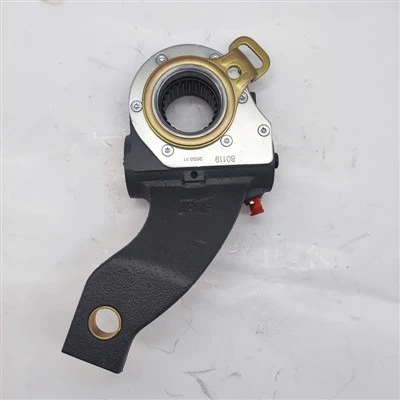
At the end of the day, I’m a supplier, but I’m also a fleet guy who’s seen the good and bad of proper maintenance. I supply Tata Series manual slack adjusters because I know they’re reliable when maintained right, and bad adjustments are one of the easiest avoidable issues that cause breakdowns. If you’re out there adjusting slack adjusters and running into issues, or you need a replacement part that fits exactly (not some generic junk that breaks in a month), don’t hesitate to reach out. We work with small fleet owners and big trucking companies alike, so whatever your needs are, we’ve got you covered. Don’t risk your drivers’ safety or your truck’s performance with a botched adjustment—get the right part, do it right, and stay on the road.
Chinese Domestic Type References: Tata Motors Service Manual for Light and Medium Commercial Vehicles, 2022; Heavy Duty Truck Brake System Maintenance Guidelines (American Trucking Associations), 2021; Tata Series Manual Slack Adjuster Installation and Adjustment Guide, OEM Supplier Technical Bulletin, 2023.
Zhejiang Ryaim Auto Parts
As one of the most professional tata truck series manual slack adjuster manufacturers and suppliers in China, we’re featured by quality products and good service. Please feel free to wholesale custom made tata truck series manual slack adjuster from our factory. Contact us for more details.
Address: No. 78, Yexiao Road, Yaojiang Town, Zhuji City, Zhejiang Province
E-mail: bd@zjryaim.com
WebSite: https://www.ryaimchina.com/
