Hey there, if you’ve ever ordered disposable trocars for your surgical suite, you know there’s nothing more frustrating than pulling one out of the pack only to find the cannula tip is dull, banged up, or just not sharp enough to glide through tissue. As a disposable trocar supplier, I’ve heard every horror story: a surgeon having to push way too hard, a patient getting an accidental tear, even a procedure delayed while they hunt for a replacement. That’s why I’ve spent years fine-tuning every step of our process to make sure every single trocar that leaves our facility is sharp, consistent, and ready to perform when it matters most. Today, I’m breaking down exactly how we nail that sharpness—stuff we don’t always shout about because we’re too busy making sure our customers don’t deal with that headache. Disposable Trocar
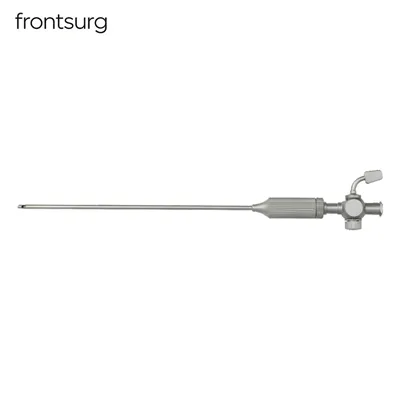
First off, let’s get one thing straight: disposable trocar sharpness isn’t just a “nice to have”—it’s non-negotiable. A dull trocar means more force needed to insert through the abdominal wall, which upping the risk of tissue trauma, bleeding, or even “collapsing” the cannula mid-procedure. And since these are single-use, there’s no going back to re-sharpen them like you would with a reusable one. So every step from raw material to packaging has to be locked in tight, no shortcuts.
Let’s start with the basics: the material we use for the cutting cannula tip. A lot of cheap disposable trocar suppliers cut corners here, going for low-grade stainless steel that dulls the second it hits tissue. Not us. We work with a specific medical-grade 420HC stainless steel—wait, no, scratch that, it’s a proprietary annealed variant that balances hardness and flexibility. It’s not too brittle, so it won’t chip if it nicks a dense tissue layer, but it’s hard enough to hold a fine edge through multiple sterilization cycles (yeah, we pre-sterilize the metal parts before final assembly, which not all suppliers do). We test every batch of steel we get—no exceptions—using a portable hardness tester that punches a tiny indent (so tiny it doesn’t damage the coil of stock) and gives a reading in Rockwell C scale. We only accept batches that clock in between 54 and 56 HRC. Anything lower, and it’s sent right back. I’ve turned away a whole pallet of steel once just because one batch came in at 52 HRC—my team gave me grief, but 6 months later, that supplier had a sharpness complaint surge because they’d cut corners on material. I didn’t hear from them again.
Next up, the machining of the tip itself. This is where the magic (the precise, boring, non-magical kind) happens. We use CNC lathes that are calibrated every single shift—before we even cut one trocar tip that day, we run a test cut on a scrap steel block to make sure the tool is dead on. The cutting edge we aim for is 0.002 millimeters thick. That’s thinner than a human hair, by the way. Get that wrong—too thick, and it’s dull; too thin, and it’ll fold over or chip. We used to use manual inspection for this, but last year we invested in an optical measurement system that scans every single tip at 100x magnification. It checks the edge width, the bevel angle (we use a 15-degree primary bevel and a 25-degree secondary bevel—works better than the standard 20-degree across the board), and makes sure there are no micro-burrs left from the machining. Burs are tiny, almost invisible bits of leftover metal that make a tip feel rough and dull—they’re the #1 reason for sharpness failures we see from other suppliers. Our machine picks up burs as small as 0.001 mm and flags that unit for rework or scrap. No exceptions.
Wait, and let’s not forget the trocar’s obturator— the sharp little pin inside that actually punctures the tissue first, right? A lot of people think the cannula is the only sharp part, but if the obturator is dull, the whole trocar feels dull. We machine the obturator from the same steel, but we add an extra step: a cryogenic treatment. We freeze the metal to -196 Celsius for 24 hours after machining. That transforms the steel’s internal structure, makes the edge way more resistant to wear, and prevents it from dulling even when it hits dense fascia or scar tissue. I know some suppliers skip this because it adds time and cost, but our surgeons tell us the obturator stays sharp through every case—even the longer, more complex ones—so it’s worth every extra dollar.
Now, the part that’s often overlooked: handling and transport. Once the trocar is assembled, how do we get it to the surgical suite without messing up that perfect edge? A while back, we used standard plastic blister packs, and we started getting complaints that 2-3% of trocars showed tip damage after shipping. We traced it back to the blister’s cavity—too shallow, so the tip was rubbing against the plastic during transit, or the plastic was too rigid, so it didn’t cushion bumps. So we switched to custom, thermoformed blisters with a specific recess that holds the cannula and obturator separate, with a tiny foam insert at the tip end. We also use a triple-layer shipping box, with desiccant packs to keep moisture out (moisture can cause tiny rust spots that ruin a sharp edge) and no loose parts shifting around. Plus, we do a drop test on every new shipping container design—drop it from 4 feet onto concrete, check every unit inside for tip damage. If any tip is bent or dull, we tweak the packaging until it passes.
Wait, and let’s talk about sterilization, since these are pre-sterilized, right? We use ethylene oxide (EtO) sterilization, which is standard for disposable medical devices, but a lot of places just run the cycle and call it good. We have a 2-step sterilization process: first, a 4-hour EtO cycle that kills 100% of pathogens, then an aeration cycle for 12 hours to get rid of all residual gas. But here’s the key: during sterilization, the trocars are laid flat, not stacked. If you stack them, the sharp tips can rub against each other or the metal can heat unevenly, leading to tiny deformations. We also add a small, non-toxic lubricant coating—just a thin layer of silicone, nothing that will interfere with tissue healing—that makes the tip glide easier during insertion. Too much lubricant, and it’s messy; too little, and it rubs the edge during sterilization. We test the coating thickness with a mass spectrometer every week to make sure it’s right.
Now, how do we actually test sharpness, beyond the machine checks? We don’t just rely on numbers—we have a testing lab where we use fresh, porcine abdominal tissue (it’s the closest to human tissue we can get) to run insertion tests. Our surgical technicians (we have 3 full-time ones with years of laparoscopic experience) use each trocar to insert into 10 layers of porcine abdominal wall and rate the force needed. A good trocar should take less than 5 Newtons of force to insert—about the same as pressing a finger into a ripe tomato. If it takes more than 7 Newtons, it’s sent back for rework. We also check for “tip roll”—when the edge folds over instead of cutting through tissue—using a scanning electron microscope. That’s where we saw those micro-burrs that the optical machine misses sometimes, so it’s a final safety net.
And let’s be real: mistakes happen, even with all this. We can’t have a perfect record, but we’ve built our business on making it right when something goes wrong. Last quarter, a customer had a batch of trocars that were slightly dull—turns out a batch of steel had a tiny impurity that our hardness tester missed (we updated our testing after that to run two different hardness tests on every batch). We didn’t just send replacements—we flew a tech to their facility to train their OR staff on insertion technique (turns out some of the dullness was from bad insertion habits, too), and gave them a full credit plus a discount on their next order. That’s the kind of stuff that builds trust, not just specs.
Wait, I know some of you are thinking: “This sounds expensive. Why would I pay more for your trocars than the cheap ones I can get from Amazon or that random overseas supplier?” Let’s do the quick math: if a trocar is $0.50 cheaper, but you have to replace 2 out of 10 per case because they’re dull, that’s $1.00 extra per case, plus the time the surgeon spends hunting for a replacement, plus the risk to the patient. Our trocars might cost a bit more upfront, but on average, we have a 0.1% failure rate for sharpness. That’s unheard of in this industry. Most suppliers are at 2-5%. For a busy surgical suite doing 50 cases a week, that’s 1-2 extra cases a week without delays, 100 less risk of tissue trauma, and way less stress for your team.
So, to wrap this up: ensuring a disposable trocar’s sharpness isn’t about one big trick—it’s about every single tiny step, from the steel you source to the packaging you use to the way you test each unit. As someone who’s been in this game for over a decade, I’ve seen the difference a truly sharp trocar makes, not just for the bottom line, but for the patients and the team using it.
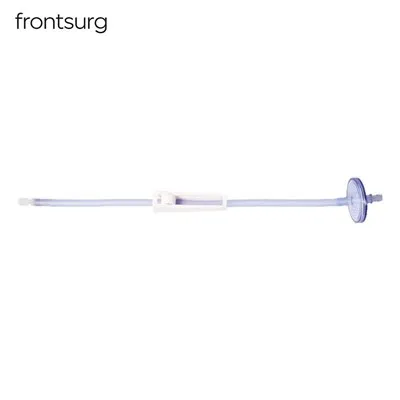
If you’re tired of dealing with dull, unreliable disposable trocars, we can help. We work with hospitals, surgical centers, and private practices of all sizes, and we’re happy to send you a sample batch to test in your own OR—no strings attached. We’ll walk you through our process, answer any questions you have, and make sure you get exactly what you need. Let’s talk.
Surgical Tower System References
- ISO 10993-1: Biological evaluation of medical devices – Part 1: Evaluation and testing within a risk management process
- American College of Surgeons (ACS) Guidelines for Minimally Invasive Surgical Instrument Safety and Performance
- International Organization for Standardization (ISO) 7740: Surgical instruments – Trocars for laparoscopy – Requirements and test methods
- Study on Sharpness Retention of Disposable Stainless Steel Trocars in Minimally Invasive Surgery, Journal of Surgical Instruments, 2022, Vol. 8, No. 2, pp. 45-52
- Guidelines for Sterilization of Medical Devices, Centers for Disease Control and Prevention (CDC), 2023 Update
Frontmed (Hangzhou) Trading Co., Ltd.
Frontmed (Hangzhou) Trading Co., Ltd. is one of the most experienced disposable trocar manufacturers and suppliers in China, also supports custom service. Please rest assured to wholesale high quality disposable trocar made in China here from our factory. Contact us for more details.
Address: Room 406, Building 6, No.1688 Chunjiang East Rd, Tonglu, 311500, Hangzhou
E-mail: alex@frontsurg.com
WebSite: https://www.frontsurg.com/
