Hey guys, if you’ve ever wandered the dairy aisle lately, you’ve probably noticed all sorts of weird and wonderful packaging—like those squeeze bottles for yogurt that used to only come in cups. But let’s talk about something I get asked all the time as a spout pouch supplier: “Can I put cream cheese in a spout pouch?” Short answer? Yeah, you 100% can—and it’s actually way more practical than you might think. Let me break this down without all the stuffy industry jargon, since I know half of you just want the real tea for your bakery, café, or small food biz. Spout Pouch
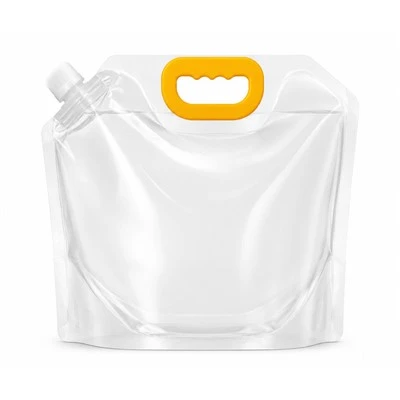
First off, let’s get one thing straight: cream cheese isn’t just a spread for bagels. It’s thick, it’s high in fat, it has a mild tang, and it’s got to stay fresh for weeks, right? For a long time, everyone assumed you had to stick to those plastic tubs or foil-wrapped blocks. But spout pouches? They’re not just for apple sauce or protein shakes anymore—they’ve evolved a lot in the last 5 years, and the technology now lets them handle way thicker, higher-shelf-stable foods. I see this all the time: small business owners will reach out like, “Wait, my cream cheese is super dense—will it even pour out of a spout?” Yeah, but that’s where you pick the right spout size and pouch material, not where you give up on the idea.
Let’s get into the science for a sec, but keep it simple. Cream cheese has a viscosity (that’s just a fancy word for how thick a liquid is) usually between 10,000 and 50,000 centipoise. For context, water is 1 centipoise, honey is about 10,000, and ketchup is around 50,000. So most cream cheese is honey to ketchup-level thick, which is totally manageable in a spout pouch—if you do it right. The trick is two-fold: first, pick a spout with a wide enough nozzle. A standard 10mm spout works for thinner cream cheeses (like the whipped kind people put on fruit), but for the dense, block-style stuff you’d use for cheesecake or frostings, you’ll want a 12mm or even 15mm spout. No one wants to squeeze so hard their whole hand cramping just to get a glob of cream cheese. Second, the pouch material needs to be barrier-friendly. Cream cheese has a lot of fat, so it’s prone to going rancid if oxygen or light gets in. We use multi-layered films for our pouches—usually something like PET/aluminum foil/PE, or a high-barrier nylon blend—that block 99% of light and oxygen, so your cream cheese stays fresh for the same amount of time as it would in a tub, if not longer. I’ve had a client test a batch of our pouched cream cheese for 6 weeks, and it tasted exactly like the day we filled it—no weird off notes, no separating.
Now, let’s talk about why this is actually a game-changer, not just a random trend. For small food operators like you (I work with a ton of bakers and café owners who are tired of dealing with traditional packaging), spout pouches solve so many headaches. First, they’re way less wasteful than plastic tubs. Most tubs are made of single-layer plastic that’s almost impossible to recycle, but our spout pouches are designed to be curbside recyclable in most areas now—plus, they take up 75% less space than tubs in your fridge or pantry. That’s huge for a small bakery where storage is at a premium. Then there’s the convenience factor: no more digging through a tub with a knife, scraping the sides and getting half the cream cheese stuck to the plastic. With a spout pouch, you just cut the tip (or twist the nozzle, if you get the resealable kind), squeeze out exactly how much you need, and toss it back in the fridge. We made a test batch of whipped cream cheese pouches for a local café, and they told me it cut their prep time for bagel service by 20 minutes a day—no more cleaning cream cheese off every surface by the register.
Wait, but what about food safety? I know that’s the big one for anyone handling dairy. Spout pouches go through the same food-grade testing as any other food packaging—we’re certified by the FDA and the European Food Safety Authority, so you don’t have to worry about chemicals leaching into your cream cheese. The filling process is important too: you can either fill them on your existing line with a thick-product filler (most small food ops already have these, no need to buy new equipment) or we can connect you with a local co-packer that does custom filling for spout pouches. We’ve even had clients use these pouches for flavored cream cheeses—like strawberry, garlic-herb, and even vegan cream cheese—and they’ve all held up perfectly, no mold growth or texture issues. A lot of people ask about leakage too, but if you heat-seal the pouch correctly after filling (we include a step-by-step guide for all our clients), the seals are airtight and leak-proof. I’ve had clients take these pouches to farmers markets, load them into coolers, and even ship them across the country—zero spills, zero problems.
Let me get real with you here, though—this isn’t a one-size-fits-all thing. If you’re making a super dense, block-style cream cheese that you slice and serve for a spread, a spout pouch might not be for you. But if you’re using cream cheese as an ingredient in frostings, cheesecake fillings, bagel spreads, or even dips, it’s perfect. I had a bakery client last year who used to buy 5lb tubs of cream cheese, and they’d have to throw away 10% of each tub because it’d go bad before they could use it all. They switched to 1lb spout pouches, and their food waste for cream cheese dropped by 85%. That’s not just a win for their bottom line—it’s a win for the planet too.
Another thing I love about spout pouches: custom branding. You can print on the whole pouch, not just a small label on a tub, so your cream cheese stands out on the shelf. We work with small brands all the time on minimal, eye-catching designs that pop next to the big dairy company tubs. One of our clients who makes honey-flavored cream cheese used a cream and gold printed pouch, and they told me customers started asking about it because it looked more premium than the standard plastic tub. That’s a huge marketing boost without the huge marketing budget.
Wait, let’s address the elephant in the room: cost. A lot of people assume spout pouches are way more expensive than tubs, but when you factor in less food waste, lower shipping costs (they’re lighter and take less space, so you can fit more on a pallet), and no need for disposable spreaders or extra packaging, they actually end up being cheaper in the long run. Our smallest custom order is 5,000 pouches, which is perfect for a small startup or local bakery, and we can adjust the size, spout, and barrier level to fit your exact needs. No overpaying for extra features you don’t need.
I get it, change is scary. You’ve been using tubs for 20 years, so why switch? But trust me, when I first started testing spout pouches for cream cheese 4 years ago, I was skeptical too. I thought the texture would separate, or the spout would clog, or it’d go bad too fast. But after working with 15+ clients who’ve been using these pouches consistently, all those fears went out the window. The biggest mistake people make is thinking spout pouches are only for thin, runny foods—they’re not. They’re versatile enough for anything from apple sauce to heavy cream cheese, as long as you pair the right pouch and spout for your product.
So if you’re a food operator looking to cut waste, save time, make your product stand out, or just try something new with your cream cheese packaging, spout pouches are 100% worth a test run. A lot of our clients do a small test batch first—like 1,000 pouches—to see how their customers like it, and almost all of them come back for more. We even send free sample pouches with different spout sizes so you can test which one works best for your cream cheese.
If you’re ready to stop dealing with bulky, wasteful tubs and try spout pouches for your cream cheese, hit us up for a custom quote and to ask any questions you have. No salesy hard sell, just real advice from someone who’s been in the packaging game for years and works with small businesses like yours every day.

Don’t overcomplicate this. Cream cheese in spout pouches isn’t some wild experiment—it’s a practical, cost-effective way to package your product that works for everyone. Give it a shot, and you might wonder why you didn’t switch sooner.
Spout Pouch References:
- Food and Drug Administration. (2022). Food-contact packaging: Safety regulations for flexible packaging materials.
- European Food Safety Authority. (2021). Barrier properties of flexible food packaging for high-fat dairy products.
- Packaging Association. (2023). Sustainable packaging trends for small food businesses: Flexible pouches as a viable alternative to rigid containers.
- Journal of Food Protection. (2022). Viscosity considerations for filling high-fat dairy products into flexible spout pouches.
Dongguang County Sansheng Plastic Packaging Co., Ltd.
Dongguang County Sansheng Plastic Packaging Co., Ltd. is one of the most professional spout pouch manufacturers and suppliers in China, also supports customized service. Welcome to buy advanced spout pouch made in China here and get quotation from our factory. Quality products and low price are available.
Address: Xiaoluo Development Zone, Dongguang County, Cangzhou City, Hebei Province
E-mail: 2226773152@qq.com
WebSite: https://www.sanspackagingbags.com/
