As a supplier of plastic reading glasses, I often get asked by buyers and even occasional customers how to spot a pair that will actually last, feel comfortable, and deliver clear vision without breaking the bank. It’s easy to grab the cheapest pair at a drugstore, but anyone who’s owned a flimsy plastic pair knows the frustration of frames that snap after a week, lenses that scratch at the slightest touch, or a fit that causes headaches after 20 minutes of wear. After 12 years working with my team to source, test, and refine our own plastic reading glasses, I’ve learned that quality isn’t just about price—it’s about three key areas: frame construction, lens clarity and accuracy, and overall user-centric design. Let’s break this down so you know exactly what to look for, whether you’re a store owner restocking your shelves or someone shopping for personal use. Plastic Reading Glasses
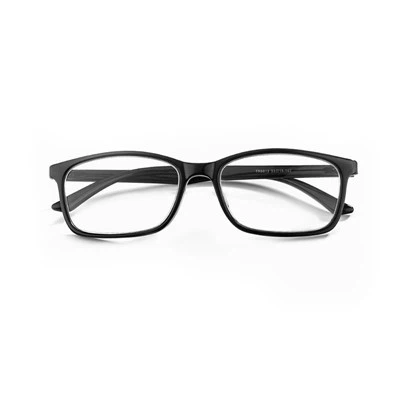
First, let’s talk about the frame, since that’s the part people interact with most. The best plastic reading glasses use a material called TR-90 (also known as thermoplastic elastomer) or a premium-grade acetate, not the thin, brittle PS (polystyrene) that’s common in ultra-cheap pairs. I’ve seen PS frames snap in half if you so much as fold them wrong, and they get brittle in cold weather, turning into tiny shards over time. TR-90, on the other hand, is flexible, durable, and has a slight “bounce back” that lets the frame adjust to different face shapes without losing its form. When you hold a TR-90 frame, it should feel lightweight (no more than 15 grams for standard pairs) but not flimsy. A quick test: bend the temple arms gently backward and forward—if they snap back perfectly without creaking, that’s a good sign. If they leave a permanent fold or crack, it’s low quality.
Also, look at the hinge. This is another make-or-break part. Cheap plastic frames often use fixed, molded hinges that can’t flex, leading to the arms pulling away from the frame after a few months. Quality plastic reading glasses have metal spring hinges, which are designed to open and close smoothly, adjust to different head sizes, and distribute weight evenly. When you open the arms, they shouldn’t feel stiff or loose—they should have a consistent, mild tension that lets you find the right fit without fumbling. Some manufacturers cut corners by using plastic-coated hinges, which break quickly; test by wiggling the arm back and forth near the hinge—any give that feels unnatural means it’s not built to last.
Next, the lenses. This is where even experienced buyers often miss red flags, because they assume all lenses labeled “+1.00” or “+2.50” are the same. That’s not true. Quality plastic reading glasses use CR-39 resin lenses, not the thin acrylic lenses found in $1 pairs. CR-39 is impact-resistant, scratches less easily, and has consistent magnification across the entire lens surface. Acrylic lenses, by contrast, are cheap to make but can have distorted edges, which cause blurriness or headaches if you’re looking at anything off-center—like a computer screen or a book page slightly to the side.
How do you test lens quality? First, hold the glasses at arm’s length, look through the center of the lens at a small, sharp object (like a printed word or a pencil point), then slowly move the glasses up and down, left and right. If the object remains sharp and doesn’t warp, that’s a good lens. If it bends, distorts, or looks stretched, it’s acrylic and low quality. Another test: check for UV protection. Many people don’t realize that reading glasses are worn close to the eyes, so UV protection is non-negotiable. Premium plastic reading glasses have 100% UVA/UVB protection built into the lens material, not a cheap coating that peels off after a few uses. Our team tests every batch of lenses for UV transmittance using a basic spectrophotometer—we can’t ship a pair that doesn’t meet ANSI Z80.1 standards, which are the U.S. industry benchmark for prescription eyewear, including readers.
Lens magnification accuracy is also critical. Nothing is more annoying than a pair labeled “+2.00” that’s actually +2.25, making your book feel too close or your phone screen too small. We test every lens before assembly using a lensometer to confirm the power is within ±0.05 diopters of the labeled power—way more precise than the minimum required. Cheap manufacturers often skip this step, relying on bulk molding that leads to inconsistent power. To test for accuracy yourself, bring a pair of your own well-made reading glasses (or a prescription pair) and hold them next to the plastic pair you’re checking. Look at a line of small text—if the lines line up perfectly and the text is the same size, the power is accurate. If one makes the text appear larger or smaller, walk away.
Then there’s fit and comfort, which ties into both frames and lenses. Even the best frame and lens are useless if the glasses don’t sit right. Quality plastic reading glasses should have a nose pad design that’s either integrated into the frame (soft, padded plastic that doesn’t dig in) or small, adjustable plastic nose pads. Metal nose pads are common on premium frames, but for plastic pairs, soft, flexible plastic nose pads work well if they’re shaped to fit the natural curve of the nose. Avoid frames with hard, flat plastic nose pads—they’ll leave red marks on your nose after an hour of wear, especially if you wear them for extended periods.
Temple arm length matters too. Good plastic reading glasses have temple arms that are long enough to go behind the ear and curve slightly to hold the glasses securely, without slipping. Cheap pairs often have arms that are too short or too straight, so they slide down your nose every time you look down. If you’re buying in bulk for resale, check that your supplier offers at least two temple lengths (standard and long) to fit different face sizes—one size fits all rarely works well for plastic readers, especially for people with larger heads or higher cheekbones.
Another often-overlooked detail is scratch resistance. Plastic lenses are more prone to scratches than glass, but quality CR-39 lenses have a hard, anti-scratch coating that makes them durable enough for daily use. To test the coating, gently run a microfiber cloth (or the provided cleaning cloth, if the pair comes with one) across the lens a few times. If you see faint scratches appear, the coating is weak and will wear off quickly. Cheap pairs will often have scratched lenses right out of the box, so this is an easy way to spot a dud before you stock them.
Now, as a supplier, I want to be transparent about what you shouldn’t have to pay for. A lot of buyers think “quality” means high price, but there’s a middle ground. Our plastic reading glasses are priced competitively because we source materials directly from trusted manufacturers and cut out unnecessary middlemen. We don’t skimp on TR-90 frames or CR-39 lenses, but we also don’t add features like fancy designer logos or extra coatings that drive up cost for no benefit. That’s why we’ve built repeat relationships with over 200 small retailers across North America—they know they can get a pair that customers will buy once, love, and come back for again, without marking up the price too high.
I’ve seen too many suppliers cut corners to offer lower prices: using PS frames, acrylic lenses, molded fixed hinges, no UV protection. Those pairs end up in the trash within a month, which is bad for the planet and bad for your business reputation. When a customer buys a $2 drugstore pair that breaks, they’re unlikely to come back for another, and they’ll tell their friends how flimsy plastic reading glasses are. But when they buy a quality pair that lasts six months, or even a year, they’ll become a loyal customer and recommend you to others.
If you’re a retail owner looking to restock plastic reading glasses, or an individual who’s tired of replacing cheap pairs, there are a few more checks to make. First, ask for a sample batch. A good supplier will send samples for free, no strings attached, so you can test the frames, lenses, fit, and durability. Bend the arms, check the hinges, test the lens distortion, look for UV protection labels. Second, ask about manufacturing standards. Any reputable plastic reading glasses supplier will use ANSI Z80.1 standards, ISO 9001 for quality control, and have a process for testing every batch before shipping. If a supplier can’t tell you about their testing process, that’s a red flag.
For buyers who are unsure of their prescription power, a quick note: reading glasses are available in +1.00 to +3.50, in 0.25 increments, and most people need between +1.00 and +2.75 for daily use. Quality suppliers will have all these increments, not just the most common ones. We keep all 11 power levels in stock, because a customer who needs +1.75 shouldn’t have to settle for +1.50 or +2.00.

At the end of the day, quality plastic reading glasses balance durability, clarity, and comfort. They won’t snap when you fold them, they won’t distort your vision, they won’t leave marks on your nose, and they’ll protect your eyes from UV rays. As someone who’s spent years in this industry, I know how hard it is to find a supplier that prioritizes quality over quick profits. If you’re looking for a reliable plastic reading glasses supplier that stands behind its products, feel free to reach out to discuss your needs, whether you’re a small boutique, a online retailer, or a bulk buyer for personal use. We’re here to help you find the right pairs that your customers will love, without the hassle of cheap, low-quality alternatives.
Reading Glasses References
ANSI Z80.1-2021, American National Standard for Ophthalmics – Prescription Ophthalmic Lenses and Sunglasses.
ISO 12812:2008, Ophthalmic optics – Plastic spectacle lenses – General requirements.
Thermoplastic Elastomers: TR-90 Material Properties, Society of Plastics Engineers, 2020.
CR-39 Resin for Ophthalmic Lenses, PPG Industries, 2019.
Danyang Boyue Optical Glasses Co., Ltd.
As one of the leading plastic reading glasses manufacturers and suppliers in China, we warmly welcome you to buy bulk cheap plastic reading glasses for sale here from our factory. All customized products are with high quality and competitive price. Contact us for pricelist and free sample.
Address: Boyue Optical Glasses, No. 8 Dabo Road, Danyang Development Zone, Jiangsu Province
E-mail: boyue@dyboyue.com
WebSite: https://www.cnboyue.com/
