Let’s cut to the chase: if you’re in the stone, concrete, or tile business, you’ve probably wrestled with polishing floors, countertops, or slabs and ended up covered in fine dust, digging through mounds of messy slurry, or fixing respiratory issues that hit after a long day at work. A few years back, I was right there with you—my team would wrap every surface in plastic, wear three layers of masks, and still come home with grit in their throats and dust in their lungs. Then I started selling dry polishing machines, and let me tell you, “worth the investment” isn’t a yes-or-no answer—it depends on what you’re actually tired of dealing with. I’m gonna break this down like I would for a buddy who’s eyeballing new gear, no corporate fluff, just real stuff I’ve seen go down with clients. Dry Polishing Machine

First off, let’s get the basics straight: a dry polishing machine doesn’t use water to grind and polish hard surfaces. Instead, it uses diamond abrasives that spin fast, and a built-in vacuum system sucks up all the dust (we’re talking 99.9% of it, per OSHA standards) right as it’s made. No slurry. No buckets. No mopping up a flood of gray, goopy water that leaves your jobsite slippery and stinky by the end of the day. But here’s the thing I don’t see enough people talking about: it’s not for everyone. If you’re polishing a 10-square-foot bathroom vanity in your garage as a side hustle, and you’d rather drag a hose out in 10 minutes than drop a few grand on a machine, that’s your call. But if you’re running regular jobs, big or small, and counting every day you lose to dust and cleanup as lost money, this might be your new best friend.
Let’s start with the downsides, ’cause I don’t wanna sound like a sales robot. First, the upfront cost is way higher than a basic wet polisher. A mid-tier dry machine is $2,000 to $5,000, compared to a cheap wet one that’s $500 to $1,000. That’s a big bite, especially if you’re a small business just getting off the ground. Then there’s the learning curve. Dry polishing isn’t just “turn the knob and go”—you have to get the pressure right, work in sections, and watch for heat buildup on the surface (too much, and you’ll burn a granite slab or leave scratch marks). I’ve had clients who tried it the first time, got frustrated, and called me like, “This sucks, go back to wet.” But after a week of practicing on scrap pieces? They were hooked. Oh, and maintenance: the vacuum filters need changing, the diamond pads don’t last as long as wet ones sometimes, and if you don’t empty the dust bin right after a big job, it can clog up and make the machine underperform. That’s not a big deal if you’re consistent, but it’s a thing to keep in mind.
But now let’s talk about the wins, ’cause that’s where the investment pays for itself fast. The first and biggest one is no dust-related downtime. OSHA has super strict limits on how much crystalline silica you can breathe—you know, that stuff in concrete and stone that causes silicosis, a lung disease that doesn’t show up for years. Wet polishing works by mixing silica slurry with water, so it keeps dust down, but even wet, you can still get silica exposure if you’re not wearing a mask (and let’s be real, half the crew skips the N95 when they’re rushing a job). Dry polishing’s vacuum system traps silica before it even hits the air. I had a commercial flooring contractor in Chicago who switched to our dry machines two years ago. Before that, he was getting one OSHA citation a year for dust violations—last year, zero. That alone saved him $15,000 in fines. And he doesn’t have to pay for his crew to get extra medical screenings for lung issues, or deal with turnover because guys hate coming home covered in dust.
Next, cleanup time. This is a game-changer. Let’s say you’re polishing a 1,000-square-foot warehouse floor with a wet polisher. You gotta drag a 50-foot hose around, set up buckets of water, drain the slurry into a waste tank (which you have to pay to dispose of—most places charge a fee for silica slurry, by the way), and then mop the floor three times to get the residue off. That whole process adds 2 to 3 hours to the job, easy. With dry polishing? You just roll the machine out, plug it in, and when you’re done, you dump the dust bin into a sealed bag and wipe the machine with a cloth. No mopping, no waste disposal fees. The Chicago contractor I mentioned said that for every big commercial job, he saves about 4 hours of cleanup time. At $75 an hour per crew member, that’s $300 a job. If he does 20 big jobs a year, that’s $6,000 right there—almost covering the extra cost of the dry machine in the first year.
Then there’s the surface quality. Wait, I know what you’re thinking: “Wet polishing gives a better shine!” No, not anymore. Modern dry polishing diamond pads and techniques give a finish that’s equal to or better than wet. The bonus? No water spots. I had a countertop fabricator in Austin who was getting complaints from customers about water streaks on their quartz countertops after installation. Now he uses dry polish, and he hasn’t had a single complaint in 18 months. He also used to have to wait 24 hours for a countertop to dry after wet polishing before he could deliver it to the client—now it’s done when he’s done, so he turns jobs around 2 days faster. That means more work, more money.
Another win: versatility. Dry polishers work on almost everything concrete, stone, tile, quartz, even marble. You can use them for big floors, small countertops, edges, corners—no need for different tools. And if you’re working indoors, like in a home remodel or a office renovation, you don’t have to tape up every door, window, and piece of furniture to keep dust from getting everywhere. I remember a job a few months back in a downtown apartment building in Brooklyn. The client was renovating a 1,500-square-foot living room and didn’t want dust getting into the neighbor’s unit down the hall. With a wet polisher, they would’ve had to set up plastic sheeting the whole length of the hallway, tape every gap, and still probably found dust on the neighbor’s couch. With our dry machine? The vacuum sucked up all the dust right at the source, the hallway stayed clean, and the client didn’t have to pay for 10 rolls of plastic and a crew to install it. That job took a day less than quoted, and the client tipped the tech $100 for the lack of mess.
But wait, let’s get real about the numbers, because that’s what makes the investment worth it. Let’s do a quick breakdown for a small to mid-sized contractor. A mid-tier dry polisher is $3,500. A good wet polisher is $1,000. So the extra cost is $2,500 upfront. Now, subtract the extra costs of wet polishing: waste disposal for slurry is about $0.10 per square foot. For a 1,000-square-foot job, that’s $100. Water and hose wear and tear? Let’s say $50 per job. Cleanup time: 2 hours at $75/hour, so $150. Total extra per job with wet polishing: $300. Now, add the OSHA fines: if you get cited once, that’s up to $15,000, but even a smaller warning is $1,000. Plus, crew turnover: if guys are leaving because of dust-related health issues, that’s thousands in recruitment and training costs. Now, how many jobs do you need to do to make up that $2,500? Less than 10. That’s it. If you do 20 jobs a year, that’s $6,000 in extra savings right there, plus no fines, less turnover, better client reviews. That’s a no-brainer for most people.
But I’m not gonna lie, it’s not for everyone. If you’re a hobbyist polishing a few small pieces a year, and you don’t mind the mess, a wet polisher is fine. If you only do one-off jobs for friends and family, the upfront cost might not make sense. But if you’re running a business, and you’re trying to save time, avoid fines, keep your crew healthy, and make clients happier? That dry polisher will pay for itself in 6 to 12 months, easy.
Here’s the thing I want every contractor to remember: investing in tools that make your job easier and more profitable isn’t a luxury—it’s how you stay competitive. I’ve seen so many guys stick with old, messy gear because they think new tools are too expensive, and then lose jobs to guys who use dry polishers, finish faster, and give a better product. Last year, I had a concrete finisher in Detroit tell me he won a $50,000 warehouse job because his competitor quoted a price that was $2,000 higher, but the client went with him because he said, “No dust, no cleanup, done in half the time.” That’s the power of a good tool.
If you’re on the fence, here’s my advice: don’t buy the cheapest dry polisher on Amazon. Those cheap models don’t have strong enough vacuums, so you still get dust, and the pads wear out in a third of the time. Go for a mid-tier machine with a HEPA vacuum, adjustable speed settings, and a good warranty. Practice on a scrap piece of stone or concrete first—don’t jump into a big job right away. Most of the frustration people have with dry polishing is from not taking 30 minutes to learn the basics, not the tool itself.
At the end of the day, the question “is a dry polishing machine worth the investment?” boils down to this: what’s your time worth, what’s your crew’s health worth, and how much is a good client review worth to you? If you’re tired of breathing dust, mopping up slurry, dealing with fines, and losing jobs to more efficient guys? Yeah, it’s worth every penny. If you’re just starting out and barely making enough to cover your current costs? Hold off for a little while, but keep it on your radar. You’ll get there, and when you do, that dry polisher will be one of the best investments you ever make.
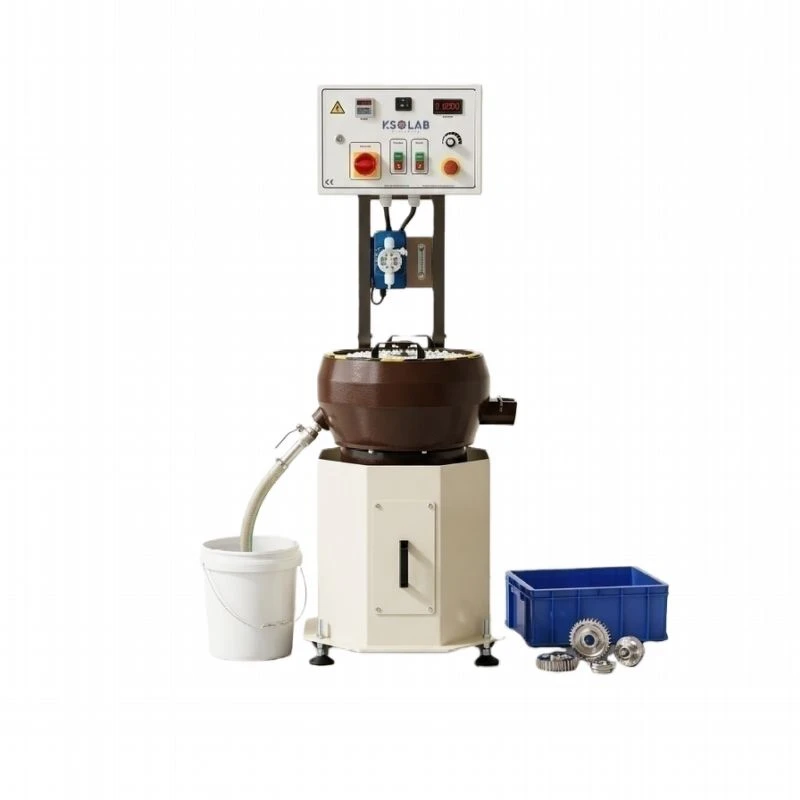
If you’re ready to talk about which machine fits your jobs, how to get training, or want to see real numbers for your business, feel free to reach out for a no-pressure chat about your needs.
Centrifugal Barrel Finishing Machine References
OSHA. (2022). Crystalline Silica: Standards and Guidelines. Occupational Safety and Health Administration.
National Floor Covering Association. (2021). Dry vs. Wet Polishing: Efficiency and Quality Comparison.
Stone Fabricators Association. (2020). Silica Exposure Risks in Natural Stone Work.
KS Lab Finishing Co., Ltd.
As one of the most professional dry polishing machine manufacturers in China, we also support customized service. We warmly welcome you to wholesale durable dry polishing machine made in China here from our factory. If you have any enquiry about pricelist, please feel free to email us.
Address: No.11-14, Yantian Shuibei Commercial Street, Fenggang Town,Dongguan,China
E-mail: sales@kslabfinishing.com
WebSite: https://www.kslabfinishing.net/
