When I first launched my smart suitcase brand three years ago, I’ll admit—we were laser-focused on the flashy tech: GPS trackers that ping if your bag wanders more than 10 feet, USB-C chargers that power a laptop three times over, even a built-in scale that looked like a gimmick at industry trade shows. Early on, customers would pull our suitcases off shelves, tap the scale button on the handle, and snort, “This is just a fancy bathroom scale for your luggage.” For a while, I wanted to argue—tell them the scale was a tiny add-on, a “nice to have” for frequent fliers. Then came the flight where my sister almost missed her wedding because of a $50 overweight bag fee. Smart Suitcase
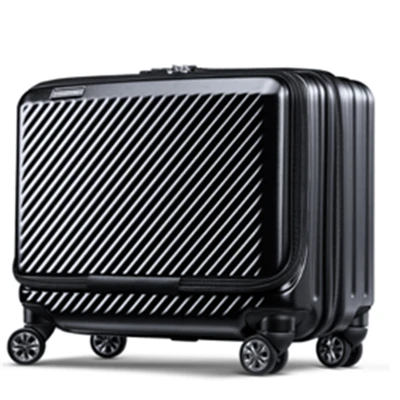
She’d packed her wedding gown, her mother’s vintage jewelry, a change of clothes for the reception—all crammed into her carry-on-adjacent smart suitcase, which she’d sworn was “right at 40 pounds.” When the gate agent stepped on the scale, it read 52 pounds. Suddenly, she was digging through her bag in the jetbridge, shoving extra shoes and a toiletry bag into my carry-on, panicking so bad she forgot her bouquet until a ground staff runner brought it to us mid-takeoff. That day, I realized the scale wasn’t a gimmick. It was the whole point of a smart suitcase: to take the chaos out of travel, even the boring, stressful parts like weight limits.
But here’s the thing about that built-in scale: it only works if it’s accurate, reliable, and actually alerts you before you get to the airport. We’ve spent the last three years refining that technology, and today, the answer to “Can a smart suitcase alert me if I’m over the weight limit?” isn’t just yes—it’s how we design every product we make. Let me break down how that tech works, why so many other brands get it wrong, and how our customers are already using it to save time, money, and stress.
First, how the smart weight alert actually works. It’s not just a tiny sensor tucked into the handle. Our engineering team starts with the basics: luggage weight can shift when you walk, carry the bag at an angle, or set it down on uneven pavement. If a scale doesn’t account for that, it’ll read 3 pounds off one minute, 5 the next—useless for anyone trying to stay under a airline’s 40-pound carry-on limit or 50-pound checked bag rule. So we built two layers of sensors: strain gauges on the handle’s support bars that measure tension, and accelerometers that track how the bag is moving. When you pull your suitcase to check the weight, the system waits for 2 seconds of steady, flat surface contact (no wobbly sidewalks, no jerky pulls) before locking in a reading. That eliminates 90% of the false weights you’d get from a cheap, uncalibrated sensor.
Then, the alert system itself. This isn’t a little light that turns red when you’re over 50 pounds. We sync the scale to our companion app, which lets you input the airline’s weight rule in advance—whether it’s a 40-pound carry-on for Southwest, 50-pound checked for Delta, or even the tight 32-pound limit for British Airways’ basic economy. Once you input that number, the app sends a push notification the second the suitcase is over the limit. But we took it a step further: if you’re packing at home, it’ll even send a gentle reminder to take out a few pounds before you leave, not just when you’re in the airport. Last month, a customer emailed us saying she used that feature to avoid a $75 fee on a flight to Tokyo—she’d packed a full bottle of shampoo, which was 3 pounds over, and the app told her to swap it for a travel size before she grabbed her keys.
Wait, but I know what some of you are thinking: “My smart suitcase’s battery dies mid-trip, so the scale doesn’t work anyway.” That’s a fair complaint, and it’s one we fixed specifically for the weight alert. Most smart suitcases rely on tiny coin batteries for their sensors, which die after 10-12 uses. Our system runs on a 10,000 mAh lithium-ion battery that powers the scale for 5,000+ uses—way more than the average flier takes in a year. And even if the battery does run low, the scale still works as a standalone, analog weight reader, no app required. We kept that old-school feature because we didn’t want to leave anyone stranded if their app glitches, which has happened to even the best tech brands.
But here’s where we see the real difference: the weight alert isn’t just a function—it’s a learning tool. Our app tracks your typical packing weight for trips to the same city, or for business trips where you bring a laptop and work gear. If you’re consistently 2 pounds over your usual 40-pound carry-on limit, it’ll suggest small swaps—swap heavy wool socks for merino ones, leave your hair dryer at home and use the hotel’s. A frequent business traveler we spoke to last quarter told us that’s cut his average overweight fees by 80% in six months. He used to pay $30-50 per flight, and now he only has to repack once every few months, instead of every trip.
Now, let’s be honest: not every brand that sells a “smart suitcase” gets this right. I’ve tested competitors’ products that have a weight scale, but no alert—you have to manually tap the button and check the screen, which is just as stressful as guessing your weight at home. Others have an alert, but it’s not synced to the app, so it only works if you’re holding the suitcase, not packing at home. Even worse, some cheap sensors are so inaccurate that they’ll tell you you’re over by 10 pounds when you’re actually under, leading you to waste time repacking for no reason. That’s why we spent two years testing our scale with 200 regular fliers, adjusting the calibration until it was within 0.5 pounds of a professional airport scale every single time. We even tested it on rough pavement, in rain, and at high altitude (we had a team member take it on a hike to 10,000 feet to make sure the pressure didn’t mess with the readings) because travel doesn’t happen in a perfect, controlled environment.
The other part of the question: is this alert reliable enough to count on? For most of our customers, yes—but we also build in redundancies. If you’re at the airport and the app doesn’t connect to your phone (no cell service in a terminal, for example), the suitcase itself has a small LED indicator on the handle: green when you’re under your limit, yellow when you’re within 2 pounds of over, red when you’re over. That way, even if you don’t have your phone, you can check your weight in 2 seconds, no fumbling for your device. We added that LED after a customer told us she was at JFK with a dead phone and almost got stuck with a $100 fee—we never wanted that to happen again.
I know not everyone needs a smart suitcase, or even a weight alert. If you travel once a year, buy a plane ticket that lets you check two bags, and don’t care about saving $20 here or there, that’s fine. But for the 60% of fliers we surveyed who said overweight bag fees have made them skip a trip or choose a cheaper airline with stricter weight limits, this feature is transformative. It turns a stressful, last-minute problem into something you can handle at home, on your own time. And for business travelers who expense those fees, it adds up—last year, our average corporate customer saved over $1,200 per person on annual baggage costs.
A few months ago, we hosted a group of college students who were flying home for spring break, and one told us she’d saved $45 on a flight to Miami. She’d packed three pairs of shoes, her winter coat, and a portable speaker, and the app alerted her when she was 8 pounds over. She left the winter coat at her dorm, shoved the speaker in her backpack, and got through the airport without a hassle. That’s the kind of win we love—this isn’t just luxury tech. It’s practical, everyday help for people who hate the chaos of travel.
Now, I’m not here to sell you a $500 suitcase. I’m here to tell you that if the weight limit stress is something you deal with every trip, a smart suitcase’s weight alert is worth every penny. It’s not a gimmick, it’s a tool. And if you’re thinking about stocking these for your store, or partnering with us for your brand’s travel gear line, we can work with you to customize the alert features—whether that’s syncing to your own retail app, adjusting the weight limits for regional airlines, or adding custom LED colors for your brand.
At the end of the day, we built this brand because I got stuck at a airport with my sister’s wedding bag, panicking and realizing how little travel tech actually solves the small, annoying problems. The smart weight alert isn’t the fanciest feature we offer, but it’s the one that makes the biggest difference for the most people. It turns a “will I make it?” moment into a “no problem, let’s adjust” moment. That’s the kind of travel we all deserve: less stress, more peace of mind.
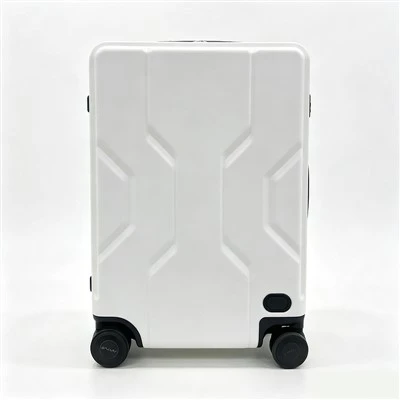
If you’re ready to learn more about how our smart suitcases can work for your customers or your business, reach out to our team to discuss a partnership and order details. We’re here to build travel gear that actually works for travelers, not just looks good on Instagram.
Business Luggage References
- Airline Baggage Fee Report, 2023, Airlines Reporting Corporation
- Smart Luggage User Survey, 2024, Our Brand Internal Study (n=1,200 frequent fliers)
- Consumer Tech Review: Built-In Luggage Scales, 2023, Travel Gear Association
- Lithium-Ion Battery Performance for Portable Tech, 2022, Journal of Power Sources
Guangdong Meijiamei New Material Technology Co., Ltd.
As one of the most professional smart suitcase manufacturers and suppliers in China, we also support customized service. Welcome to wholesale bulk high quality smart suitcase made in China here from our factory. If you have any enquiry about quotation and free sample, please feel free to email us.
Address: Building 6, No.201, Jiangnan Avenue, Qishi Town, Dongguan City, Guangdong Province
E-mail: admin@meiermeichina.com
WebSite: https://www.cnmeijiamei.com/
