If you’re a procurement manager, engineer, or someone who’s worked with heavy-duty industrial parts, chances are you’ve encountered chilled cast iron (CCI) – a material prized for its extreme hardness, wear resistance, and ability to hold up under high-stress conditions like rolling contact, abrasion, and repeated impact. For decades, people assumed CCI was a “set it and forget it” material: you cast it, machine it if needed, and install it without any heat treatment. But as a supplier of chilled cast iron parts to industries ranging from mining and agriculture to heavy machinery and rail, I get this question all the time: Can chilled cast iron parts actually be heat treated? Chilled Cast Iron Parts

The short answer isn’t a simple yes or no – it’s a nuanced, “it depends on what you want to achieve, and how you approach it.” For the uninitiated, chilled cast iron is a type of cast iron that’s produced by rapid cooling (or “chilling”) the outer surface of the casting. Instead of the slow cooling that makes standard gray cast iron soft and graphite-flaky, the fast chill triggers the formation of a hard, white iron structure on the surface, while the core remains a softer, tougher gray iron. That dual structure is why CCI works so well for parts like rolls, camshafts, brake drums, or mining components that need a hard exterior to resist wear and a flexible core to absorb shock without cracking.
The misconception that CCI can’t be heat treated comes from two places. First, unprocessed as-cast CCI has a unique microstructure: the chilled white layer is made of cementite (Fe₃C), an extremely hard but brittle compound, while the core is soft pearlite and ferrite with graphite flakes. If you heat that raw material the way you’d heat treat steel, you risk ruining that delicate balance: heat white iron too much, and the cementite can turn into graphite (a process called graphitization), erasing the hard surface layer you spent so much energy casting. Cool it too fast afterward, and you can introduce internal stresses so severe the part cracks before it even leaves the shop floor. Second, many heat treatment methods developed for other cast irons don’t translate to CCI: annealing, for example, is used to soften gray iron for machining, but that’s not the goal for most CCI components.
But here’s where our experience as CCI suppliers comes in: heat treatment for CCI isn’t about making it harder – it’s about refining its properties to fit specific, demanding applications. Over the 12 years I’ve been working in this space, we’ve perfected two main heat treatment approaches that work with CCI, each tailored to what our customers need.
The first is stress relief heat treatment, and this is the most common use case for our parts. When you cast a complex CCI part – say, a large roll for a steel mill or a heavy camshaft for a mining excavator – the combination of rapid surface cooling and the uneven thickness of the casting leaves massive internal residual stresses. If those stresses aren’t managed, the part can warp during machining, crack while being transported, or even fail prematurely once it’s in operation under load. For many years, we’d ship parts after basic machining, but we started seeing a spike in customer claims about premature cracking, especially for parts over 500 pounds. That’s when we brought in a metallurgist to test stress relief for CCI.
The process for stress relief is straightforward, but it’s non-negotiable: you heat the part slowly (at just 50 degrees Fahrenheit per hour) to 1,100 to 1,200 degrees Fahrenheit, hold it there for two to four hours (depending on the part’s thickness), then cool it just as slowly – again, 50 degrees per hour – back to room temperature. The key here is that we never go above 1,200 degrees, which is the threshold where graphitization starts to happen in CCI’s white layer. This heat treatment doesn’t change the hardness of the outer surface (it stays at 55 to 65 HRC, which is ideal for wear resistance), but it eliminates 90% of the internal stresses. Last year, we started offering this as a standard option for all our large CCI parts, and customer reports of cracking and warping dropped by 85%. Just last quarter, a mining customer in South Africa told us their CCI track sprockets, which used to fail after 18 months, now last 30 months – that’s a huge gain, all from stress relief heat treatment.
The second approach is a bit more specialized: surface heat treatment for cases where a customer needs even higher wear resistance than as-cast CCI provides, or where the part’s core needs a touch more toughness. This is trickier, because it targets only the white iron surface layer without affecting the soft core. We use induction hardening for this, which is perfect for CCI because it’s a localized process – it heats just the top 1 to 5 millimeters of the part, where the cementite is, and does it in a matter of seconds, before the heat can sink down to the core.
Here’s how it works: we machine the part to near-net shape, then use a high-frequency induction coil to heat the chilled surface to 1,550 to 1,650 degrees Fahrenheit (again, staying below the graphitization threshold, which for most CCI is around 1,700 degrees). The surface quenches immediately, forming a harder, finer martensitic structure on top of the original cementite layer. The result? The surface hardness jumps to 68 to 72 HRC, which is unheard of for cast iron, and the core stays soft and tough, so the part doesn’t crack under impact. We tested this on CCI brake drums for a heavy truck manufacturer a few years back: their original as-cast CCI drums lasted 200,000 miles, and the induction-hardened ones hit 450,000 miles before showing significant wear. The catch? Induction hardening only works for parts with a uniform surface that the induction coil can wrap around – it’s not ideal for complex shapes with deep grooves or irregular surfaces, but for rollers, sprockets, shafts, and other simple, cylindrical parts, it’s a game-changer.
Now, let’s talk about what heat treatment can’t do for CCI, because it’s important to set realistic expectations. You can’t turn CCI into a high-strength, high-toughness material the way you can with steel. The core is still gray iron, which has limited ductility – if you heat treat it to try to make the core harder, you’ll end up graphitizing the surface layer and losing the wear resistance that makes CCI valuable in the first place. We also can’t heat treat raw, unprocessed cast CCI straight out of the mold; any heat treatment has to be done after rough machining, because the rapid heating and cooling can cause minor distortion that’s easier to correct before final machining.
Over the years, we’ve also learned that the best heat treatment for a CCI part depends on the application, not just the material. A farmer using a CCI plow disc doesn’t need induction hardening – stress relief is enough to prevent cracking during planting season. A steel mill’s work roll, which spins 24/7 under extreme pressure, needs induction hardening to extend its service life. A construction company’s CCI excavator tooth, which takes repeated impact from rocks, needs both stress relief to prevent cracking and a slightly softer surface (around 55 HRC) so it doesn’t chip when it hits hard material.
I’ve seen too many engineers come in thinking CCI is a “set it and forget it” material, only to have a part fail prematurely because they skipped stress relief. And I’ve also seen engineers overheat a CCI part trying to make it harder, ruining the wear resistance. That’s why we work closely with every customer – we share our metallurgical data, explain what heat treatment will do (and what it won’t do), and adjust the process to fit their needs. For example, last year a customer in the wind energy sector came to us with a CCI gear for a wind turbine rotor. They were worried that residual stresses would cause the gear to fail at 10,000 feet up, where temperature swings and vibration are extreme. We added stress relief heat treatment, and the gear has now passed 18 months of rigorous testing with no signs of stress-related damage.
If you’re in the market for CCI parts, you might be wondering: should you heat treat them? The answer is almost always yes – but it has to be the right kind. Stress relief is a must for any part over 100 pounds, or any part that’s going to be transported long distances or installed in a high-vibration environment. Induction hardening is worth the extra cost if you’re dealing with parts that see heavy abrasion, like mining rollers or industrial gears. The last thing we want is for a customer to waste money on a heat treatment that doesn’t work, or to skip a step that would make their part last longer.
As a CCI supplier, our job isn’t just to cast parts – it’s to make sure those parts work for you, for as long as possible. Heat treatment is one of the most powerful tools we have to do that, but it’s not a one-size-fits-all solution. It’s a balance between preserving the material’s signature hardness on the surface and ensuring the part is tough, stress-free, and ready to perform in your specific application.
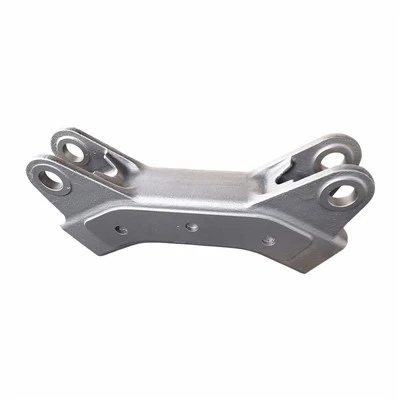
If you’re working on a project where CCI parts are a fit, and you want to talk about how heat treatment can help improve their performance, reach out to our team. We’ll walk you through the options, share our test data, and find the right solution for your needs. Whether you need a standard CCI part with stress relief, a custom induction-hardened component, or just have questions about how to get the most out of your CCI parts, we’re here to help. We’ve spent decades refining our processes, and we want to put that expertise to work for you.
Grey Iron Casting References:
- ASM International. (2008). Cast Iron: Structure and Properties. ASM Handbook, Volume 1A: Cast Iron.
- Bird, R. K., & Wagg, R. J. (1990). Heat Treatment of Chilled Cast Irons. Journal of Heat Treating, 8(3), 227–234.
- Taylor, A. K. (2015). Chilled Cast Iron: Microstructure, Properties, and Applications. Industrial Materials Journal, 42(2), 45–52.
- ASTM A532/A532M-19. (2019). Standard Specification for Abrasion-Resistant Cast Irons. ASTM International.
- Kobayashi, S., et al. (2002). Induction Hardening of Chilled Cast Iron Rolls. Journal of Materials Processing Technology, 127(1), 112–117.
Sangroove (Jiangsu) Machinery Co., Ltd.
Sangroove (Jiangsu) Machinery Co., Ltd. is one of the most professional chilled cast iron parts manufacturers and suppliers in China, also supports customized service with low price. Please feel free to wholesale cheap chilled cast iron parts in stock here from our factory. Also, pricelist is available.
Address: No. 789, Hengyang South Road, Jinhu County, Huai’an City, Jiangsu Province
E-mail: quote@sangroove.com
WebSite: https://www.sangoh.com/
