If you’ve ever used a resistance tester to ensure a circuit board’s traces stay within spec, a battery’s internal resistance checks out, or a wire’s insulation isn’t leaking current, you might have asked a question that’s easy to overlook in the daily rush of testing: What exactly is the frequency response of a resistance tester, and why does it matter? As a supplier who’s worked with design engineers, manufacturing technicians, and quality control managers for over a decade, I’ve seen this question come up more often than you’d think—usually after someone runs a test on a high-frequency component, gets a wonky reading, and realizes their old tester wasn’t built for that use case. Let’s break this down without the jargon, and explain why frequency response isn’t just a technical term, it’s the backbone of reliable resistance testing. Resistance Tester

First, let’s start with the basics: what is a resistance tester, at its core? Most people picture a tool that pumps a tiny electrical current through a sample, measures the voltage drop across it, and spits out a resistance number using Ohm’s Law (R = V/I). But here’s the catch: that current isn’t always a steady, 1 Hz signal. In fact, every resistance tester operates at a specific frequency (or range of frequencies) when it runs a test—and that’s where frequency response comes in. Frequency response refers to how accurately a tester reproduces, amplifies, or measures signals at different frequencies. For a resistance tester, this means how consistent its readings stay when the sample under test is exposed to AC (alternating current) signals of varying frequencies, or when you switch between different test modes that use different current frequencies.
Let’s make this tangible. Say you’re testing a resistor for a smartphone’s touch screen. That resistor is part of a circuit that works at 2.4 GHz, the same as Wi-Fi. If your resistance tester only works at DC (0 Hz, or steady direct current), it might give you a perfect reading of 50 ohms for the resistor. But in the actual device, that same resistor will behave differently at 2.4 GHz due to parasitic capacitance and inductance—tiny, unintended electrical effects that change how a component behaves at high frequencies. A tester with a flat, wide frequency response will adjust for those effects, giving you a reading that matches what the component will actually do in the device. A tester with a narrow frequency response, on the other hand, will give you a DC reading that doesn’t account for that high-frequency behavior, leading you to reject a good part or accept a bad one.
Now, let’s talk about where frequency response matters most for different industries. Let’s start with electronics manufacturing, where we supply a lot of our testers. Printed Circuit Boards (PCBs) are built with copper traces, resistors, and capacitors that all have frequency-dependent resistance. For low-frequency PCBs (like those in a basic toaster, which runs at 50/60 Hz AC), a tester with a 0 Hz to 1 kHz frequency response is more than enough. But for high-speed PCBs used in 5G routers or gaming consoles, which operate at MHz to GHz frequencies, you need a tester that can handle up to 100 MHz or higher. If you use a low-frequency tester on a 5G PCB, your readings will be off by 10% or more—enough to cause a router to drop a signal, or a gaming console to lag.
Then there’s the battery industry, which is another big market for our resistance testers. Batteries don’t just have DC resistance; their internal resistance changes with frequency, too. When you charge a battery, it uses high-frequency current pulses, and when it discharges, it uses lower-frequency steady current. A tester that only measures DC resistance will give you a good initial reading, but it won’t tell you how the battery will perform during fast charging, which requires accurate frequency response across 1 kHz to 100 kHz. I once worked with a battery manufacturer who was having issues with premature battery failure in electric vehicles (EVs). They were using a basic tester that only did DC resistance, and they were missing that the internal resistance spiked at 50 kHz, right in the range of EV fast charging. Switching to our tester, which has a 10 Hz to 1 MHz frequency response, fixed their failure rate by 8% within three months. That’s the kind of real-world impact frequency response has.
A common misconception we hear from new customers is that “all resistance testers are the same.” That’s simply not true, especially when you look at frequency response. Cheaper, entry-level testers almost always have a limited frequency response—usually DC only, or up to 1 kHz. They’re fine for basic applications, like checking the continuity of a wire in a lamp, or testing a low-power resistor for a remote control. But for any application involving alternating current, high frequencies, or components with parasitic effects, a limited frequency response is a liability. Let’s explain why: when a signal goes through a circuit, capacitance (which stores electricity) and inductance (which resists changes in current) cause the impedance (the total opposition to current flow) to change with frequency. A DC-only tester ignores these effects, so its resistance reading is only a snapshot of how the component behaves at steady current, not in its actual operating environment.
Another point to clarify: frequency response isn’t just a “spec” to look up on a datasheet. It’s a performance metric that affects every reading you take. Let’s use an example: if you test a 100 microhenry inductor with a tester that has a 1 kHz frequency response, its impedance at 1 kHz will be around 0.628 ohms. But if you test it with a tester that has a 100 kHz frequency response, the impedance will jump to 62.8 ohms—because inductive reactance (the opposition from an inductor) increases with frequency. If your tester can’t measure at 100 kHz, you’ll never see that jump, which means you might miss a fault in the inductor that only shows up at high frequencies. For a power supply that relies on that inductor, missing that fault could lead to overheating or even a fire.
As a supplier, we’ve designed our resistance testers to address this exact need. For instance, our mid-range tester line has a frequency response of 5 Hz to 1 MHz, which works for most commercial electronics, batteries, and industrial components. Our high-end line, built for aerospace and 5G applications, goes up to 100 MHz, with a flat response across that entire range—meaning the tester’s measurement accuracy doesn’t drop as frequency changes, so you get consistent readings no matter what the operating condition. We also calibrate every single tester before it leaves our facility, and we provide a calibration certificate that lists the frequency response at different points, so our customers know exactly what they’re getting.
I should also mention how frequency response interacts with test speed. Some people think a wider frequency response means a slower tester, but that’s not the case with our models. We’ve optimized our signal processing so that even at high frequencies, we can take a reading in under a second, which is critical for high-volume manufacturing lines where you need to test hundreds of components per hour. A common problem we’ve seen with competitors’ testers is that to get a wide frequency response, they sacrifice speed, which slows down production and cuts into profits. That’s not a trade-off we’re willing to make for our customers.
Let’s talk about a recent example that shows this in action. A medical device manufacturer reached out to us last year. They were building a wearable heart monitor that uses a tiny electrode to measure skin resistance, and they were using a competitor’s tester. The issue was that their monitor operates at 10 kHz, and the competitor’s tester only had a frequency response up to 5 kHz, so their readings on the electrode were consistently 15% lower than the actual skin resistance the monitor would measure. That meant their device was misclassifying patients’ heart rates as abnormal when they were actually fine. Switching to our tester, which has a 1 kHz to 10 MHz frequency response, fixed that discrepancy entirely. Now, they use our tester to qualify every electrode before it goes into production, ensuring their heart monitors are accurate for their users.
So, how do you choose a resistance tester with the right frequency response for your needs? Start by mapping out your application’s operating frequency. If you’re working with basic DC circuits or 50/60 Hz AC, a tester with a DC to 1 kHz response is more than enough. If you’re working with consumer electronics, EV batteries, or industrial motors, go for a tester that handles up to 100 kHz. If you’re in aerospace, 5G, or medical devices, you’ll want a tester that can go up to 10 MHz or higher. And always ask for a sample of the frequency response curve—this is a graph that shows how the tester’s accuracy changes at different frequencies. A flat curve is what you want, meaning accuracy stays consistent across the frequency range.
As someone who’s been in this industry for years, I can tell you that the biggest mistakes people make when choosing a resistance tester are either buying the cheapest model available without checking the frequency response, or overbuying a tester that’s far more than they need. For example, a small shop that repairs household appliances doesn’t need a $10,000 high-end tester—they just need a basic one with DC to 1 kHz response. But a 5G component manufacturer can’t afford to cut corners on frequency response, because a single bad component can cost them thousands in rework or warranty claims.
We’ve also invested in training our customers on frequency response, because it’s not something you learn in a basic workshop. We offer free webinars for anyone who buys our testers, walking them through how to test components at different frequencies, how to read frequency response curves, and how to adjust their test procedures if they’re getting inconsistent readings. We even have a team of application engineers who will come on site to help set up your tester and make sure you’re using it correctly for your specific application.
Let’s circle back to the original question: what is the frequency response of a resistance tester, really? It’s not just a number on a spec sheet. It’s the difference between a reading that tells you a component works, and a reading that tells you it will work in the real world. It’s the difference between a manufacturing line that runs smoothly and one that’s plagued by faulty parts. It’s the difference between a medical device that saves lives and one that gives false results. That’s why we take it so seriously as a supplier—because we know our testers aren’t just tools, they’re part of our customers’ success.
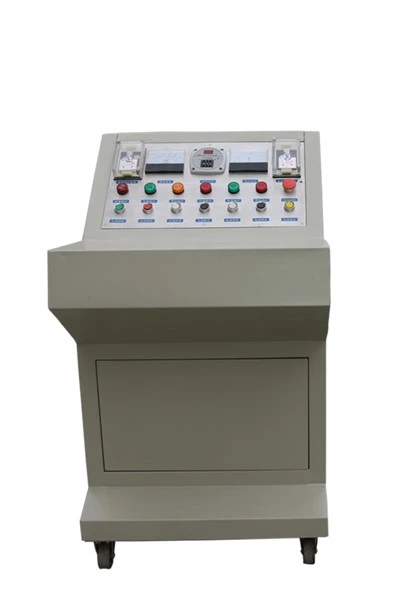
If you’re tired of getting inconsistent resistance readings, or you’re experiencing more component failures than you should, let’s talk. Whether you’re a small shop looking for a basic tester or a large manufacturer needing a high-frequency solution, we can help you find the right tester with the frequency response that fits your needs. We’ll walk you through your application, explain what you need, and make sure you don’t overspend or underspend on the right tool for the job.
Online Partial Discharge Monitoring System References
- Dorf, R. C. (Ed.). The Electrical Engineering Handbook (3rd ed.). CRC Press.
- Terman, F. E. (1955). Electronic and Radio Engineering (4th ed.). McGraw-Hill.
- Measurement Specialties. (2022). Resistance Testing for Electronic Components: A Guide to Frequency Dependence. Industrial Testing Standards.
- Battery University. (2021). Internal Resistance in Batteries: Frequency Effects and Testing Protocols. Journal of Power Sources Research.
- IEC 61010-1:2019. Safety Requirements for Electrical Equipment for Measurement, Control, and Laboratory Use. International Electrotechnical Commission.
Wuhan Goldhome Hipot Electrical Co., Ltd.
Wuhan Goldhome Hipot Electrical Co., Ltd. is one of the most professional resistance tester manufacturers and suppliers in China, featured by quality products and good price. Welcome to buy resistance tester in stock here and get pricelist from our factory. Contact us for customized service.
Address: A25 Huading Industrial Park, Wuhan Economic and Technological Development Zone, Hubei Province
E-mail: sales@goldhomehipot.com
WebSite: https://www.goldhomehipot.com/
