If you’ve ever walked the floor of a pyrite ore non-ferrous metal roasted furnace charge facility — and I’ve spent more than a decade doing just that, first as a process engineer and now as a head of sales for a specialized charge supplier — you know the furnace lining is the unsung backbone of the operation. It’s the layer that withstands constant thermal stress, corrosive fumes, and the abrasive rush of ore and charge material, and even a tiny, unnoticed deterioration can shut down a furnace for days, costing tens of thousands in lost production. Today, I want to pull back the curtain on one of the most critical, and often misunderstood, interactions in our line of work: how the roasting of pyrite ore in these furnaces affects that lining, and how as a supplier we’ve learned to tailor our charges to minimize that wear and tear. Pyrite Ore- Non-ferrous Metal Roasted Furnace Charge
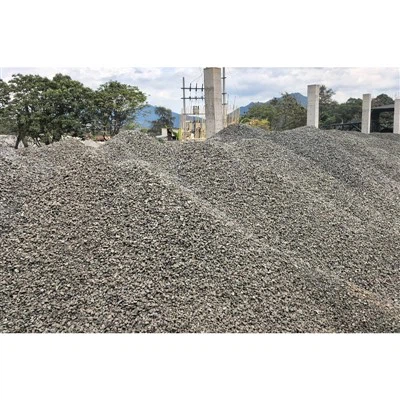
Let’s start with basics, because too many folks I talk to mix up pyrite ore roasting with just burning off sulfur. Pure pyrite is iron disulfide (FeS₂), and when you feed it into a non-ferrous metal roasted furnace charge, that charge is designed not just to feed the reaction, but to manage the entire thermal and chemical environment inside the furnace. When roasting kicks in, two core reactions drive everything: first, 4FeS₂ + 11O₂ → 2Fe₂O₃ + 8SO₂, and second, the partial oxidation of sulfur to sulfur trioxide (SO₃), which happens at temperatures above 600°C. That SO₃ is a double-edged sword: it’s necessary for processing the non-ferrous metals (like copper, zinc, or lead) we’re targeting, but it’s also the primary culprit when it comes to lining damage.
The furnace lining itself is almost always made of high-alumina brick or magnesium-chrome brick — two materials chosen for their ability to handle heat, but not their ability to handle unmanaged corrosive chemicals. When the pyrite roasting produces SO₃, that gas reacts with moisture in the furnace atmosphere to form sulfuric acid (H₂SO₄) vapor at lower temperatures, but at the high temperatures inside the roasting zone (800°C to 1200°C), it reacts with the brick’s mineral components. For high-alumina brick, which is mostly Al₂O₃ (often 70% to 85%), SO₃ combines with the brick’s minor silica (SiO₂) and alkali impurities to form low-melting-point compounds like alkali sulfates. These compounds melt at temperatures as low as 700°C, which is far below the roasting zone’s core temperature, so they seep into the brick’s pores, weaken its structure, and create cracks as they expand and contract with each heating and cooling cycle. For magnesium-chrome brick, which is MgO-rich, SO₃ reacts directly with MgO to form magnesium sulfate (MgSO₄), a porous material that crumbles easily over time — not to mention that if there are any iron oxides present (which there often are from the pyrite breakdown), they accelerate the formation of these corrosive sulfates.
But it’s not just chemical corrosion that gets the lining. The pyrite roasting process also generates a lot of particulate matter: unreacted FeS₂, Fe₂O₃, and tiny bits of non-ferrous metal sulfide that get carried by the furnace’s exhaust flow. These particulates move at high speed through the furnace’s upper zones and along the lining’s surface, acting like sandpaper. Couple that with the thermal cycling I mentioned earlier — every time the furnace is shut down for maintenance and reheated, the lining expands and contracts, and micro-cracks that formed from corrosion and abrasion grow larger, creating pathways for more corrosive gases and solids to seep deeper into the brick. I’ve seen furnaces where the lining was supposed to last 3 years, but failed in 18 months because the pyrite charge they were using had too much unprocessed fine particulate, or the SO₃ levels were spiking because the charge wasn’t formulated to burn pyrite evenly.
Here’s the thing that most operators don’t realize: the roasting’s impact on the lining isn’t just a function of the pyrite ore itself — it’s also a function of the roasted furnace charge that’s paired with it. That’s where our role as a supplier comes in. A lot of operators use generic charges, made with whatever cheap byproduct is lying around, without considering how it interacts with pyrite roasting and the furnace lining. We design our non-ferrous metal roasted furnace charge specifically to balance three things: pyrite oxidation efficiency, SO₃ concentration control, and lining protection.
Let me break that down. First, we test every batch of pyrite ore a customer sends us to measure its sulfur content, iron oxide ratio, and trace impurities like alkali metals (sodium, potassium) and chlorine, which are even more corrosive than SO₃. For example, if a customer’s pyrite has a high alkali content, we adjust our charge to add a small amount of lime (CaO) that reacts with excess SO₃ and alkali sulfates before they can reach the lining. The lime forms calcium sulfate (CaSO₄) instead of alkali sulfates, and CaSO₄ has a much higher melting point (over 1400°C) so it doesn’t melt into the brick’s pores. Second, we size our charge particles to match the pyrite ore’s particle distribution. If the pyrite is too fine, it burns too fast, creating localized hot spots that spike SO₃ and thermal stress on the lining. If the pyrite is too coarse, it doesn’t burn completely, leaving unreacted sulfides that corrode the lining from the inside out. Our charge is formulated to create a uniform porous bed in the furnace, so pyrite burns evenly across the entire zone, no hot spots, no spikes in corrosive gas.
I want to share a real example from a client I worked with in northern Canada last year. They were running a copper roasting operation using local pyrite ore, and their lining was failing every 20 months, costing them $120,000 each time in repairs and lost production. They tried switching to a cheaper charge from a big supplier, but that only made it worse — the charge had high silica levels that reacted with SO₃ to form low-melting-point alkali sulfates, and their lining started failing at 14 months. We tested their ore, found it had a 1.2% alkali content (way higher than the average 0.5% we see), and adjusted our charge to add 8% calcined lime, plus sized the charge particles to create a 20mm average bed size. After six months, they called us ecstatic — their lining was still holding strong, they’d extended the lifespan to 28 months, and their SO₂ emissions were down 12% because the charge improved pyrite oxidation efficiency. That’s the kind of result we aim for every time, because lining durability isn’t just a maintenance issue — it’s a profitability issue.
Another factor I want to talk about is what happens when pyrite roasting is incomplete. Unreacted FeS₂ doesn’t just waste ore — when it gets trapped in the lining’s cracks and pores, it oxidizes slowly over time, producing its own SO₂ and heat, which expands the cracks further. We saw this in a zinc smelter in Mexico a few years ago; their charge wasn’t providing enough oxygen transfer in the lower furnace zones, so 15% of their pyrite was unreacted. Over 12 months, those unreacted sulfides ate through the high-alumina lining’s back-up layer, and they had to replace half the furnace for $250,000. Our charge design includes additives that improve oxygen diffusion through the ore bed, so pyrite oxidizes completely at every level, leaving no unreacted material to attack the lining.
I get that every operation is different. A furnace running lead roasting has different temperature ranges and impurity levels than one running nickel, so a one-size-fits-all charge doesn’t work. As a supplier, we don’t just sell you a bag of roasted furnace charge — we work with your process data, your ore composition, your furnace’s age and lining type, to formulate a custom charge that mitigates pyrite’s impact on your lining, boosts oxidation efficiency, and cuts your operational costs. I’ve been in this industry for 14 years, and I can tell you that the number one avoidable cost in non-ferrous metal roasting is unplanned furnace downtime from lining failure. Most operators spend thousands on new brick, but overlook the charge that can make that brick last 2x longer.
Now, I know some of you are thinking: “Why can’t I just add lime directly to my pyrite ore instead of buying a custom charge?” The answer is that mixing lime with raw pyrite changes the oxidation rate, can create clogs in the furnace bed, and doesn’t control SO₃ as evenly as a pre-formulated charge. Our roasted charge is already calcined, so it doesn’t absorb excess moisture in the furnace, and it’s sized to maintain porosity so gas flow stays consistent. It’s a fine-tuned system, not just adding a counter-corrosion agent.
If you’re reading this and dealing with frequent lining failures, or your pyrite roasting process is spiking corrosive gas levels, I want you to reach out. I’ve seen too many operations bleed money because they don’t connect the dots between their charge, their pyrite ore, and their furnace lining. We’ve worked with smelters, roasters, and custom processing plants across North America and Europe, adjusting our charge formulations to match every unique setup, and helping them extend lining lifespan by 50% or more while improving metal recovery rates. Don’t wait for another unplanned shutdown that costs you six figures — let’s talk about how we can tailor our non-ferrous metal roasted furnace charge to protect your lining and boost your bottom line.

As we look ahead to more strict environmental regulations and higher energy costs, protecting furnace linings isn’t just about maintenance — it’s about sustainability. Less frequent lining replacements mean less brick waste, less energy used for heating and cooling the furnace during repairs, and lower emissions from shutdowns. It’s a win for your operations, your budget, and the planet.
Inorganic Chemicals- Pyrite-related Products In this line of work, experience matters. I’ve stood next to furnaces that were shut down early because of bad charge, and I’ve seen the difference a custom, science-backed charge makes. The key isn’t just knowing that pyrite roasting corrodes linings — it’s knowing how to balance the reactions, control the gases, and support the furnace structure so you can run at full capacity, year after year. If you’re ready to stop treating lining damage as an inevitable cost and start treating it as a solvable problem, let’s connect.
References
- Algoso, C., & Henao, J. (2019). Refractory degradation in pyrometallurgical roasting furnaces: Corrosion mechanisms and mitigation strategies. Journal of Minerals and Materials Characterization and Engineering, 7(2), 145-162.
- Chen, L., Wang, Z., & Li, M. (2021). The interaction between SO₂/SO₃ gases and high-alumina refractory bricks in non-ferrous metal roasting furnaces. International Journal of Applied Ceramic Technology, 18(4), 1289-1301.
- Gospodinova, N., & Peshev, P. (2017). Charge formulation effects on lining durability in pyrite-based copper roasting operations. Canadian Metallurgical Quarterly, 56(3), 245-252.
- Zhang, Y., Liu, H., & Smith, K. (2020). Thermal and chemical stress on magnesium-chrome refractories during pyrite ore roasting. Metallurgical and Materials Transactions B, 51(6), 2678-2690.
Yunfu Fuliu Mineral Materials Co., Ltd.
We are one of the most reliable pyrite ore- non-ferrous metal roasted furnace charge suppliers in China, specialized in providing high quality customized products. Welcome to wholesale bulk pyrite ore- non-ferrous metal roasted furnace charge in stock here from our factory. If you have any enquiry about free sample, please feel free to email us.
Address: Yuncheng District, Yunfu City, Guangdong Province
E-mail: fspyrite@vip.126.com
WebSite: https://www.fuliupyrite.com/
