If you’ve ever worked in a workshop during a sweltering summer, you know that even a steady breeze from a wall fan can feel like a sauna—one that makes it hard to focus, slows down heavy machinery, and even leaves you drained by lunch. For years, shop owners have tossed around ideas to cool these big, open spaces, and lately, a lot of folks have asked me: can an industrial mist generator actually pull that off, instead of just making everything damp? As someone who’s been selling these systems for over a decade, I’m here to break this down straight—no jargon, no fancy sales pitches, just what actually works and what you need to know before pulling the trigger. Industrial Mist Generator
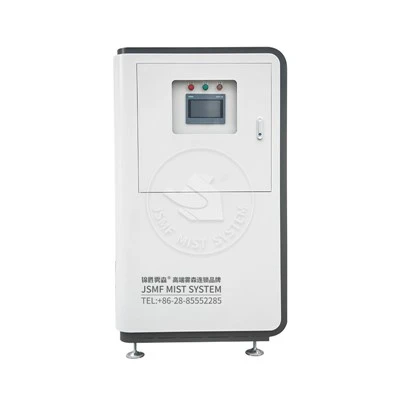
First, let’s clear up the basics: industrial mist generators aren’t the same as the tiny, tabletop spray bottles you use at home, or even the fancy misting systems for backyard patios. These bad boys are built to pump out tiny water droplets—like, super tiny, 10 to 50 micrometers small. That’s key. If the droplets are too big, they’ll just splatter on the floor, leave water stains on your tools, pools under your equipment, and do nothing for the temperature. But the small ones? They evaporate fast—really fast. And when water changes from a liquid to a gas, it absorbs heat from the air around it. That’s the same science that cools your body when you sweat, right? But on a bigger scale.
Now, does this work in a workshop? Let’s get real about workshop conditions because they’re way different from a closed patio or a tiny office. Workshops are usually big—think 10,000 square feet or more, with high ceilings, lots of heavy machinery that already pumps out heat (lathes, welders, compressors—these things can add hundreds of extra degrees just running), and usually big roll-up doors or open bays for loading materials. That’s a lot of volume to cool, but here’s the good news: if set up right, industrial mist systems can cut the ambient temp by 10 to 15 degrees Fahrenheit, even in those big, drafty spaces.
I’ve seen this first-hand with a customer last year: a metal fabricating shop in Detroit that was hitting 98 degrees on summer afternoons, with some parts that got too hot to handle without gloves. They installed a mid-sized 10-nozzle system along their main production aisle, set it to run for 30 seconds every 10 minutes, and within a week, they were down to 82 degrees. Their welders stayed more focused, less workers took midday breaks to cool off, and their air compressors—one of the biggest heat hogs—actually ran more efficiently because they didn’t have to work as hard to stay cool. The key here was they didn’t overdo the misting. If they’d run it nonstop, they would’ve had puddles on the floor and moisture rusting their steel stock. That’s the mistake most new shop owners make: cranking the mist too high because they think more equals cooler, but it’s actually about matching the mist output to your space’s size and ventilation.
Wait, let’s talk about ventilation, because that’s a make-or-break point. If your workshop is totally sealed—no fans, no open doors, just walls and a roof—misting might not work as well. The evaporated water vapor has nowhere to go, so the air gets humid, which makes that cooling effect useless. But most workshops aren’t sealed—they have exhaust fans, or open loading bays, or even cross-ventilation from a side door. That constant air flow flushes out the humid air and brings in fresh, drier air, so the mist can keep evaporating and pulling heat. I tell customers: if you can keep air moving at 1 to 3 miles per hour (which is what most workshop fans already do), the mist will work like a charm. If your space is super stagnant, you might need to add a couple extra exhaust fans to pair with the mist system.
Another big question: is misting safe for a workshop? Let’s break this down by workshop type, because not all shops are the same. If you’re a woodworking shop, or a metal shop where you’re not dealing with explosive dust or flammable materials, this is totally fine. The water droplets are so small, they don’t settle on surfaces enough to cause issues—we’re talking a little dampness, not flooding. But if you’re a chemical plant, or a shop with lots of volatile dust (like grain, or certain plastics that can ignite easily), you have to be careful. Even small amounts of moisture can mix with dust and change its properties, or create a humid environment that raises explosion risks. For those spaces, misting might not be the right call, but that’s a niche case. For 90% of manufacturing, woodworking, auto repair, and fabrication shops, it’s safe—no issues with electrical equipment, no rust if you set the system up right, no mess on your tools.
Let’s also compare this to other cooling options, because that’s what most shop owners care about: cost. A central air conditioning system for a 10,000 square foot workshop? You’re looking at $50,000 to $100,000, plus thousands a month in electricity. Evaporative coolers (swamp coolers) are cheaper, but they only work well in super dry climates—like Arizona, or parts of Texas. If you’re in a humid place like Florida or the Pacific Northwest, swamp coolers do almost nothing. Industrial mist generators, though? They’re way more affordable. A system for a 10,000 square foot space will run you $5,000 to $15,000, depending on the size, and electricity costs are like $50 to $100 a month. That’s a no-brainer for most small to mid-sized shops.
But I’ll be honest—there are myths out there, and I hear them every day. One of the biggest: “Misting will rust all my metal.” Only if you run it nonstop, or don’t have proper drainage, or the space is super humid already. We recommend running the system on a timer, so it only mists for short bursts. And if you have steel stock stored outside, or in a section of the workshop without much ventilation, you might want to cover it or add a small dehumidifier to that zone, but 9 times out of 10, it’s not a problem. Another myth: “Misting just makes the space wet.” Again, no—unless you have the wrong nozzles (buy cheap nozzles that make big droplets, and yeah, you’ll have a mess) or you set the mist output too high. We use high-pressure nozzles (1,000 PSI, usually) that make those tiny droplets, so they evaporate before they hit the ground. I’ve had customers test this by putting a piece of paper on the floor while the mist is running—it’s a little moist, not soaked.
So, when does misting not work? Let’s be clear about that, because I don’t want to sell someone a system that won’t fit their needs. If your workshop is smaller than 2,000 square feet, and you can afford central AC, that’s fine—misting is overkill for a tiny space. If you’re in a place with constant humidity over 80% (like a tropical island, or a coastal area in summer), the evaporation rate slows down, so the cooling effect is minimal. In that case, you’d need to pair the mist system with a dehumidifier for the air, which adds cost. And if you have no ventilation at all—no fans, no open doors, just a closed box—then the vapor builds up, and you’re just making the air muggier, not cooler.
But for most of the shops I work with, this is a game-changer. Let’s talk about another customer: a auto repair shop in Chicago, with 12 bays, big garage doors that stay open all day, and temps hitting 95 in summer. They tried a swamp cooler a few years back, and it did nothing because Chicago’s humidity is too high. They switched to a mist system, and now their bays are consistently 85 degrees, even on the hottest days. Their techs say they don’t get as tired, they can work longer without taking breaks, and their tire changers and lift equipment don’t overheat. That’s real—productivity gains that add up way more than the cost of the system.
A lot of people also worry about water usage. How much does an industrial mist system use? It’s not like a garden hose—we’re talking 10 to 50 gallons an hour, depending on the system. That’s way less than a car wash, or even a lawn sprinkler. Most shop owners pay a few extra dollars a month on their water bill, which is negligible compared to the savings from less employee downtime and more efficient machinery.
So, what should you do if you’re thinking about a mist system? First, measure your space: square footage, ceiling height, how much ventilation you have. Look at your local humidity levels—if you’re under 70% humidity in the summer, it’s a home run. If you’re over 70%, just make sure you have good air flow. Don’t buy the cheapest system you find—those usually use low-pressure nozzles that make big droplets, which leave a mess and don’t cool well. Invest in a high-pressure system with quality nozzles, and a timer so you can control the mist output. And if you’re not sure, reach out to someone who knows industrial mist systems—someone who’s actually installed them in workshops, not just backyard patios.
I’ve been doing this for 12 years, and I’ve seen hundreds of shops go from sweltering to manageable with these systems. The biggest mistake people make is assuming it’s too good to be true, or that it’ll cause a mess. But when set up right, it’s a cost-effective, safe way to cool your workshop without breaking the bank. If you’re tired of your workers dragging through afternoons, or your machinery slowing down because of heat, it’s definitely worth looking into.
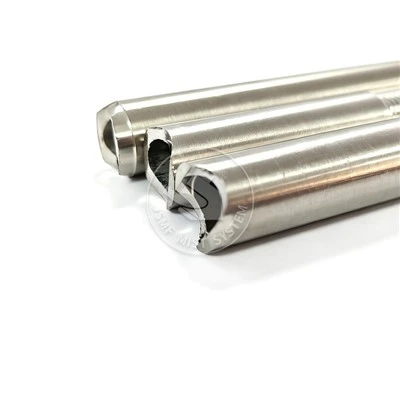
If you want to talk through your workshop’s specific needs—what size space you have, your local climate, what your current cooling struggles are—reach out to our team to get more details and find the right system for you.
Latch-type Connection Piece References
- Industrial Ventilation: A Manual of Recommended Practice, American Conference of Governmental Industrial Hygienists, 2022.
- Evaporative Cooling Technology for Industrial Applications, International Society of Automation, 2021.
- Heat Stress Management in Manufacturing Workplaces, Occupational Safety and Health Administration (OSHA), 2020.
- High-Pressure Mist System Design for Space Cooling, Journal of Industrial and Environmental Technology, Vol. 18, No. 2, 2019.
Jinsheng Mist Forest-High Pressure Mist System
Address: 109 Yonghong Road, Wenjiang District, Chengdu City, Sichuan Province, China
E-mail: 18190767523@163.com
WebSite: https://www.jswsmist.com/
