What’s up, fellow industrial folks — especially the engineers, maintenance leads, and folks who just need to get their fluid handling setups working? If you’re here because you’re staring at a box of O rings wondering why one works for water but melts when it hits that chemical, you’re not alone. I’m from an O seal ring supply company, and let’s be real — picking the wrong O ring for a fluid is one of the fastest ways to turn a routine fix into a production headache. We’ve seen it a hundred times: a guy grabs a random O ring from the shelf, slaps it on, and three days later it’s swollen, cracked, or leaking all over his parts. Today, I’m breaking this down like we’re chatting over a coffee — no fancy jargon overload, just what actually works for different fluids, and how you don’t waste money on the wrong seal. O Seal Ring
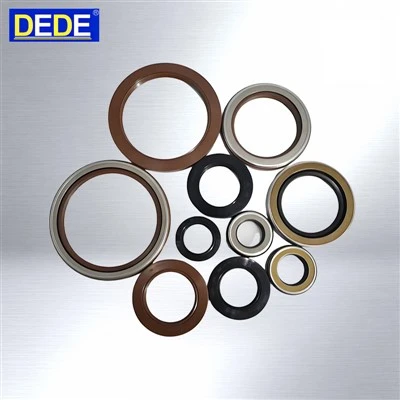
First, let’s cut to the chase: O rings aren’t one-size-fits-all. Their job is to create a tight barrier between two parts so fluid doesn’t get out or air doesn’t get in. But every fluid has a personality — some are mild, some are harsh, some eat through rubber like acid. The key is matching the O ring’s material to the fluid you’re dealing with, not the other way around. Let’s go through the most common fluid types people hit, and what works for each.
Starting with the big one: water. Plain old tap water, potable water, even process water for general use. This is the easiest, right? Most O ring materials work here, but you’ve got options depending on if it’s for drinking water or a high-pressure system. For standard potable water, EPDM (ethylene propylene diene monomer) is the go-to for most folks. It’s cheap, holds up great to water, and doesn’t leach weird chemicals — which is non-negotiable if you’re dealing with water that goes into food, drinks, or even pharmaceuticals. But if it’s high-pressure water, like in a hydraulic pump that runs hot, nitrile (Buna-N) is better. Nitrile has more tensile strength, so it won’t blow out under pressure, and it still handles water like a champ. One quick tip here: skip silicone for water unless it’s super low pressure. Silicone is great for heat, but water breaks it down faster, and you’ll be replacing O rings every couple of weeks.
Next up: hydraulic fluids. This is where a lot of guys mess up. Hydraulic fluid is usually a mineral-oil-based stuff, and that eats through a ton of O ring materials. Nitrile (Buna-N) is the classic pick here — it’s been around forever, works perfectly with mineral oils, and has good resistance to abrasion, which matters in heavy machinery. But wait — if you’re working with synthetic hydraulic fluids (like those used in modern equipment for better performance), nitrile might not cut it. Synthetic fluids often have additives that break down Buna-N, so you need FKM (Viton) instead. FKM is way more resistant to synthetic oils, heat, and even some chemicals. Yeah, it’s pricier, but if you’re dealing with hydraulic systems that run at high temps or use synthetic fluid, it’s worth every penny to avoid a shutdown. We’ve had customers switch from nitrile to Viton for their hydraulic presses and cut their O ring replacement costs by 70% — that’s not a stat I made up, that’s actual feedback from one of our regulars.
Now, let’s talk chemicals — the ones that’ll ruin an O ring in hours. This is where things get tricky because chemicals vary so much. If you’re dealing with acids (like sulfuric or hydrochloric, common in cleaning and manufacturing) or bases (lye, caustic soda), EPDM is your main guy. Wait, no — hold up, not just any EPDM. Industrial-grade EPDM, not the cheap stuff you’d use for a garden hose. Cheap EPDM swells with weak acids, but industrial EPDM is formulated to stand up to most inorganic chemicals. For organic acids (like acetic acid, vinegar) and alcohols, you might consider PTFE (Teflon) coated O rings. PTFE is basically inert — it doesn’t react with almost any chemical, even the harsh ones. The only catch? It’s not as flexible as rubber, so it needs a perfect seal groove to work, otherwise it can crack when you install it. That’s why a lot of folks opt for Viton for mild to moderate chemicals, but PTFE for the really nasty stuff. I’ll be honest, we sell a ton of PTFE O rings to plating shops and pharmaceutical facilities because they just can’t risk a leak.
Then there’s fuel and petroleum products — gas, diesel, kerosene, even jet fuel. This is where nitrile shines again, but high-nitrile grades. Standard nitrile is 70% acrylonitrile, but for fuel, you want 90% acrylonitrile nitrile — it’s way more resistant to swelling when it hits gasoline. If you use regular nitrile for fuel, it’ll soak up the gas, get soft, and blow out. We tested this once: a customer tried a 70% nitrile O ring for his small engine, and it swelled 30% in two days. Switched to 90% nitrile, and it’s still going after six months. Another thing: if you’re dealing with biodiesel (B20, B100), standard nitrile doesn’t hold up. Biodiesel has additives that break down Buna-N, so you need FKM or even EPDM for that. A lot of delivery fleets are switching to EPDM for their biodiesel tanks now, and it’s saved them a ton on maintenance.
Wait, let’s not forget high-temperature fluids. Things like hot water, steam, or heat-transfer oils. Silicone O rings are the obvious pick here — they can handle temps up to 450°F, which is way higher than nitrile or EPDM. But as I said earlier, silicone sucks for cold temps and oil, so don’t use it if it’s not needed. If you’re dealing with steam, make sure you get high-temperature EPDM too — it’s cheaper than silicone and works great for steam lines in factories or food processing plants. We had a bakery that was using silicone O rings for their steam ovens, and they were cracking every month. Switched to high-temp EPDM, and they haven’t had a crack in a year. That’s a small win that adds up to a lot of money saved.
Okay, so how do you actually choose this on your own, without calling a supplier every five minutes? Let’s make a quick checklist you can keep in your toolbox: 1) Write down exactly what fluid you’re using — don’t just say “oil,” specify if it’s mineral, synthetic, biodiesel, etc. 2) Note the temperature range — is it 100°F or 500°F? 3) Pressure level — low (under 100 PSI), medium (100-500 PSI), high (over 500 PSI)? 4) Any other factors? Like food safety, chemical compatibility, or cost.
For example: if you need an O ring for a food-grade water line at 80 PSI and 120°F, pick industrial EPDM. If it’s a hydraulic system with synthetic oil at 300 PSI and 200°F, go FKM. If it’s a chemical line with 10% sulfuric acid at 70°F, industrial EPDM will work, but if it’s 50% sulfuric acid, PTFE is better. If it’s a small engine with gasoline, 90% nitrile is your guy. That’s not rocket science, but it’s where most people go wrong — they skip the details and grab the cheapest O ring on the shelf.
Wait, what about common mistakes people make? Let’s call these out so you can avoid them. First, mixing up similar fluids. Like, using biodiesel O rings for regular diesel — they’re not the same. Second, ignoring temperature. An O ring that works at 70°F will melt at 300°F, no question. Third, skimping on material quality. Cheap O rings from random Amazon sellers are often made with recycled rubber that doesn’t meet specs — they swell, crack, or leak way faster than industrial-grade ones. We’ve had customers tell us they saved $5 on a box of cheap O rings, but then lost $500 in downtime when a leak ruined their parts. That’s a tradeoff no one should make. Fourth, not checking the seal groove size. Even if you pick the right material, if your O ring doesn’t fit the groove right, it won’t seal. But that’s a whole other topic — maybe another time.
Now, let’s talk about when to call a supplier (that’s us, by the way). If you’re dealing with a rare fluid — like a refrigerant, liquid nitrogen, or some specialty chemical — don’t guess. We’ve got a compatibility chart that’s been tested in real-world settings, not just a lab. For example, refrigerants like R-134a work with nitrile, but R-410A needs FKM. Liquid nitrogen is super cold, so you need a material that stays flexible at -300°F — silicone won’t work, EPDM won’t, you need something like Kalrez (but that’s for really extreme stuff). We can help you sort through that because we don’t just sell O rings — we know how they perform in actual setups.
Also, if you have a custom setup — like a weird size or a mix of fluids (say, a hydraulic system that sometimes touches water) — we can hook you up with the right material. We don’t just sell standard sizes, either — we can make custom O rings in any size, so you don’t have to settle for a generic one that doesn’t fit.
Wait, one more quick tip: test a small batch first. If you’re not sure, buy a pack of 5 or 10 O rings in the material you’re thinking of, test it with your fluid for a week or two. We do this all the time with new customers — send them a sample, they test it, and then they place a bulk order. It’s way better than buying 100 O rings that end up being useless.
At the end of the day, picking the right O ring for your fluid isn’t hard, but it’s crucial. You don’t want a leak bringing your production to a halt, or wasting money on replacements every month. We’ve been doing this for a while, and we’ve helped hundreds of people get the right O rings for their specific fluids — from food plants to construction fleets to chemical factories.
If you’re staring at a fluid chart, trying to figure out what O ring you need, or just want to avoid the headache of the wrong seal, hit us up to talk through your setup. We’re here to help you get it right the first time, no guesswork, no wasted cash.
V Ring Seal References
- SAE International. (2021). Compatibility of Elastomeric Seals with Automotive Fluids. SAE International Technical Paper Series.
- Society of Chemical Industry. (2019). Elastomer-Chemical Interaction: A Practical Guide for Process Industries. SCI Publishing.
- Rubber Manufacturers Association. (2020). O Ring Material Selection Guide for Industrial Fluid Handling. RMA Technical Bulletin.
- ASTM International. (2022). Standard Practice for Testing Elastomeric O-Ring Compatibility with Petroleum and Synthetic Fluids. ASTM D2000-22.
DEDE SEAL Co., Ltd.
DEDE Seal Co., Ltd. is one of the most experienced o seal ring manufacturers and suppliers in China for over 35 years, featured by quality products and good price. Please feel free to buy bulk customized o seal ring made in China here from our factory. Welcome to contact us for pricelist.
Address: Hunan Road, Pudong New Area, Shanghai, China
E-mail: info@dedeseal.com
WebSite: https://www.dedesealing.com/
