Hey there, if you’re deep in the manufacturing game—whether you’re running a small fabrication shop or a mid-sized production line—you’ve probably stared at a Busher former machine and thought, “How do I make this thing work smarter, not harder?” As someone who’s been supplying these machines for over a decade now, I get it. A lot of operators and production managers fixate on the Busher’s core job—crimping, forming, shaping those bushing components like it’s just brute force—but here’s the secret most folks sleep on: its data monitoring function. It’s not some fancy add-on gimmick; it’s the part that turns your machine from a “piece of equipment” into a productivity workhorse. Let’s break this down like we’re hanging out in a shop break room, no stuffy jargon allowed. Busher Former Machine
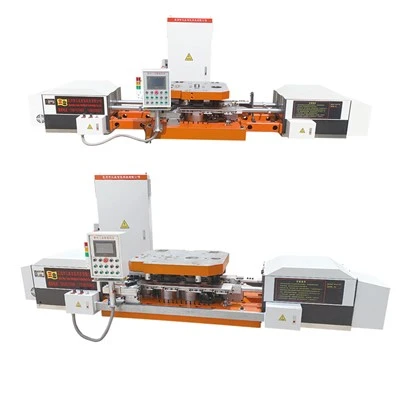
First off, let’s get clear on what a Busher former actually does in case you’re new here. It takes raw metal (usually steel or copper, depending on the bushing) and forms it into that tight, durable sleeve that goes into everything from car transmissions to plumbing fixtures. Before data monitoring, you’d cross your fingers, watch for weird noises, and hope the end product meets spec because you only checked parts at the end of a run. If there was a flaw—say, a bushing that’s slightly too thin in one spot—you might not catch it until you’ve run 500 bad parts, wasting material and time. That’s where the data monitoring steps in, and it’s built right into the machine, not bolted on later like some aftermarket hack.
Let’s start with the real-time metrics everyone cares about first. The Busher former’s monitoring system tracks things that actually affect quality, not just useless stats. For example, it keeps an eye on crimp pressure in real time. I’ve had a customer a few years back who was making bushings for heavy-duty truck transmissions; his old machine would spike pressure for half a second at the start of a run without anyone noticing, leading to split bushings that failed stress tests. The new Busher with data monitoring? It flagged that pressure spike immediately, shut down the machine, and adjusted the die alignment before he ran a single bad part. No more wasting $200 worth of raw steel on a bad batch. That’s the kind of win that makes you go, “Wait, why didn’t all machines have this?”
Then there’s cycle time tracking. Every manufacturing shop is chasing OEE (Overall Equipment Effectiveness) these days, right? The Busher’s data monitor logs how long each forming cycle takes, down to the millisecond. If a cycle suddenly jumps from 2 seconds to 3, it’ll alert you—could be a dull die, a loose component, or even an air leak in the machine’s lines. I had a shop owner tell me last year that this cut his unplanned downtime by 18% in the first month he had the upgraded monitoring. He used to lose 4 hours a week troubleshooting random slow cycles without knowing where to look; now he gets a pop-up that says “Cycle time deviation detected on Station 2” and fixes it before it turns into a full breakdown. That’s not just monitoring—that’s predictive maintenance before you even know you need it.
Wait, and let’s not forget material usage tracking. Raw metal isn’t cheap, and waste adds up fast. The Busher’s data system measures how much feed stock is used per bushing, and flags if there’s overfeed or underfeed. Underfeed means you get a bushing that’s too short—reject it. Overfeed means you’re wasting 0.2 grams of metal per part, and if you run 10,000 parts a day, that’s 2kg of scrap a day, or over 700kg a year. Multiply that by the price of steel, and that’s thousands of dollars you’re throwing away for no reason. The data monitor catches that automatically, so you don’t have to have someone manually weighing scrap every shift. That’s money you can put back into growing your business, not just replacing wasted material.
Here’s another big one that a lot of people don’t talk about: quality traceability. If you get a product recall or a customer complaint that a batch of bushings is faulty, you don’t have to dig through piles of paperwork or guess what went wrong. The Busher’s data monitoring function logs every cycle, every pressure reading, every cycle time, and even which operator ran that part. So if 100 bushings in a batch are bad, you can pull the exact data for that run, check if pressure was off, or if cycle time was weird, or if a specific operator’s settings were off. I had an aerospace client a while back that had a minor issue with a bushing batch, and they used the data logs to narrow it down to a single die that had shifted 0.1mm during a run. Fixed it in 20 minutes, no recall, no lost contracts. Traceability isn’t just a nice-to-have for regulated industries—it’s a lifesaver for keeping customers happy.
Now, I know what some of you are thinking: “This is all great, but is it complicated to use?” Nope. When we supply a Busher former with data monitoring, we don’t give you a 100-page manual that no one reads. The system has a touchscreen on the machine that’s super intuitive—like using a smartphone. You can set alerts for pressure or cycle time deviations so your phone pings you if something’s wrong, even when you’re not in the shop. It also syncs with basic software (we help with the setup, no coding needed) so you can pull weekly or monthly reports on downtime, waste, quality, all on your laptop. I once had a guy who runs a 3-person shop tell me he spends 10 minutes a day checking the data screen instead of 2 hours troubleshooting or inspecting parts. That’s time he can spend on other jobs, growing his business.
Wait, let’s be real for a second—no machine is perfect, and data monitoring isn’t magic. It works best when you use it as a tool, not a replacement for good operators. But what it does is take the guesswork out of running a Busher former. Before, you’d have operators crossing their fingers, now you have data that tells you exactly what’s happening. I’ve seen shops go from 5% defect rates to 1% in 3 months just by using the monitoring function right. I’ve seen unplanned downtime drop by 25% because they catch small issues before they turn into big breakdowns. That’s not just “monitoring”—that’s improving your bottom line, plain and simple.
If you’re still on the fence about whether the data monitoring function on a Busher former is worth the extra investment, let me put it in perspective. Let’s say you run 5,000 parts a day, 5 days a week. A 1% reduction in defect rates saves you 50 parts a day. At $1 a part, that’s $50 a day, $250 a week, over $13,000 a year. Cut unplanned downtime by 10%—if you’re running 20 days a month, that’s 2 extra days of production a month, which is another chunk of change. And let’s not forget reduced material waste—even a tiny 0.5% cut there adds up fast. That extra cash can go to hiring more staff, upgrading other equipment, or just keeping more profit in your pocket.
Here’s the thing: when I started supplying Busher formers, a lot of customers only cared about how fast the machine could run. Now, almost every single one asks about the data monitoring function first. Because they’ve seen what it does. They don’t want a machine that just forms bushings—they want a machine that helps them run their business better, make more consistent parts, waste less money, and keep their customers happy. The data monitoring function isn’t a fancy add-on; it’s the core reason a modern Busher former is way more valuable than the machines you might have had 10 years ago.

If you’re curious about how a Busher former’s data monitoring could work for your specific shop—whether you’re making small precision bushings for electronics, heavy-duty ones for construction, or anything in between—hit us up to chat. We can walk you through real customer examples, show you how the system works, and figure out what setup makes sense for your production volume and goals. No sales pitch, no pressure—just straight talk from someone who’s been in this game long enough to know what actually helps shops, not just what sounds good in a catalog.
Busher Former Machine References:
- National Institute of Standards and Technology (NIST). (2022). Smart Manufacturing Data Monitoring for Metal Forming Equipment.
- Society of Manufacturing Engineers (SME). (2021). Predictive Maintenance in Forming Processes: A Practical Guide.
- Automotive Industry Action Group (AIAG). (2023). Traceability and Quality Metrics for Component Manufacturing.
Quanzhou Sanye Intelligent Technology Co., Ltd.
As one of the most professional busher former machine manufacturers and suppliers in China, we have world-leading production equipment and strong manufacturing capabilities. Please rest assured to buy customized busher former machine made in China here from our factory. Welcome to contact us for quotation.
Address: Anhai Town, Jinjiang City, Fujian Province, China
E-mail: jack_tmm@163.com
WebSite: https://www.qzsymanipulator.com/
