If you’ve ever knelt in the engine bay of a semi-truck at 2 a.m. on the side of the highway, or squeezed into the cramped cabinet of a commercial HVAC system to replace a pressure control part, you know that space isn’t just a convenience—it’s a constraint that makes or breaks a repair. As a threaded valve supplier, I’ve spent more than a few late nights troubleshooting issues with parts that seemed like the right pick on paper, only to hit a wall when physical access turned an “easy install” into a half-day mess. Threaded valves are workhorses, reliable for a wide range of industrial and commercial applications, but their limitations in tight spaces aren’t just minor inconveniences—they’re the kind of problems that delay projects, drive up labor costs, and even put safety at risk. Let’s break down the real, practical limitations I’ve seen firsthand, and why choosing the right valve isn’t just about fitting in the space, but understanding how that fit shapes every step of the job. Threaded Valve
The first and most obvious limitation is installation access, and it’s the one that trips up even experienced maintenance techs. Threaded valves rely on male or female threads to screw into a mating port, right? That means you need clearance on both sides of the valve: one side to grip it with a wrench or socket, and enough room to turn the valve as you thread it into place. In a tight space—think the narrow gap between two 6-inch pipes in a process skid, or the crowded interior of a water heater’s control compartment—there simply isn’t room for a standard wrench. I remember a call from a manufacturing client last year; their line’s pressure relief valve went out on a Friday afternoon, and their maintenance team grabbed a replacement threaded valve from stock, thinking it was an exact match. When they got to work, they realized the space between the pipe and the adjacent sensor was just an inch wider than the valve’s body—no room to fit a 1 1/16-inch wrench to turn it. They ended up having to saw a small section of pipe to get more space, which cost them two hours of downtime and $1,200 in emergency labor, not to mention risking damage to the nearby sensor. This isn’t an isolated case; standard clearance requirements for threaded valves (per ASME B1.20.1, the standard for pipe threads) mandate a minimum of 1.5 times the valve’s nominal pipe size (NPS) on the turning side to achieve proper thread engagement. In a tight space, that clearance is often cut by half or less, making it impossible to get the torque needed for a leak-proof seal.
Speaking of seals, the next big limitation is the risk of cross-threading and installation errors that come with cramped working conditions. Cross-threading happens when the valve’s threads don’t align straight with the port, causing the threads to strip or gouge. In an open space, a tech can feel when the valve is catching incorrectly and back it out to re-align. In a tight space, though, visibility is zero—you’re working by feel, with gloves on, and often distracted by other parts around you. I’ve seen a stripped valve port on a chemical processing unit that cost $8,000 to repair because a tech couldn’t see the misalignment and forced the valve into place. Cross-threading doesn’t just cause leaks; if it’s a high-pressure or hazardous fluid application, it can lead to spills, equipment damage, or even workplace injuries. Compounding that, threaded valves often require Teflon tape or pipe dope to seal the threads. In a tight space, it’s easy to over-apply tape, which can bunch up in the threads and restrict flow, or under-apply it, leading to slow, hard-to-detect leaks. I had a food and beverage client last month who had to shut down a entire processing line for three hours because a threaded valve’s tape had bunched up, blocking the flow of sanitizing solution and leading to a failed quality check. The tech tried to fix it without removing the valve, but the bunched tape was too far in, so they had to take it out in a space that required a custom tool to grip, adding more time to the delay.
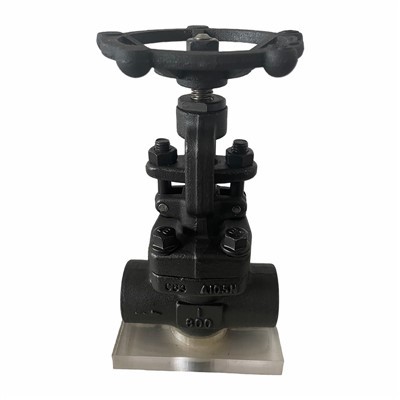
Then there’s the issue of maintenance and replacement over the valve’s lifecycle. Threaded valves aren’t permanent fixtures—they need to be inspected, lubricated, or replaced every few years, depending on the application. But in a tight space, removing a threaded valve is often just as hard as installing it. You need to grip the valve, apply counter-torque to break the seal, and pull it out—all while navigating around pipes, wires, or insulation. I worked with a hospital’s mechanical team last year to replace three threaded gate valves in a basement pipe chase. The space was so tight that they couldn’t use a regular wrench, so they had to fabricate a custom offset wrench that cost $300 and took two days to make. Each valve took 45 minutes to remove, compared to 10 minutes in an open space. What’s more, threaded valves are often held in place with pipe dope or thread sealant that cures over time, making the valve even harder to remove. If a valve is stuck, techs often have to use chemicals to break down the seal, or even cut the pipe—adding more downtime and cost. Contrast that with flanged valves, which use bolts to connect and can often be loosened with a wrench in tight spaces if you have access to the bolt heads. It’s not that flanged valves are perfect, but their maintenance profile is better for cramped locations.
Wait, there’s another, less talked-about limitation: torque-induced stress on adjacent components. When you tighten a threaded valve, you apply significant torque to the valve body, and that force transfers to the pipe it’s connected to. In a tight space, pipes are often already crowded, with other valves, sensors, or structural parts nearby. That torque can cause the pipe to bend, crack, or even pull away from its mounting bracket. I remember a case from an oil and gas client where a tech tightened a threaded globe valve in a small valve manifold, and the torque was enough to crack a 2-inch copper pipe that was just 3 inches away. The pipe leaked natural gas, forcing an evacuation of the facility and a $25,000 fine for unplanned downtime. The tech didn’t mean to over-tighten—he just couldn’t gauge how much torque he was applying in the cramped space, and the lack of clearance meant he had no room to use a torque wrench, which would have prevented the mistake. Torque management is critical for threaded valves, but in tight spaces, it’s almost impossible to implement properly. Most threaded valve applications call for a torque of 20 to 50 foot-pounds, depending on size, but when you can’t see or feel the pressure on the wrench, it’s easy to go too far.
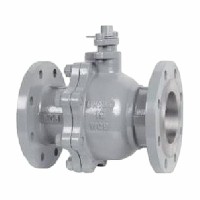
Let’s be clear: this isn’t a knock on threaded valves. They’re affordable, widely available, and reliable for many applications. But when space is at a premium, their design—tied to thread-based installation and removal—becomes a bottleneck that creates avoidable problems. As a threaded valve supplier, I don’t just sell parts; I work with clients to navigate these limitations, because I’ve seen how much is at stake when a valve doesn’t fit as expected. If you’re working on a project in a tight space, don’t just grab the threaded valve that matches the size of the port. Ask about clearance requirements, maintenance access, and torque limitations. Maybe a threaded valve is the right pick, but you need a compact body design or a special low-torque seal to make it work. Or maybe a different valve type, like a compact ball valve with a flange or push-to-connect fitting, would serve you better in that narrow space.
If you’re facing challenges with threaded valves in tight spaces on your site, reach out to our team for a consultation. We can help you assess your space, identify the right valve design for your needs, and troubleshoot any installation or maintenance issues you’re dealing with. Don’t let a cramped work area turn a routine repair into a costly headache—we’re here to help you find the right solution for your specific application.
Type Strainer References
ASME B1.20.1, “Pipe Threads, General Purpose (American Standard)”, American Society of Mechanical Engineers, 2020
Miller, J. L., “Valve Selection for Compact Industrial Systems”, Industrial Valve Magazine, Vol. 18, No. 3, 2021, pp. 45-52
National Fire Protection Association (NFPA), “Hazardous Materials Handling in Confined Spaces”, NFPA 30, 2022, Section 7.2.4
Xiongxiang Valve Group Co., Ltd.
As one of the most professional threaded valve manufacturers and suppliers in China, we’re featured by quality products and good price. Please rest assured to wholesale cheap threaded valve for sale here from our factory. Contact us for more details.
Address: Building 1, No.306, 12th Binhai Road, Jinkai District, Wenzhou City, Zhejiang Province, China
E-mail: info@xiongxiangvalve.com.cn
WebSite: https://www.steelvalvegroup.com/
