When I first started working as a pedestal basin supplier over a decade ago, one of the most common questions I got from both homeowners and contractors was, “Do pedestal basins have overflow holes?” It’s such a straightforward question, but the answer isn’t always as simple as people think—especially since there are a lot of myths and misconceptions floating around about these classic bathroom fixtures. Let me walk you through what I’ve learned from years of helping customers pick the right pedestal basin for their space, backed by real industry knowledge and hands-on experience. Pedestal Basin
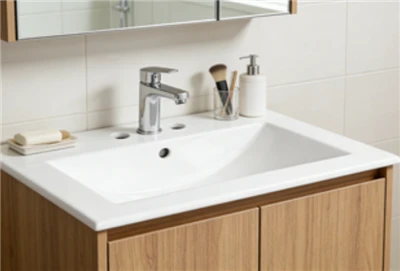
First, let’s get the basics straight: a pedestal basin is that freestanding bathroom sink supported by a single vertical column (the pedestal) that connects to the drain pipe under the floor. It’s been a staple in bathrooms for decades, loved for its compact size, timeless design, and ease of installation. Now, the overflow hole is that small, round slot you usually see around the inner rim of most bathroom sinks. Its job is to prevent water from spilling over the edge if you accidentally leave the faucet running. If water rises past the overflow hole, it drains out through a hidden pipe instead of flooding your bathroom floor.
So, back to the main question: do pedestal basins have overflow holes? The short answer is: some do, and some don’t. This isn’t a random choice—there are specific reasons why a manufacturer would design a pedestal basin with or without an overflow, and why you’d want one over the other depending on your needs. Let’s break that down.
For most standard pedestal basins sold in North America and Europe, yes, they do come with overflow holes. These are the ones you’ll find in most regular bathrooms—guest bathrooms, powder rooms, half baths, and main bathrooms where someone might forget they turned on the faucet. If you’re installing a pedestal basin in a space that’s used by kids or elderly family members, an overflow is practically a must. I remember a customer a few years back who bought a no-overflow basin for their kid’s bathroom. They left the water running while they grabbed a towel, and by the time they got back, water had spilled all over the bathroom rug and seeped under the door into the hallway. It was a mess they could have avoided if they’d just picked a basin with an overflow. That story stuck with me, which is why I always make a point to mention overflow holes early on when talking to customers.
But wait—why would anyone choose a pedestal basin without an overflow? There are a few specific scenarios where no-overflow models make more sense. First, if you’re going for a seamless, minimalist look. A lot of modern homeowners love the clean, uninterrupted line of a basin without that small slot around the rim. It gives the sink a sleeker, more streamlined appearance that works really well in contemporary or industrial-style bathrooms. Another reason is material. Some materials, like certain types of glass or concrete, are harder to drill with a precise overflow hole without risking cracks or leaks. Manufacturers will sometimes skip the overflow for these materials to avoid quality issues. Also, some smaller pedestal basins, designed for very compact powder rooms, don’t have space for an overflow. If the basin is only 12 or 14 inches wide, adding an overflow would take up too much interior space, making it hard to wash your hands comfortably.
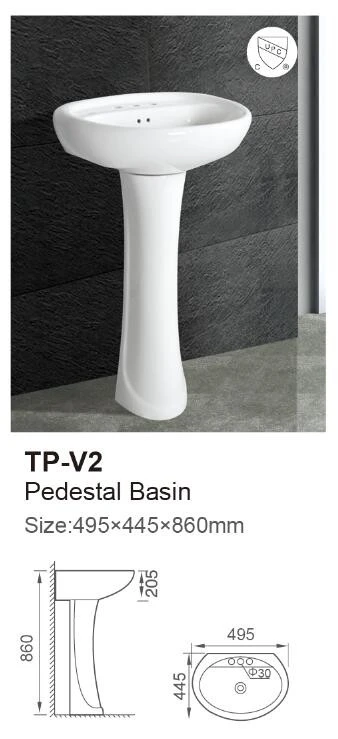
Now, let’s talk about how overflow holes work in pedestal basins specifically, because there’s a common misconception here. Some people think the overflow in a pedestal basin is just like the overflow in a drop-in sink, but that’s not entirely true. With a drop-in sink, the overflow connects to the drain pipe through a pipe inside the sink’s body, usually attached to the strainer. With a pedestal basin, the overflow connects to the drain pipe through the pedestal itself. Wait, let me explain that. The pedestal is a hollow column, right? The drain from the basin goes down through the pedestal to connect to the main waste pipe under the floor. For basins with an overflow, there’s a small pipe that runs from the overflow hole in the inner rim of the basin, down through the back of the basin, and into the hollow pedestal. That pipe connects to the main drain line at the bottom of the pedestal. So when water hits the overflow, it doesn’t just pool in the pedestal—it drains out through the proper pipe, just like it would in any other sink. It’s a clever design that uses the pedestal’s hollow space instead of extra pipes inside the basin, which keeps the look clean.
I’ve seen a lot of installation mistakes with overflow holes in pedestal basins, too. One of the biggest ones is when plumbers accidentally plug the overflow pipe when hooking up the sink. If you don’t make sure that pipe is clear, the overflow won’t work at all. That’s why I always recommend that homeowners watch their plumber during installation, or at least double-check with their supplier that the overflow is properly connected. Another mistake is buying a basin without an overflow if you have a habit of leaving the faucet running. We’ve had customers come back to us saying their no-overflow basin spills over all the time, and we have to explain the trade-offs they made for the look. It’s important to weigh those pros and cons before you buy.
Let’s get into the factors you should consider when choosing a pedestal basin with or without an overflow, since that’s what customers ask me all the time. First, think about who will be using the bathroom. If it’s a high-traffic bathroom, especially one with kids or guests, go with an overflow. The risk of spillage is just too high. If it’s a low-traffic powder room that only gets used by adults who are careful, a no-overflow basin might be a good fit. Next, think about the bathroom’s style. If you’re going for a traditional look, most classic pedestal basins do have overflow holes, so that’s the way to go. If you’re doing a modern, minimalist design, a no-overflow basin will look much cleaner.
Material is another big factor. Porcelain is the most common material for pedestal basins, and almost all porcelain basins come with an overflow because it’s easy to drill the hole without damaging the material. Porcelain is durable, easy to clean, and holds up well with an overflow. But if you’re looking at a glass pedestal basin, concrete, or stone, you might have more options for no-overflow models. Glass basins, for example, can be designed without an overflow for a sleek look, but they’re heavier and more fragile than porcelain, so you have to be careful with installation. Concrete basins are also customizable—you can order them with or without an overflow, depending on your preference.
Size matters too, as I mentioned earlier. If your bathroom is small, a compact pedestal basin (like 16 inches wide) might not have space for an overflow. The interior would be too narrow, so adding an overflow would make it hard to wash your hands or face. In that case, a no-overflow basin is the only practical choice. Larger basins, 18 inches or more, almost always have overflow holes because there’s enough space for both the overflow and comfortable use.
Another thing to consider: plumbing codes. In most places, building codes require that bathroom sinks have an overflow hole to prevent water damage. I’ve heard of a few areas where this isn’t the case, but in North America and most of Europe, you’re required to have an overflow for any bathroom sink. That means if you’re planning to sell your home in the future, a no-overflow basin might be a problem when you get a home inspection. The inspector might flag it as not meeting code, which could delay the sale or require you to install an overflow later. It’s a small detail, but one that can save you a lot of hassle down the line.
I want to share a couple more customer stories to illustrate how important this choice is. Last year, a contractor bought 20 pedestal basins for a new apartment complex. They opted for no-overflow models because the units were small, and they thought it would save money on installation. But about six months later, half the tenants called with complaints about water spilling over the sinks. The management had to call us back to buy replacement basins with overflow holes, and the cost ended up being higher than if they’d just bought the right ones in the first place. That’s a mistake we see all too often—choosing based on cost or looks without thinking about practical use.
On the flip side, another customer bought a pedestal basin with an overflow for their master bathroom. A few months after installation, their son had a friend over who turned on the faucet full blast and went to play video games in the other room. When they came back, the water had risen to the overflow, drained out, and there was no mess at all. The customer told us that small incident saved them from a huge cleanup job, and they were glad they’d listened to our recommendation to get an overflow.
So, to circle back to the original question: do pedestal basins have overflow holes? The answer is that it depends on the basin’s design, material, size, and intended use. As a pedestal basin supplier, I always make sure my customers have all the information they need to make the right choice, not just what’s cheapest or looks best. If you’re in the market for a pedestal basin, here’s what I suggest you do: first, measure your bathroom and think about who will use the sink. If it’s a high-traffic main bathroom, go for a porcelain basin with an overflow. If it’s a small, low-traffic powder room and you love the minimalist look, a no-overflow model might work for you. Just make sure you check your local building codes to avoid any issues later.
I also want to mention that some manufacturers make basins with “semi-overflow” systems, which are a middle ground. These are basins that don’t have a visible overflow hole on the inside rim, but they have a hidden pipe that works as an overflow. They give you the clean look of a no-overflow basin while still preventing spillage. They’re a great option if you want the best of both worlds, though they’re a bit more expensive than standard models.
At the end of the day, the question of whether a pedestal basin has an overflow isn’t just a technical detail—it’s about practicality, style, and peace of mind. For me, as someone who’s been in this business for years, the best advice I can give is to don’t just pick a basin because it looks nice. Think about how you’ll use it, who’ll use it, and what could go wrong if you don’t have an overflow. A small investment in the right basin now can save you a lot of stress and money later.
If you’re ready to look for a pedestal basin that fits your needs, or have more questions about overflow holes, feel free to reach out to our team for a conversation. We’re happy to walk you through the different models, materials, and options to find the perfect one for your bathroom. Don’t hesitate to connect with us to discuss your project—we’re here to help you make the right choice.
Cabinet Basin References
- International Plumbing Code (IPC). Minimum Standards for Plumbing Facilities and Design.
- "Pedestal Sink Design and Functionality." International Association of Plumbing and Mechanical Officials (IAPMO).
- Kitchen & Bath Industry Show (KBIS) 2022 Report: Trends in Bathroom Fixtures.
- Porcelain Bathroom Sink Manufacturing Guidelines. National Association of Home Builders (NAHB).
- "Overflow Systems for Residential Sinks." Journal of Architectural Engineering, Vol. 28, No. 3, 2022.
Tangshan Houfengyuan Import and Export Co., Ltd.
As one of the most professional pedestal basin manufacturers and suppliers in China, our products have good reputation in the market. We warmly welcome you to wholesale customized pedestal basin from our factory. Good service and quality products are available.
Address: COMPREHENSIVE SERVICE PARK BUILDING,No.3 ROOM 216 MEIYI ROAD No.14 LUBEI,TANGSHAN CITY, HEBEI PROVINCE,CHINA
E-mail: hfy01@hfybath.com
WebSite: https://www.hfy-bath.com/
