If you’ve ever swapped out your car’s old, dull incandescent turn signal bulbs for bright LED ones, you’ve probably noticed something weird—those lights blink way faster than they did before. That super-fast blink is called hyper flash, and if you’re a car owner, it’s not just a quirky little annoyance—it’s actually a red flag that your new LED bulbs might not be playing nice with your car’s stock electrical system. As someone who’s been supplying LED turn signal bulbs for years, I’ve heard this question a hundred times: “Why is my LED light hyper flashing, and do I need to fix it?” Let’s break this down without all the confusing tech jargon, so even if you’re not a car mechanic, you get exactly what’s going on. LED Turn Signal Bulbs
First, let’s circle back to those old incandescent bulbs they used to make. You know, the ones that get hot enough to light up your whole hand if you touch them. Those bulbs work by running electricity through a thin filament, which heats up and glows. The car’s turn signal system has a part called a flasher unit—think of it as a little timer that sends power on and off to the turn signals. For incandescents, the flasher unit is calibrated to work with how much resistance those bulbs create. Resistance is basically how much a component slows down electrical current; incandescents have a high resistance because their filaments are thin and long. When the flasher unit sends power to a high-resistance bulb, it takes a split second to heat up the filament and make it glow, so the blink rate is slow and steady—usually around 1 to 2 blinks per second, which is what you’re used to seeing on the road.
Now, LED bulbs are totally different. They’re diodes, not filaments, and they work by letting electrons flow through a semiconductor material, which emits light. LEDs are way more efficient than incandescents, but here’s the big catch: they have super low resistance. Like, way lower than those old bulbs. So when you swap a 21-watt incandescent bulb (that’s a common turn signal size) for an LED, you’re suddenly cutting the total resistance of the turn signal circuit by a lot. The stock flasher unit doesn’t know how to handle this. It’s used to sensing a high resistance load from incandescents, and when that load drops too much, it speeds up the blink rate to “hyper flash” as a way to alert you. That’s right—your car isn’t just being glitchy; it’s built to tell you, “Hey, something’s different here.”
Wait, but why does hyper flash matter anyway? Some people brush it off as no big deal, but it actually is a problem for a couple of reasons. First, it’s not compliant with road safety rules in most places. Turn signals have to blink at a consistent rate, usually 1 to 2 times per second, so other drivers can easily see and respond to your turn. Hyper flash is often 3 to 4 times faster—so fast that it can look like a solid light or a flicker that drivers next to you might miss. That’s a recipe for a near-miss. Second, if your car has a “bulb out monitor” (that little light on your dashboard that pops up if a bulb burns out), hyper flash will trigger it even if both turn signals are working fine. That means you’ll have a random dashboard light staring at you every time you drive, which is annoying, and if you don’t know why it’s there, you might panic and think you have a major electrical issue.
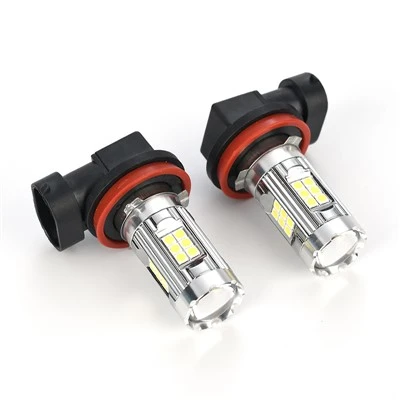
Now, let’s talk about why some LED bulbs don’t hyper flash, and why others do. At this point, you might be thinking, “If LEDs are the future, why can’t they just replace incandescents without this problem?” It comes down to how the LED bulb is built. Cheap no-name LEDs skimp on parts to keep costs low. They don’t add anything to increase the resistance, so they work perfectly with the new electrical systems in some cars—but not older ones, or even some modern ones that still use traditional flashers. On the other hand, quality LED turn signal bulbs (the ones we supply, for example) are designed with a tiny little component called a load resistor, or sometimes they’re “canbus-ready.” Canbus is just the name for the system that monitors electrical loads in newer cars, and canbus-ready LEDs have built-in technology that tricks the car’s computer into thinking there’s a high-resistance incandescent bulb there, so it doesn’t trigger hyper flash.
But hold on—load resistors aren’t perfect either, right? Some people add external resistors to fix hyper flash, but if you get the wrong size or mount them wrong, they can get super hot, even hot enough to melt plastic or cause a fire. That’s why we never recommend just slapping a random resistor on your bulb. Our LED bulbs already have calibrated, heat-resistant resistors that are matched exactly to common car models, so you don’t have to mess around with extra parts that could damage your car.
I’ve seen so many customers come to us after buying a set of LED bulbs from a big box store or a random online site, and they’re complaining about hyper flash. Half the time, those bulbs are cheap no-name ones that don’t have the right resistance, or they’re labeled as “universal” but don’t work with their specific car. That’s the difference between our bulbs and the ones you can buy everywhere else: we test every single batch to make sure our load resistors or canbus technology is dialed in for most popular cars, so you don’t have to worry about that annoying fast blink.
Let’s also bust a common myth here: some people say hyper flash is just a “quirk” and you don’t need to fix it. But for drivers who track their cars, or anyone who cares about safety, it’s not a quirk. If your turn signal is blinking too fast, other drivers might not recognize it as a turn signal at all. I had a customer a few months back who told me he didn’t notice his hyper flash for a week, and he almost got hit by a car when he turned—because the other driver thought he had a hazard light on, not a turn signal. That’s the kind of thing that makes us take hyper flash seriously.
Another thing to note: hyper flash can happen on one turn signal or both. If only one is hyper flashing, that usually means the new LED bulb on that side has too low resistance, or the flasher unit is starting to go bad. If both are hyper flashing, that’s almost definitely the bulbs you installed. And if you’ve tried adding resistors and it’s still hyper flashing, you might have a flasher unit that needs to be replaced, or your car’s computer needs a quick reset (sometimes disconnecting the battery for 10 minutes will fix that, but don’t hold your breath—most of the time it’s the bulbs).
So what’s the solution, if you’re dealing with hyper flash? First, don’t just disable the turn signal hyper flash with a wire bypass or something sketchy—those can mess with your car’s electrical system long-term. The best fix is to swap out your old LEDs for quality ones designed to prevent hyper flash. That’s exactly what we do here: our LED turn signal bulbs are made to work with both old and new car electrical systems, so they blink at the right rate, no fast flash, no dashboard bulb light, and they’re way brighter than incandescents too. We also include a little guide for every order to tell you if your car needs a quick install tweak, just to make it even easier.

If you’ve been fighting hyper flash on your LED turn signals, or you’re thinking about making the switch from incandescents and don’t want to deal with the headache, feel free to reach out to us to talk through your needs. We work with all types of car drivers, from people with daily commuter cars to those with classic cars that need a little extra care, and we can help you pick the right bulbs that won’t leave you staring at a hyper flashing light every time you turn.
LED Exterior Light Bulbs References
- Society of Automotive Engineers (SAE). Surface Vehicle Recommended Practice: Turn Signal Lamp Characteristics.
- Automotive Electronics Council. CAN Bus System Requirements for Passenger Vehicles.
- International Organization for Standardization (ISO). Road Vehicle Lighting Regulations, Part 7: Turn Signals.
Shine Bright Optoelectronic Co., Ltd.
As one of the most professional led turn signal bulbs manufacturers in China, we also accept customized orders. Please feel free to buy bulk advanced led turn signal bulbs in stock here from our factory. Welcome to contact us for quotation.
Address: 6th Floor, Buildings B & C, Baotang Industrial Zone, No.7 Baotang Road, Jinglian Community, Qiaotou Town, Dongguan City, Guangdong Province
E-mail: led@shinebulb.com
WebSite: https://www.shinebulb.com/
