Hey there! I’m a supplier of rubber rollers, and one of the most common questions I get from customers is how to measure the hardness of a rubber roller. It’s a crucial aspect, as the hardness can significantly affect the roller’s performance in various applications. So, let’s dive right into it. Rubber Roller
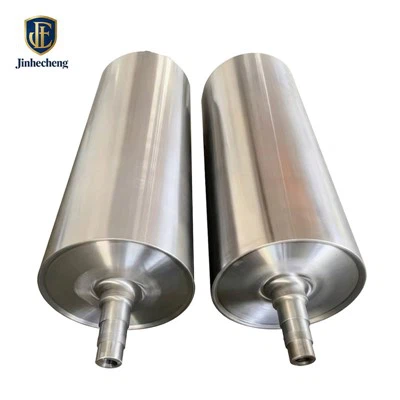
Why Measuring Rubber Roller Hardness Matters
First off, let’s talk about why it’s so important to measure the hardness of a rubber roller. Different applications require different levels of hardness. For example, in printing presses, a softer rubber roller might be used to transfer ink smoothly, while in industrial manufacturing processes where high pressure and precision are needed, a harder roller could be the better choice.
If you use the wrong hardness roller, it can lead to a bunch of problems. A roller that’s too soft might wear out quickly, causing uneven pressure distribution and poor performance. On the other hand, a roller that’s too hard could damage the materials it comes into contact with or not provide the necessary grip.
Common Methods for Measuring Rubber Roller Hardness
Shore Hardness Testing
The most widely used method for measuring rubber roller hardness is the Shore hardness test. There are different types of Shore durometers, but the two most common ones for rubber rollers are the Shore A and Shore D scales.
- Shore A Scale: This is used for softer rubber materials. The durometer has a blunt indentor that is pressed into the rubber surface. The hardness value is determined by how far the indentor penetrates the rubber. A lower Shore A value means a softer rubber, while a higher value indicates a harder rubber. For example, a rubber roller with a Shore A hardness of 30 is much softer than one with a Shore A hardness of 70.
- Shore D Scale: This scale is used for harder rubber and plastic materials. The indentor on a Shore D durometer is sharper, which allows it to measure the hardness of more rigid materials. If you’re dealing with a rubber roller that has a very high hardness level, the Shore D scale would be the way to go.
To perform a Shore hardness test, you need to make sure the rubber roller is at room temperature. The surface should be clean and smooth. Place the durometer on the roller’s surface, apply a steady pressure, and wait for the reading to stabilize. Take multiple readings at different points on the roller to get an accurate average.
IRHD (International Rubber Hardness Degrees) Testing
Another method is the IRHD testing. This method is more precise and is often used in quality control in the rubber industry. There are two types of IRHD tests: the normal and the micro.
- Normal IRHD: This test is suitable for larger rubber specimens and is based on the principle of measuring the indentation of a spherical indenter into the rubber under a specific load. It gives a hardness value in IRHD units, which range from 0 to 100. A lower IRHD value means a softer rubber.
- Micro IRHD: This is used for smaller rubber parts or when you need to measure the hardness of a specific area on the roller. It uses a very small indenter and a lower load.
IRHD testing requires more specialized equipment and a controlled testing environment. It’s a bit more complex than the Shore hardness test, but it provides more accurate and consistent results.
Factors Affecting Rubber Roller Hardness Measurement
Temperature
Temperature can have a significant impact on the hardness of a rubber roller. Rubber is a viscoelastic material, which means its properties change with temperature. As the temperature increases, the rubber becomes softer, and the hardness value decreases. Conversely, as the temperature decreases, the rubber becomes harder.
So, when measuring the hardness of a rubber roller, it’s important to note the temperature at which the test is conducted. If you’re comparing hardness values from different sources, make sure they were measured at the same temperature.
Aging and Environmental Exposure
Over time, rubber can age and its properties can change. Exposure to sunlight, ozone, chemicals, and other environmental factors can cause the rubber to harden or soften. For example, exposure to ozone can cause the rubber to become brittle and harder.
If you’re measuring the hardness of an old or used rubber roller, keep in mind that the measured hardness might be different from the original hardness due to aging and environmental exposure.
Tips for Accurate Hardness Measurement
- Prepare the Roller: Make sure the roller’s surface is clean and free of any debris or contaminants. This will ensure that the indentor can make proper contact with the rubber surface.
- Use the Right Equipment: Make sure you’re using a calibrated durometer or IRHD tester. An uncalibrated instrument can give inaccurate readings.
- Take Multiple Readings: Don’t rely on a single reading. Take multiple readings at different points on the roller and calculate the average. This will give you a more accurate representation of the roller’s hardness.
- Control the Testing Environment: Try to keep the temperature and humidity constant during the testing process. This will minimize the effects of environmental factors on the hardness measurement.
Conclusion

Measuring the hardness of a rubber roller is an important step in ensuring its proper performance. Whether you’re using the Shore hardness test or the IRHD test, it’s crucial to follow the correct procedures and take into account the factors that can affect the hardness measurement.
Stainless Steel Roller If you’re in the market for rubber rollers and need help with hardness selection or measurement, don’t hesitate to reach out. We’re here to provide you with high-quality rubber rollers and expert advice. Contact us to start a conversation about your specific needs and let’s find the perfect rubber roller solution for you.
References
- ASTM D2240 – Standard Test Method for Rubber Property – Durometer Hardness
- ISO 48 – Rubber, vulcanized or thermoplastic – Determination of hardness (hardness between 10 IRHD and 100 IRHD)
Qingdao Jinhecheng Machinery Co., Ltd.
Qingdao Jinhecheng Machinery Co., Ltd. is one of the most professional rubber roller manufacturers and suppliers in China, featured by quality products and low price. Please rest assured to buy discount rubber roller made in China here from our factory. Customized orders are welcome.
Address: Aishan Industrial Park, Yanghe Town, Jiaozhou, Qingdao City, Shandong Province
E-mail: alice@jhcroller.com
WebSite: https://www.jhcroller.com/
